Hair coloring can transform your appearance, add personality to your style, and help you achieve the shade you have been looking for. At the same time, frequent coloring, bleaching, heat styling, and repeated washing can leave hair feeling dry, coarse, fragile, or less manageable. This is why a thoughtful hair-care routine becomes especially important after coloring.
Many people with colored hair look for hair oils that can support softness, nourishment, and scalp comfort without making their routine complicated. Adivasi Herbal Hair Oil is one option that can be considered as part of a consistent hair-care regimen, particularly for those interested in traditional herbal-based care.
The key is to use oil in a way that complements color-treated hair rather than treating oil as a replacement for every other aspect of hair maintenance. Shampoo selection, conditioning, heat protection, washing frequency, and professional color care still play major roles.
Why Colored Hair Needs Extra Care
Hair color changes the condition of the hair fiber because chemical coloring can affect the outer cuticle layer. Bleaching tends to be especially demanding because it removes natural pigment and can make strands more porous. Even permanent color can contribute to dryness when repeated frequently.
Common concerns after coloring include:
- Dry or rough texture
- Loss of smoothness
- Increased tangling
- Split or brittle ends
- Dull-looking strands
- Frizz and flyaways
- Scalp dryness or discomfort
These concerns do not mean that colored hair cannot remain healthy-looking. A balanced routine can help hair retain a smoother feel and improve manageability.
This is where a suitable hair oil may have a useful role. Oil can provide lubrication, reduce the feeling of roughness, and make strands feel softer when applied appropriately.
How Adivasi Herbal Hair Oil May Benefit Colored Hair
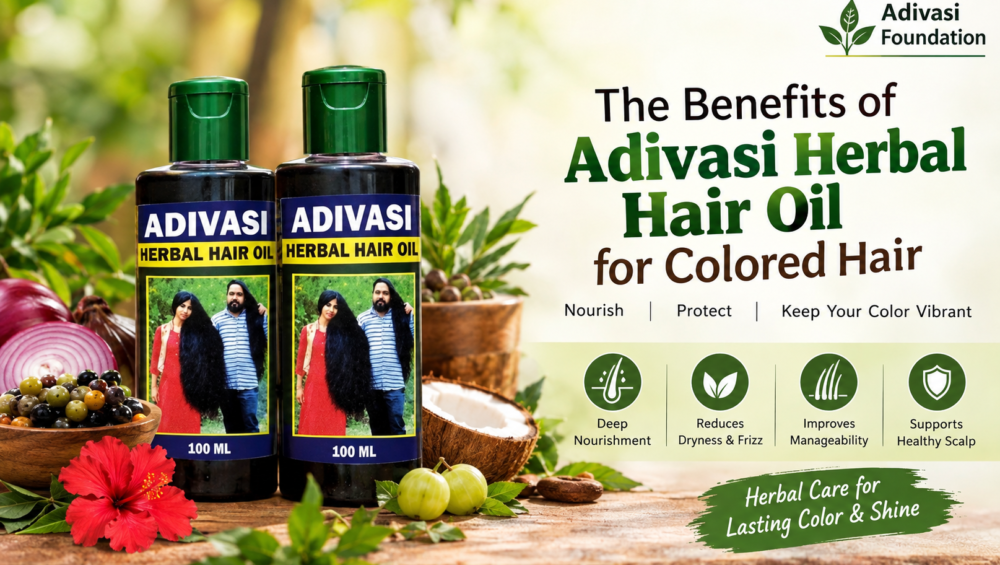
Adivasi Herbal Hair Oil can be incorporated into a hair-care routine for people who want an herbal approach to routine nourishment. Its value for colored hair is best considered in terms of hair feel, moisture support, scalp care, and manageability rather than as a product that can reverse chemical damage.
1. Helps Improve Hair Softness
Colored hair can sometimes feel rough because the cuticle becomes less smooth after chemical processing. Applying a suitable hair oil before washing may help coat the strands and reduce the dry, coarse sensation.
Regular oiling can make the hair feel softer and more comfortable to comb, especially when the lengths and ends are particularly dry.
2. Supports Dry and Frizzy Hair
Dryness is one of the most common complaints among people with treated hair. Oil can help reduce the sensation of dryness by providing lubrication to the hair surface.
For people dealing with frizz, a small amount applied to the lengths may also improve the appearance of stray strands. The amount matters. Excessive oil can make colored hair look heavy or greasy and may require stronger cleansing.
3. May Help With Hair Manageability
Colored hair often becomes harder to detangle when it is dry. Rough strands create more friction, which can lead to pulling and breakage during brushing.
Hair oil can provide slip, making it easier to detangle the lengths gently. This can be especially useful before shampooing or when preparing hair for styling.
A wide-tooth comb and gentle handling should still be used. Oil works best as one part of a low-friction hair routine.
4. Supports a Nourished-Feeling Scalp
A healthy-feeling scalp is an important part of overall hair care. People experiencing dryness or tightness may appreciate the comforting feel of an herbal oil massage.
Applying oil with a gentle massage can also turn hair care into a relaxing self-care practice. However, people with a sensitive scalp, dandruff, or a scalp condition should choose products carefully and stop use if irritation develops.
5. Complements an Herbal Hair-Care Routine
Those who prefer traditional plant-based approaches may choose Adivasi Herbal Hair Oil as part of their regular regimen.
Herbal hair oils are often valued for their traditional use and sensory qualities, including the experience of massage, the richness of the oil, and the feeling of nourishment after application. Results can differ from person to person, so it is sensible to focus on realistic cosmetic benefits rather than expecting dramatic repair.
Can You Use Ayurvedic Hair Oil on Colored Hair?
Yes, Ayurvedic Hair Oil can be included in a routine for colored hair, but the way it is used matters.
Freshly colored hair may need a little time before washing, depending on the coloring service and the instructions provided by your stylist or color brand. Once you begin your normal maintenance routine, oiling can be used before shampooing when it suits your hair type.
People with dry or thick hair may prefer more frequent oiling, while those with fine or oily hair may need less product. Start with a small amount and adjust based on how your hair responds.
It is also important to remember that hair oil does not automatically prevent color fading. Water temperature, cleansing frequency, sunlight, heat styling, and the type of dye used can all influence how long a color remains vibrant.
How to Use Adivasi Herbal Hair Oil for Colored Hair
A practical routine can be simple.
Step 1: Choose the Right Time
Pre-shampoo application is often a convenient choice. Apply the oil to the scalp and hair lengths according to your comfort and hair needs.
Step 2: Massage Gently
Use your fingertips rather than scratching with your nails. Gentle circular movements can spread the oil while providing a relaxing scalp massage.
Step 3: Pay Attention to the Ends
The ends of colored hair are often the driest part of the strand. Use a little extra oil on the mid-lengths and ends when they feel rough or tangled.
Step 4: Leave It for a Suitable Period
There is no universal need to leave oil on the hair overnight. A shorter pre-wash period may be enough for many people. Those with sensitive scalps should avoid leaving products on for long periods if they notice discomfort.
Step 5: Shampoo Gently
Use a mild shampoo suited to color-treated hair. Avoid very hot water because it can leave hair feeling drier.
Step 6: Condition the Lengths
Conditioner remains important even when oil is part of the routine. Apply conditioner mainly to the mid-lengths and ends, then rinse thoroughly.
Does Hair Oil Cause Colored Hair to Fade?
Hair oil itself is not necessarily the main reason for color fading. However, frequent washing, hot water, harsh cleansing products, sun exposure, and repeated heat styling can contribute to faster loss of vibrancy.
Some oils can also affect the look or longevity of certain temporary color products, so people with fashion shades or freshly applied color should follow the instructions supplied with their specific dye or salon service.
For better color maintenance, consider a combination of gentle cleansing, conditioner, reduced heat exposure, and suitable hair products.
Why Scalp Care Matters After Hair Coloring
Color-treated hair gets most of the attention, but scalp care deserves equal consideration. Some coloring services may leave the scalp feeling dry or sensitive, particularly when strong chemical processes are involved.
An herbal oil can be soothing for some users, but it should not be applied over irritated or broken skin. A patch test is a sensible precaution when trying a new product, especially for people who know they have sensitive skin.
If itching, redness, swelling, burning, or persistent flaking occurs, discontinue use and seek appropriate professional advice.
Adivasi Herbal Hair Oil vs. Regular Hair Oil
The biggest difference may come from the ingredient approach and the user’s preference.
Adivasi Herbal Hair Oil may appeal to consumers who prefer herbal formulations and traditional hair-care practices. A conventional hair oil may focus more heavily on cosmetic conditioning, lightweight texture, or specific modern ingredients.
Neither approach needs to replace the other. What matters is whether the oil fits the person’s hair texture, scalp condition, styling habits, and color maintenance routine.
For colored hair, a good oil should leave the hair manageable without creating excessive buildup or requiring aggressive washing afterward.
Tips for Keeping Colored Hair Healthy-Looking
Using oil regularly can be helpful, but colored hair generally benefits from a broader routine.
Limit unnecessary heat styling and use a heat-protective product whenever heated tools are used. Avoid brushing aggressively when the hair is wet. Trim damaged ends when necessary rather than trying to hide severe splitting with products.
Washing frequency should also suit your scalp rather than following a fixed schedule. A person with a dry scalp may wash less often, while someone with an oily scalp may require more frequent cleansing.
Protecting hair from prolonged direct sunlight can also be useful, especially for bright or fashion colors that are more noticeable when they lose intensity.
Another important factor is the quality of the coloring service. Excessive bleaching or repeated chemical processing can place more stress on the hair fiber. Giving the hair adequate time between major chemical services may help maintain better manageability.
Who May Benefit From Adivasi Herbal Hair Oil?
Adivasi Herbal Hair Oil may be suitable for people who:
- Have colored or chemically treated hair
- Experience dryness or rough texture
- Prefer herbal hair-care products
- Want a pre-shampoo oiling routine
- Need help improving hair manageability
- Enjoy scalp massage as part of self-care
People with very fine hair may need only a small amount to avoid heaviness. Those with oily scalps may prefer applying the oil mainly to the lengths and ends instead of concentrating it heavily on the scalp.
Who Should Be More Careful?
Not every hair or scalp reacts in the same way to an oil. People with known ingredient sensitivities should review the product label carefully.
Anyone experiencing unexplained hair loss, significant scalp inflammation, persistent dandruff, or painful scalp symptoms should not rely only on cosmetic hair products. A qualified dermatologist or hair professional can help identify the underlying concern.
It is also wise to perform a patch test before full application when using a new formulation.
Why Consistency Matters More Than Quantity
Using a large quantity of oil does not necessarily produce better results. In many cases, a moderate amount applied consistently is easier to wash out and less likely to weigh down colored hair.
The goal is not to saturate the hair every time. The goal is to support a comfortable, manageable routine that works alongside shampoo, conditioner, styling products, and professional color maintenance.
For Adivasi Foundation, the focus should remain on making herbal hair care practical and easy to fit into everyday routines. Consumers are more likely to benefit from products they can use consistently and correctly.
Final Thoughts
Colored hair needs care that balances nourishment with gentle maintenance. Adivasi Herbal Hair Oil can be a useful addition for people seeking an herbal-based approach to softness, scalp comfort, manageability, and pre-shampoo conditioning.
It should not be viewed as a cure for chemical damage or a guarantee against color fading. Instead, it can complement a sensible regimen that includes suitable shampoo, regular conditioning, limited heat exposure, gentle detangling, and careful color maintenance.
Choosing the right product is only one part of the process. The way it is applied, the amount used, the frequency of washing, and the overall condition of the scalp and hair all influence the final experience.
For individuals who enjoy traditional herbal hair care and want to maintain colored hair with a gentle routine, Adivasi Herbal Hair Oil may be worth considering as part of a balanced approach from Adivasi Foundation.
Frequently Asked Questions
Does Adivasi Herbal Hair Oil help prevent hair color from fading?
Hair oil should not be considered a guaranteed color-protection product. Color longevity is influenced by washing frequency, water temperature, heat styling, sunlight, and the type of coloring used. Use a color-friendly shampoo and conditioner alongside your oiling routine.
How often should I use Adivasi Herbal Hair Oil on colored hair?
The ideal frequency depends on hair texture and scalp needs. Dry or coarse hair may benefit from more regular use, while fine or oily hair may need less. Starting once a week and adjusting based on how your hair feels can be a practical approach.
Is Ayurvedic Hair Oil suitable for dry and frizzy colored hair?
Ayurvedic Hair Oil can be a useful option for people seeking additional lubrication and softness for dry, frizzy strands. For the best results, combine oiling with gentle cleansing, regular conditioning, minimal heat exposure, and careful detangling.