
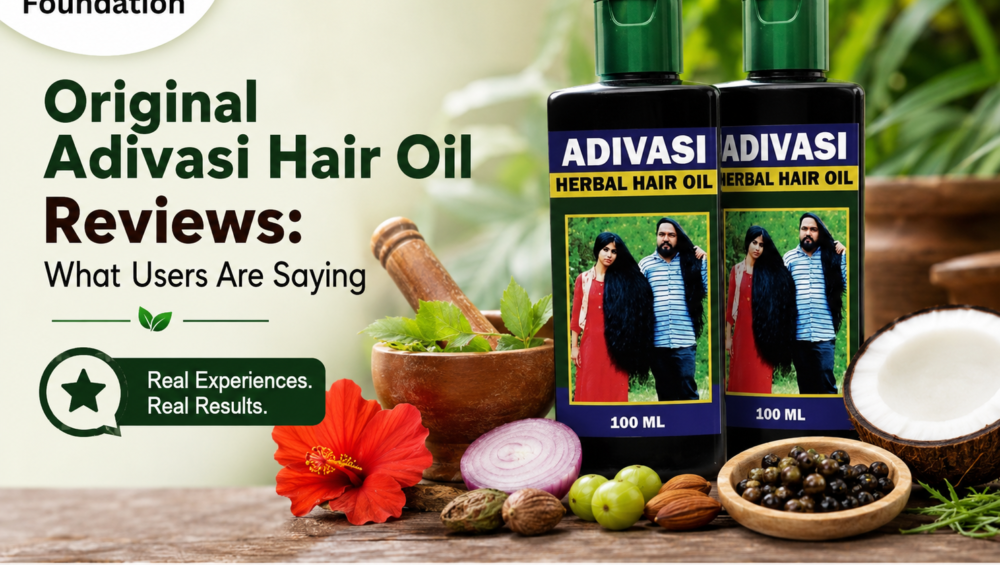
Hair oil has remained an important part of Indian hair-care routines for generations. As interest in herbal and traditional formulations grows, Adivasi hair oil has attracted considerable attention among people seeking plant-based options for scalp and hair care. Original Adivasi Hair Oil Reviews commonly focus on hair fall, dryness, scalp comfort, softness, shine, thickness, application, fragrance, and the time required to notice changes. However, individual feedback varies considerably, making it important to look at recurring themes rather than isolated claims.
Why Are People Talking About Original Adivasi Hair Oil?
Interest in Adivasi hair oil has grown through social media videos, customer testimonials, online discussions, influencer content, and increased consumer interest in traditional hair-care practices.
The term “Adivasi hair oil” is used for products marketed as being inspired by traditional herbal knowledge and preparations associated with tribal communities. Different sellers may offer significantly different formulations, ingredients, manufacturing processes, packaging, and quality standards. Therefore, consumers should not assume that every product sold under the Adivasi name is identical.
Public feedback is also mixed. Some product websites display highly positive customer testimonials, while independent discussions and media coverage include more sceptical experiences. India Today, for example, reported that strong hair-regrowth claims associated with various Adivasi oils lack adequate scientific evidence and should be treated cautiously.
For consumers, this difference makes careful product selection especially important.
What Do Users Commonly Mention in Their Reviews?
When people share their experiences with herbal hair oils, they often evaluate much more than hair growth. Reviews tend to focus on how the hair feels, whether breakage appears reduced, how manageable the hair becomes, scalp comfort, fragrance and overall ease of use.
Customer testimonials published across sellers of Adivasi-style oils frequently mention perceived improvements in softness, shine, thickness and hair fall. However, these testimonials represent individual experiences rather than controlled scientific evidence, and results cannot automatically be expected for every person.
Here are some of the most frequently discussed areas.
1. Hair Fall Is a Major Topic in User Feedback
Hair fall is one of the main reasons consumers search for herbal hair oils.
Some users report noticing less hair shedding after incorporating oiling into their regular routines. Several customer testimonials available online specifically mention perceived reductions in hair fall after weeks of use.
Such feedback needs context.
Hair shedding can occur for many reasons, including nutritional deficiencies, stress, hormonal changes, genetics, scalp disorders, illness, medications, styling habits and physical damage. A cosmetic hair oil cannot necessarily address the underlying cause.
Oiling may help lubricate hair fibres and reduce friction or breakage in some people. Someone noticing fewer broken strands may consequently feel that overall hair fall has decreased.
Persistent, sudden or severe hair loss deserves professional medical assessment rather than reliance solely on cosmetic products.
2. Users Often Mention Softer Hair
Softness appears repeatedly in positive customer feedback.
Regular oiling can coat and lubricate the hair shaft, which may make dry or rough hair feel smoother. People with long, curly, coarse, chemically treated or naturally dry hair may particularly notice this conditioning effect.
Some online testimonials for Adivasi-style products describe hair as smoother or softer after regular application.
This type of benefit is easier to evaluate personally than dramatic growth claims. Consumers can observe whether their hair becomes easier to comb, feels less rough or appears better conditioned after washing.
A good review should therefore distinguish between improved hair appearance and actual changes in follicular hair growth.
3. Shine and Overall Appearance Receive Positive Attention
Healthy-looking shine is another recurring theme.
Hair oils can create a smoother surface and reduce the dull appearance associated with dryness. This may make strands look shinier and more polished.
Some users describe their hair as more lustrous after using herbal oils regularly. Such cosmetic changes do not necessarily indicate faster hair growth, but they can still improve the overall appearance of the hair.
People evaluating an oil should consider practical questions:
Does the hair look healthier after washing?
Does it appear less dry?
Does it feel smoother?
Is it easier to style?
These observations can provide a more realistic assessment of an oil’s cosmetic performance.
4. Hair Growth Reviews Require Careful Interpretation
Hair growth receives perhaps the greatest attention because it is also one of the strongest claims associated with Adivasi hair oils.
Some customer reviews claim that their hair appeared longer, thicker or fuller after regular use. Others mention noticing small new hairs around the scalp or hairline. Similar testimonials appear across several online sellers.
However, testimonials cannot prove that an oil directly caused new hair growth.
Hair naturally follows a growth cycle, and changes in length require time. Genetics, nutrition, age, hormones, health conditions and hair-care practices can influence visible growth and retention.
Consumers should therefore remain cautious about promises suggesting that an oil can rapidly regrow hair, reverse baldness or restore substantial areas of hair loss.
Experts interviewed by India Today questioned dramatic regrowth claims and noted the lack of sufficient scientific evidence supporting such promises.
5. Thickness Can Mean Different Things to Different Users
Another frequently mentioned benefit is thicker-looking hair.
The meaning of “thicker” varies considerably in customer feedback. One person may mean individual strands feel stronger. Another may mean the hair appears fuller because breakage has decreased. Someone else may believe actual density has increased.
Oil can temporarily coat strands, which may change their feel and appearance. Better conditioning may also reduce breakage, allowing hair to retain length and look fuller over time.
True changes in follicular density are different and should not automatically be inferred from cosmetic improvements.
Consumers reading reviews should therefore look for specific descriptions instead of relying solely on broad phrases such as “my hair became thick.”
6. Scalp Dryness and Comfort Matter
Many people purchase hair oil because their scalp feels dry, tight or uncomfortable.
Massage combined with an appropriate oil may make a dry scalp feel conditioned. Users sometimes describe their scalp as feeling more comfortable after establishing a regular oiling routine.
However, more oil does not always mean better scalp health.
People with dandruff, seborrhoeic dermatitis, scalp acne, psoriasis or other conditions may react differently. India Today cited a dermatologist warning that excessive oiling may aggravate dandruff in some situations.
Anyone experiencing persistent itching, redness, scaling, pain or irritation should consider seeking professional advice rather than continually increasing oil application.
7. Fragrance Can Divide User Opinion
Fragrance is highly subjective.
A strong herbal aroma may reassure some consumers because they associate it with traditional ingredients. Others may find an intense smell inconvenient, particularly when leaving the oil on overnight.
Reviews should therefore describe fragrance separately from effectiveness.
A strong herbal smell does not prove that a product contains a particular concentration of herbs, just as a mild fragrance does not automatically indicate poor quality.
People sensitive to fragrances should check the ingredient information before application and perform a patch test when appropriate.
8. Texture and Greasiness Affect the Experience
The texture of hair oil influences how consistently people use it.
Some users prefer richer oils because they associate them with deep conditioning. Others want lighter formulations that spread quickly and wash out easily.
Positive reviews sometimes mention oils feeling relatively light or manageable, while individual experiences vary according to hair density, scalp type and the amount applied.
Applying excessive quantities can make even a suitable oil difficult to remove.
Consumers may get a better impression by beginning with a moderate amount, massaging it gently through the scalp and adjusting the quantity according to hair length and density.
9. Results Depend on Consistent Use
Hair care rarely produces meaningful changes after one application.
Many reviewers who report positive experiences describe using their chosen oil regularly for several weeks or months. This does not establish that the oil caused every reported change, but it highlights an important point: hair appearance and condition should be evaluated over a reasonable period.
Taking photographs under similar lighting can help consumers compare changes more objectively.
People can also track shedding, breakage, scalp comfort, softness and manageability instead of relying on memory alone.
Consistency matters, but unrealistic expectations should not encourage excessive application.
10. Why Do Some Users Report Different Results?
No hair-care product produces identical results for everyone.
Two people can use the same oil in the same way and form completely different opinions because their starting conditions differ.
Important variables include:
- Hair texture and porosity
- Scalp condition
- Frequency of washing
- Existing hair damage
- Chemical treatments
- Heat styling
- Diet and nutritional status
- Stress levels
- Hormonal factors
- Genetics
- Medical conditions
- Application quantity
- Product authenticity
- Duration of use
These variables explain why personal reviews should inform purchasing decisions without becoming guarantees.
Positive Reviews: What Patterns Appear Most Often?
Across customer testimonials, several positive themes appear repeatedly.
Users commonly mention softer hair, improved shine, reduced roughness, easier manageability and perceived reductions in hair fall. Some reviewers also report thicker-looking hair or visible growth after extended use.
These comments indicate what consumers value from herbal hair oils.
However, the strongest testimonials should still be interpreted carefully. Statements about reversing baldness, rapidly producing new follicles or permanently changing grey hair require substantially stronger evidence than ordinary cosmetic claims about softness and shine.
A balanced evaluation separates plausible conditioning benefits from extraordinary promises.
Negative Reviews and Consumer Concerns
Not every experience is positive.
Marketplace feedback shows that Adivasi-labelled products can receive both favourable and unfavourable ratings. Some complaints relate to the product itself, while others concern quantity, authenticity or fulfilment.
Independent online discussions have also questioned aggressive marketing surrounding some Adivasi hair oils, particularly where promotional content appears similar across multiple sellers.
This reinforces an important purchasing principle: evaluate the specific manufacturer and product rather than assuming every bottle carrying the term “Adivasi” comes from one source.
The Importance of Buying an Authentic Product
Popularity inevitably creates opportunities for imitation and confusingly similar products.
Consumers searching for Adivasi hair oil may encounter numerous websites, labels, bottle designs and formulations claiming originality. This makes authenticity an important part of the review conversation.
Before purchasing, check the manufacturer’s identity, ingredient declaration, batch information, manufacturing details, expiry or best-before information, customer-support details and applicable regulatory information on the packaging.
Adivasi Foundation encourages consumers to make informed choices rather than relying solely on viral videos, dramatic before-and-after photographs or extraordinary promises.
How Should You Read Online Hair Oil Reviews?
A useful review usually contains specific information.
Look for reviewers who explain how long they used the oil, how frequently they applied it, what their original concern was and exactly what changed.
Be cautious when a review promises dramatic transformation within an unusually short period.
Also distinguish between seller-hosted testimonials and independent customer feedback. Seller websites can help reveal common customer experiences, but they should not serve as the sole basis for evaluating effectiveness.
Independent reporting, ingredient information and professional medical advice can provide valuable additional context.
Setting Realistic Expectations
Traditional hair oil can form part of a sensible hair-care routine, but realistic expectations remain essential.
Hair oil may support conditioning, lubrication, softness, shine and manageability. Regular scalp massage can also make oiling a relaxing personal-care practice.
That does not mean every hair concern has a cosmetic solution.
Significant thinning, bald patches, sudden shedding or persistent scalp problems may require assessment by a dermatologist or qualified healthcare professional.
Consumers should be particularly sceptical of guaranteed timelines and promises of permanent hair regrowth.
How to Evaluate Your Own Experience
Instead of asking only whether the oil “works,” define what success means for your hair.
For example, evaluate whether your hair feels less dry, breaks less during combing, looks shinier, feels easier to manage or leaves your scalp comfortable.
Record the condition before starting and reassess after several weeks.
Change only a limited number of products at once. If someone starts a new oil, shampoo, conditioner, supplement and diet simultaneously, identifying which factor caused a change becomes difficult.
Personal observation becomes more useful when the routine remains relatively consistent.
Final Thoughts
Original Adivasi Hair Oil Reviews show why consumer experiences need balanced interpretation. Many users describe improvements in softness, shine, manageability, thickness or perceived hair fall, while others remain sceptical about dramatic growth claims. Online feedback also varies substantially between sellers and marketplaces.
Adivasi Foundation believes informed hair care starts with realistic expectations, careful product selection and consistent use. Treat reviews as individual experiences rather than guarantees, check authenticity and ingredient information carefully, and seek professional advice when hair loss or scalp problems persist.
FAQs
How long should Adivasi hair oil be used before evaluating it?
Hair condition should generally be evaluated over several weeks rather than after one or two applications. Users can monitor softness, breakage, shedding, scalp comfort and manageability. Hair grows gradually, so claims promising dramatic length or regrowth within an extremely short period deserve caution.
Can Original Adivasi Hair Oil regrow hair on bald areas?
Customer testimonials sometimes report visible new hair, but personal reviews do not establish clinical effectiveness. Baldness and significant thinning can have genetic, hormonal, nutritional or medical causes. No cosmetic oil should automatically be considered a proven treatment for baldness. A dermatologist can assess persistent or progressive hair loss.
How can buyers choose an original Adivasi hair oil?
Check the manufacturer's details, ingredient declaration, batch information, manufacturing and expiry information, packaging quality and applicable regulatory information. Purchase through a traceable source and avoid relying entirely on influencer promotions or dramatic before-and-after photographs. Products marketed under similar Adivasi names may have different formulations and manufacturers.