Healthy hair is often a reflection of consistent care, balanced nutrition, and a well-maintained scalp. While genetics play a role in hair texture and growth patterns, daily habits can significantly influence hair strength, shine, and resilience. People searching for natural methods often prefer solutions that work with the body’s natural processes instead of relying on harsh chemical treatments.
Hair requires proper nourishment from both inside and outside. A healthy lifestyle, mindful hair care, and natural ingredients can help reduce breakage, improve scalp health, and create favorable conditions for healthy hair growth. Choosing quality products, maintaining good hygiene, and protecting hair from unnecessary damage all contribute to long-term results.
Adivasi Foundation believes that natural hair care starts with simple, consistent practices supported by traditional ingredients that have been valued for generations. When combined with a healthy routine, products such as Adivasi Hair Oil can become part of an effective hair care regimen.
Why Healthy Hair Growth Depends on Overall Wellness
Hair grows from follicles beneath the scalp. These follicles require nutrients, oxygen, and proper circulation to produce healthy strands. Factors that may affect hair health include:
- Nutritional deficiencies
- Stress
- Hormonal fluctuations
- Poor scalp hygiene
- Excessive heat styling
- Chemical treatments
- Environmental pollution
- Lack of proper hydration
Focusing on overall wellness often provides better long-term support for hair health than relying solely on cosmetic treatments.
Maintain a Clean and Healthy Scalp
A healthy scalp creates the ideal environment for hair follicles to function properly. Dirt, sweat, excess oil, and product buildup can clog follicles and affect scalp comfort.
Simple scalp care includes:
- Washing hair according to your scalp type
- Using mild cleansers
- Massaging the scalp gently while washing
- Avoiding harsh scratching
- Keeping the scalp free from excessive buildup
Regular cleansing also helps natural oils distribute evenly through the hair, improving softness and shine.
Nourish Hair with Natural Oils
Natural oils have been used across different cultures for centuries as part of regular hair care routines. They help moisturize the scalp, reduce dryness, and improve hair manageability.
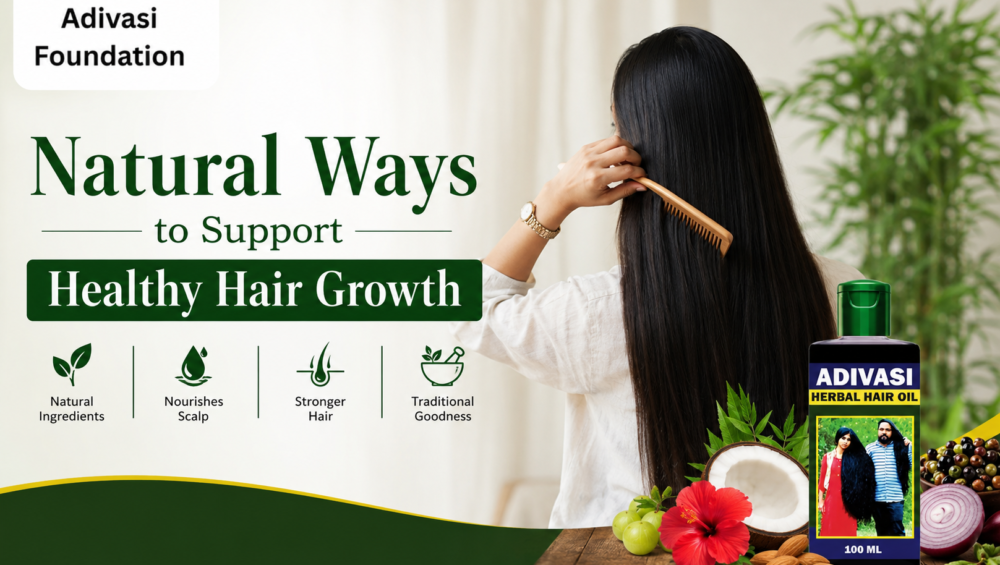
Many people include Adivasi Hair Oil in their routine because it contains traditional herbal ingredients selected to support healthy-looking hair. Gentle scalp massage with oil may also improve relaxation while helping distribute nourishment evenly across the scalp.
For best results:
- Warm the oil slightly before application.
- Massage gently using fingertips.
- Leave it on for several hours or overnight if suitable.
- Wash with a mild shampoo.
Consistency often produces better outcomes than occasional use.
Eat a Balanced Diet
Hair is primarily made of protein, making nutrition one of the most important aspects of healthy hair growth.
Include foods rich in:
Protein
Hair requires amino acids to build strong strands.
Examples include:
- Eggs
- Lentils
- Beans
- Fish
- Chicken
- Dairy products
- Soy products
Iron
Iron helps transport oxygen throughout the body, including to hair follicles.
Good sources include:
- Spinach
- Beetroot
- Pumpkin seeds
- Red meat
- Legumes
Zinc
Zinc supports normal tissue growth and repair.
Sources include:
- Nuts
- Seeds
- Chickpeas
- Whole grains
Biotin
Biotin contributes to healthy hair maintenance.
Natural sources include:
- Eggs
- Almonds
- Sweet potatoes
- Mushrooms
Omega-3 Fatty Acids
Healthy fats help nourish the scalp.
Sources include:
- Walnuts
- Flaxseeds
- Chia seeds
- Fatty fish
Stay Properly Hydrated
Water supports numerous bodily functions, including nutrient transport and skin health. Since the scalp is also skin, adequate hydration helps maintain its natural balance.
Drinking sufficient water throughout the day may reduce dryness while supporting healthy body functions associated with hair health.
Reduce Heat Styling
Frequent use of straighteners, curling irons, and blow dryers can weaken hair over time.
To minimize damage:
- Air dry hair whenever possible.
- Use lower heat settings.
- Apply heat protectants.
- Limit styling frequency.
- Avoid repeated exposure to high temperatures.
Healthier strands are generally less prone to breakage.
Avoid Tight Hairstyles
Constant tension placed on the scalp may weaken hair roots.
Consider avoiding prolonged use of:
- Tight ponytails
- Tight braids
- Heavy hair extensions
- Tight buns
Choosing looser hairstyles allows the scalp to remain comfortable while reducing unnecessary strain on follicles.
Massage the Scalp Regularly
Scalp massage remains one of the simplest natural practices for supporting healthy hair care.
Benefits may include:
- Improved blood circulation
- Relaxation
- Better oil distribution
- Reduced scalp tightness
Using Adivasi Hair Oil during massage may further support a nourishing hair care routine.
Even five to ten minutes several times each week can become a beneficial habit.
Protect Hair from Environmental Damage
Daily exposure to sunlight, dust, wind, and pollution can gradually affect hair quality.
Protective measures include:
- Wearing hats outdoors
- Covering hair during excessive sun exposure
- Washing away accumulated pollutants
- Using moisturizing conditioners
- Trimming damaged ends regularly
Healthy protection helps preserve natural shine and softness.
Manage Stress Effectively
Stress may contribute to temporary hair shedding in some individuals.
Natural stress management practices include:
- Walking
- Meditation
- Deep breathing
- Reading
- Regular exercise
- Quality sleep
- Spending time outdoors
Maintaining emotional well-being supports overall body health, including the scalp.
Sleep Well Every Night
Quality sleep allows the body to repair and regenerate tissues.
Adults generally benefit from seven to nine hours of restful sleep each night. Consistent sleep patterns support many biological processes involved in healthy skin and hair maintenance.
Avoid Excessive Chemical Treatments
Frequent coloring, bleaching, rebonding, or chemical straightening may weaken hair structure.
If using chemical treatments:
- Space appointments apart.
- Deep condition regularly.
- Trim damaged sections.
- Use sulfate-free cleansers where appropriate.
- Follow proper aftercare.
Healthier hair often retains moisture and elasticity more effectively.
Choose Gentle Hair Care Products
Hair products vary widely in formulation.
Look for products that:
- Match your scalp type
- Avoid excessive harsh ingredients
- Support moisture balance
- Clean effectively without over-drying
Natural hair care products are increasingly preferred by individuals seeking gentler alternatives.
Trim Hair Regularly
Although trimming does not directly increase hair growth from the scalp, removing split ends helps maintain healthier-looking lengths.
Regular trimming reduces breakage, allowing hair to appear fuller and stronger over time.
Include Herbal Ingredients in Hair Care
Traditional herbs have remained popular for supporting scalp care.
Common ingredients include:
- Aloe vera
- Amla
- Bhringraj
- Hibiscus
- Fenugreek
- Neem
- Brahmi
These ingredients are frequently incorporated into herbal oils and hair masks used in regular routines.
Adivasi Hair Oil combines traditional herbal knowledge with carefully selected ingredients intended to support healthier-looking hair when used consistently.
Do Not Overwash Hair
Washing too frequently may remove natural oils that help protect hair.
The ideal washing schedule depends on:
- Scalp oiliness
- Physical activity
- Weather conditions
- Hair texture
Maintaining a balanced routine helps preserve natural moisture.
Eat More Fresh Fruits and Vegetables
Colorful fruits and vegetables provide vitamins and antioxidants that support overall health.
Examples include:
- Oranges
- Berries
- Carrots
- Tomatoes
- Spinach
- Bell peppers
- Papaya
These foods contribute nutrients that support healthy skin and scalp function.
Avoid Smoking and Limit Alcohol
Lifestyle habits influence overall health.
Smoking reduces circulation, while excessive alcohol intake may contribute to nutritional imbalances. Supporting general wellness often benefits hair quality over time.
Keep Hair Moisturized
Dry hair becomes more susceptible to breakage.
Ways to retain moisture include:
- Applying natural oils
- Using conditioners
- Limiting harsh shampoos
- Avoiding excessive heat
- Protecting hair during extreme weather
Moisturized hair generally appears shinier and smoother.
Exercise Regularly
Physical activity improves circulation throughout the body.
Regular movement supports nutrient delivery and promotes overall health.
Suitable activities include:
- Walking
- Cycling
- Yoga
- Swimming
- Strength training
Consistency matters more than intensity.
Be Patient with Natural Hair Care
Natural routines rarely produce overnight changes.
Hair grows gradually, and improvements often become noticeable after maintaining healthy habits for several months.
Avoid switching products too frequently. Instead, establish a balanced routine that combines:
- Nutritious meals
- Hydration
- Gentle cleansing
- Scalp massage
- Quality sleep
- Stress management
- Regular use of Adivasi Hair Oil
Common Mistakes That Affect Hair Health
Many people unknowingly develop habits that weaken their hair.
Some examples include:
- Aggressive towel drying
- Brushing wet hair roughly
- Skipping conditioner
- Using dirty hairbrushes
- Applying excessive styling products
- Sleeping with tight hairstyles
- Ignoring scalp health
Replacing these habits with gentler practices helps protect hair over time.
Building a Sustainable Hair Care Routine
Consistency often matters more than expensive treatments. A practical routine may include:
Morning
- Eat a protein-rich breakfast.
- Drink enough water.
- Protect hair before stepping outdoors.
Weekly
- Massage the scalp with Adivasi Hair Oil.
- Wash using a mild shampoo.
- Apply conditioner.
- Clean combs and brushes.
Monthly
- Trim split ends if needed.
- Review your hair care products.
- Continue healthy eating and hydration habits.
Following a structured routine encourages healthier-looking hair while reducing unnecessary damage.
Why Natural Hair Care Continues to Gain Attention
Natural hair care focuses on supporting the scalp and hair using gentle practices instead of relying solely on quick cosmetic solutions. Traditional herbal ingredients, balanced nutrition, regular scalp care, and healthy lifestyle habits work together to improve overall hair appearance.
Many individuals choose herbal oils because they fit easily into long-term routines and complement healthy daily habits. Products such as Adivasi Hair Oil become even more effective when paired with proper nutrition, hydration, stress management, and consistent scalp care.
Conclusion
Healthy hair growth begins with daily choices rather than temporary fixes. A balanced diet, proper hydration, regular scalp massage, gentle cleansing, stress management, and protective hair care habits all contribute to stronger, healthier-looking hair over time. Consistency remains the key to achieving lasting results.
Adivasi Foundation encourages a natural approach that combines traditional herbal wisdom with healthy lifestyle practices. Including Adivasi Hair Oil as part of a regular hair care routine, alongside mindful nutrition and scalp care, can help support healthier hair while promoting long-term scalp wellness.
FAQs
How often should I apply Adivasi Hair Oil?
Many people apply Adivasi Hair Oil two to three times a week. Gently massaging it into the scalp and leaving it on for a few hours before washing can become an effective routine.
What foods naturally support healthy hair growth?
Protein-rich foods, leafy vegetables, nuts, seeds, fruits, eggs, legumes, and foods containing iron, zinc, biotin, and omega-3 fatty acids help support healthy hair from within.
How long does it take to notice improvements with natural hair care?
Hair grows gradually, so visible improvements usually require consistent care over several weeks or months. Maintaining a balanced routine with proper nutrition, scalp care, and Adivasi Hair Oil offers the best opportunity for long-term results.