Adivasi hair oil has attracted considerable interest among people seeking traditional, plant-based hair care. Its popularity has also created concerns about imitation, diluted, mislabelled, and unauthorised products. Buyers must therefore examine more than attractive packaging or promotional claims before making a purchase. Checking the seller, label, ingredients, batch details, seal, price, and contact information can help reduce the risk of receiving a questionable product. A careful assessment also protects the scalp from poorly formulated or unidentified substances.
Why Product Authenticity Matters
Hair oil comes into direct contact with the scalp and may remain there for several hours. A genuine, properly labelled product should give buyers sufficient information about its ingredients, manufacturer, quantity, batch, usage, and storage. An imitation may omit these details or present misleading information.
An unverified product may contain low-quality oils, artificial fragrance, colourants, mineral oil, or ingredients that do not match its label. Poor storage and unhygienic filling can also affect product safety. Buyers may experience itching, redness, excessive dryness, scalp irritation, or an unpleasant residue after using an unsuitable formulation.
Authenticity also matters because customers deserve to receive the product they selected and paid for. Misleading sellers sometimes copy product names, bottle shapes, label colours, photographs, and promotional language. A product may appear genuine in an online image but arrive with different packaging or unclear information.
No single visual sign can confirm authenticity in every case. Buyers should assess several details together and contact the stated brand or manufacturer whenever doubts remain.
Check the Seller Before Checking the Bottle
The first authenticity check should begin before placing an order. Buyers should assess the seller, sales channel, product listing, and available contact details.
Purchase from the official website, an authorised seller, or a recognised marketplace account linked to the brand. A seller should provide a clear business name, customer-care information, return policy, delivery terms, and product details. Be cautious when a seller communicates only through an unverified social media profile or requests payment without issuing an order confirmation.
Check whether the seller uses consistent names, addresses, phone numbers, and email details across its website and social profiles. Frequent spelling changes, incomplete addresses, inactive phone numbers, and copied descriptions may indicate an unreliable operation.
Marketplace ratings can offer useful clues, but ratings alone cannot confirm authenticity. Read recent customer comments and look for repeated concerns involving broken seals, different labels, missing invoices, unusual fragrance, leakage, or inconsistent texture. Pay attention to reviews with customer photographs because they may reveal differences between the advertised and delivered items.
Compare the Product With Official Information
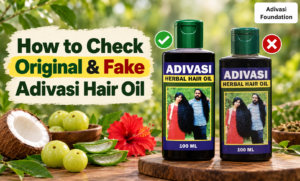
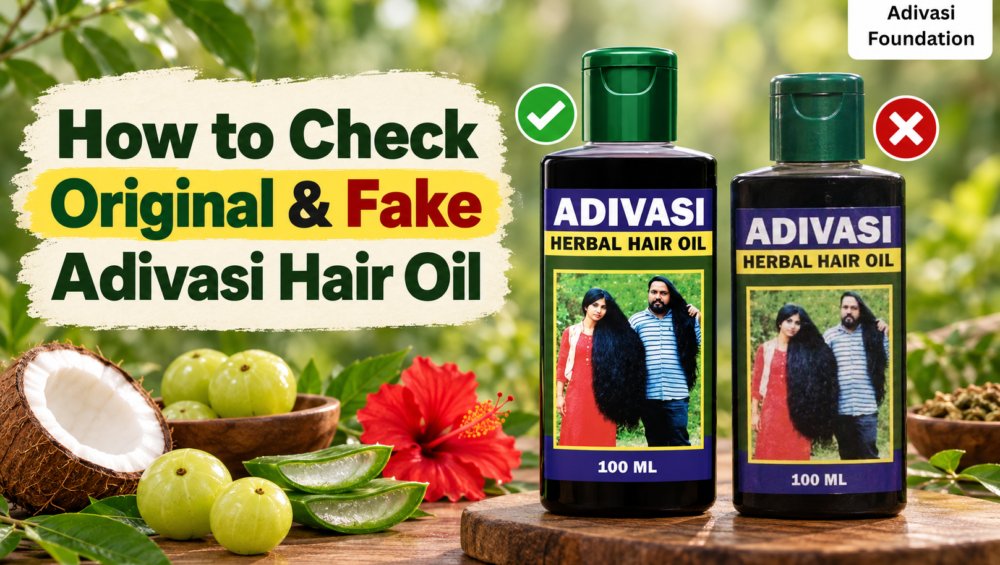
Before opening the bottle, compare it with the images and product information published through Adivasi Foundation’s authorised channels. Check the bottle shape, cap, label placement, colour scheme, printed information, quantity, and outer packaging, if applicable.
Packaging can change because of design updates, legal requirements, or supply decisions. A different label does not automatically make a product fake. However, major differences deserve verification, especially when the seller cannot explain them.
Buyers should compare the actual bottle with current official images rather than old photographs shared by unrelated websites. If the brand has announced a packaging update, examine the details of that update before reaching a conclusion.
Inspect the Seal and Closure
A secure seal helps indicate whether someone has opened, refilled, or tampered with the bottle. Examine the outer wrapping, cap, inner plug, induction seal, shrink band, or protective covering supplied with the product.
Look for signs such as:
- A loose or damaged cap
- Torn plastic wrapping
- Glue marks around the closure
- Oil around the bottle neck
- A seal that appears lifted and replaced
- Scratches near the cap
- Leakage inside the parcel
- An inner plug that does not fit properly
Transport can occasionally damage a package, so leakage does not prove counterfeiting by itself. Still, customers should avoid using a bottle if the seal appears deliberately broken or the contents look contaminated. Photograph the parcel and packaging immediately, then contact the seller for clarification or replacement.
Read Every Detail on the Label
A responsible label should help customers identify what they have purchased. Read the front and back rather than relying on the product name alone.
Check for:
- Product name
- Net quantity
- Ingredient information
- Manufacturer or marketer details
- Customer-care details
- Batch or lot number
- Manufacturing or packing date
- Use-before or expiry information, where applicable
- Maximum retail price
- Directions for use
- Storage instructions
- Relevant warnings
- Required licence or registration details, where applicable
Poor-quality printing, blurry text, uneven spacing, spelling mistakes, missing information, or labels placed over older labels may raise concern. Counterfeiters may reproduce colours and logos but often make errors in smaller text.
Customers should also check whether the manufacturer’s address appears complete and readable. A vague location or missing contact channel makes verification difficult. If the bottle displays a customer-care number, buyers can contact it and ask whether the batch details match the brand’s records.
Verify the Batch Number
The batch number connects a product to a particular production cycle. It supports identification, quality control, stock tracking, and complaint handling.
Check whether the batch number appears printed clearly on the bottle or outer box. It should not look casually handwritten, partially erased, or pasted over another number. If both the box and bottle display batch information, compare them.
A batch number alone does not establish authenticity because an imitator may copy one from genuine packaging. Verification becomes stronger when the brand confirms that the number follows its format and corresponds with the stated manufacturing information.
When contacting customer support, share photographs of the front label, back label, cap, seal, batch code, invoice, and seller details. Clear photographs allow the support team to assess the product more accurately.
Examine the Manufacturing and Pricing Information
Check whether the manufacturing date, use-before details, quantity, and maximum retail price appear clearly. The information should look consistent and professionally printed.
Be cautious if the price sticker covers important details or appears to conceal an earlier label. A seller should not charge above the printed maximum retail price. At the same time, an extremely low offer may indicate old, damaged, diluted, diverted, or imitation stock.
Discounts do not always mean a product is fake. Brands and authorised sellers may run legitimate promotions. Evaluate the discount alongside the seller’s identity, invoice, seal, batch information, and return policy.
Review the Ingredient List Carefully
The ingredient list helps buyers determine what the formula contains. Traditional hair oils may use a base oil infused or blended with herbs and botanical ingredients. Formulas vary, so customers should refer to the label rather than assume that every Adivasi oil contains the same ingredients.
Question products that make dramatic claims but provide no meaningful ingredient information. Expressions such as “secret formula” should not replace essential labelling details. Consumers need enough information to avoid known allergens and make an informed choice.
Ingredient order, naming style, and label format may differ between products. However, unexplained inconsistencies between the online listing and delivered bottle deserve attention. Ask the seller or brand why the lists differ before applying the oil.
Observe Colour, Texture, and Fragrance
Colour, texture, and fragrance can provide supporting clues, but they cannot independently prove whether an oil is genuine.
Natural ingredients may produce slight variations between batches. Temperature can also change an oil’s thickness. Coconut-based oils, for example, may become cloudy or solidify in cooler conditions. Botanical particles or sediment may occur in certain traditional preparations, depending on filtration and formulation.
Warning signs may include:
- An overpowering chemical fragrance
- Unexpected separation that does not resolve
- Visible mould
- Rancid or sour odour
- Unusual foam
- Foreign particles
- A watery consistency inconsistent with the stated formula
- A burning sensation immediately after application
Do not rely on social media demonstrations that claim an oil must have one exact colour or thickness. Manufacturers can alter colour and fragrance, and counterfeit products can imitate both. Use sensory observations only as part of a wider assessment.
Check the Invoice and Order Record
A proper invoice creates a traceable purchase record. It should show the seller’s name, product description, quantity, price, date, order number, and relevant tax details.
Save the invoice, payment receipt, courier label, order confirmation, and seller conversation until you have inspected and tested the product. These records can support a replacement, refund, marketplace complaint, or brand verification request.
Cash-on-delivery does not guarantee authenticity. Likewise, prepaid payment does not automatically indicate fraud. Seller traceability, secure payment systems, written terms, and reliable customer support provide stronger evidence.
Watch for Misleading Advertising Claims
Imitation sellers often use exaggerated promises to create urgency. They may claim instant hair growth, guaranteed results, permanent reversal of baldness, or identical outcomes for every person. Hair condition depends on genetics, nutrition, hormones, health, styling practices, scalp conditions, medication, and many other factors.
A trustworthy presentation should not rely solely on dramatic before-and-after photographs. Images can be edited, reused, staged, or taken under different lighting. Customer stories may describe individual experiences, but they cannot guarantee the same result for everyone.
Be wary of countdown timers that constantly restart, pressure to pay immediately, or claims that stock will disappear within minutes. Responsible sellers allow buyers to review product details and policies.
Conduct a Patch Test Before Full Application
Even a genuine product may not suit every scalp. Natural ingredients can still cause sensitivity or allergic reactions. A patch test provides a basic precaution before wider use.
Apply a small amount to a limited area of skin according to the product directions. Wait and observe for redness, itching, swelling, burning, or irritation. Do not use the oil across the scalp if a reaction develops.
Stop using any hair oil if it causes persistent discomfort. Seek advice from a qualified medical professional when symptoms become severe, spread, or involve swelling and breathing difficulty. People with existing scalp disorders, allergies, pregnancy-related concerns, or ongoing dermatological treatment should consult an appropriate healthcare professional before use.
A patch test checks personal tolerance; it does not confirm whether the product is genuine.
Common Signs That Require Further Verification
Customers searching for Original & Fake Adivasi Hair Oil comparisons should avoid making a decision from one clue. Several irregularities appearing together create a stronger reason for concern.
Request verification if the product has:
- No batch number
- No manufacturer or marketer address
- No customer-care details
- A damaged or replaced seal
- Multiple spelling mistakes
- Labels placed over old information
- A suspiciously low price
- No invoice
- Different ingredients from the advertised listing
- An unexplained change in bottle size or design
- A seller who refuses to share business details
- Claims that appear medically unrealistic
- A QR code that opens an unrelated or unsafe page
Do not taste, burn, freeze, or mix the oil with chemicals to test it. Such home experiments do not offer reliable authentication and may create safety risks.
How to Report a Suspicious Product
Stop using the product if you suspect tampering, contamination, or mislabelling. Keep the bottle, packaging, invoice, courier label, and payment details. Take clear photographs and record the reason for concern.
Contact the seller first and request an explanation, replacement, or refund. If the response remains unsatisfactory, contact Adivasi Foundation through its authorised customer-care channel and provide the complete evidence.
Customers who purchased through a marketplace can also use its complaint and return system. For serious concerns involving deceptive trade practices or unsafe products, consumers may approach the appropriate consumer protection or regulatory authority.
Avoid publicly accusing a seller without adequate evidence. Packaging variations, transport damage, and storage conditions can create legitimate differences. Verification should rely on documentation and direct confirmation.
Practical Buying Checklist
Before purchasing:
- Use an authorised sales channel.
- Check the seller’s full identity.
- Read recent customer feedback.
- Review the return and refund policy.
- Compare current official product images.
- Avoid unrealistic claims and pressure tactics.
After delivery:
- Record the parcel opening if practical.
- Inspect the seal and cap.
- Check the batch, dates, quantity, and price.
- Read the complete label.
- Compare the bottle with official information.
- Retain the invoice and packaging.
- Contact customer support if anything appears inconsistent.
- Perform a patch test before broader application.
Conclusion
Identifying a genuine hair oil requires more than judging its colour, scent, or thickness. Buyers should verify the seller, compare current packaging, inspect the seal, read the complete label, check batch information, retain the invoice, and question unrealistic claims. When uncertainty remains, direct confirmation from Adivasi Foundation offers a safer approach than relying on online rumours or home experiments. Careful purchasing and patch testing can help protect both consumer rights and scalp health.
Frequently Asked Questions
Does a different colour mean the Adivasi hair oil is fake?
Not necessarily. Natural ingredients, batch variation, storage temperature, filtration, and lighting can affect appearance. Colour alone cannot confirm authenticity. Examine the seal, label, seller, batch details, invoice, fragrance, and ingredients together, then request verification if significant differences remain.
Can a QR code confirm that Adivasi hair oil is original?
A valid QR code may support verification, but it should not act as the only test. Counterfeiters may copy codes or direct buyers to imitation websites. Check the web address carefully and combine the result with seller verification, batch information, packaging inspection, and official customer support.
What should I do if I receive a suspected fake product?
Do not continue using it. Photograph the bottle, seal, label, batch code, parcel, and invoice. Contact the seller and Adivasi Foundation through authorised channels. Request verification, replacement, or a refund. Report unresolved concerns to the marketplace or appropriate consumer authority.