Healthy hair has always been linked to proper nourishment, consistent care, and the use of natural herbs. Across generations, traditional communities have relied on plant-based ingredients to strengthen hair, reduce breakage, and maintain scalp health. These herbal combinations continue to attract people who prefer natural alternatives over products filled with harsh chemicals.
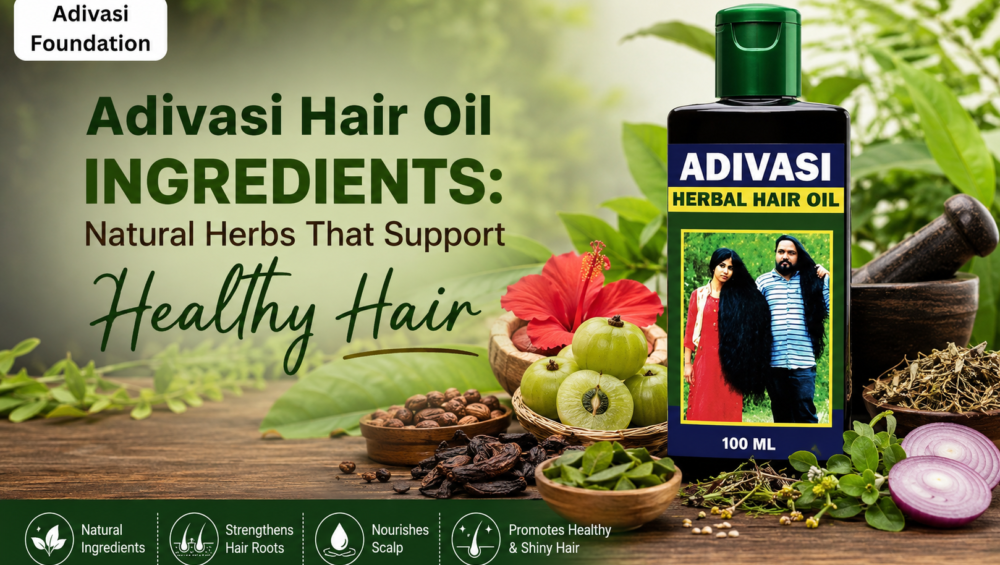
Adivasi Hair Oil combines carefully selected herbs that have been valued for centuries. Every ingredient contributes unique properties that work together to support healthy hair growth, nourish the scalp, and improve overall hair quality. At Adivasi Foundation, the emphasis remains on preserving traditional herbal knowledge while offering a carefully prepared oil suitable for modern lifestyles.
Why Natural Herbal Ingredients Matter for Hair Care
Hair is constantly exposed to pollution, sunlight, dust, heat styling, chemical treatments, and changing weather conditions. These external factors often weaken hair roots, dry out the scalp, and cause premature hair fall.
Natural herbs offer a gentle approach by supplying essential nutrients directly to the scalp. Unlike synthetic formulations that may provide temporary cosmetic effects, herbal ingredients focus on improving scalp health, which forms the foundation for healthier hair.
Regular use of herbal oils may help:
- Nourish hair follicles
- Maintain scalp moisture
- Reduce dryness
- Improve hair texture
- Minimize hair breakage
- Support stronger roots
- Add natural shine
- Encourage healthier hair growth
The effectiveness of any herbal oil depends largely on the quality and balance of its ingredients.
The Philosophy Behind Adivasi Hair Oil
Traditional tribal communities have long relied on medicinal plants for personal care. Their knowledge comes from observing nature and passing herbal practices from one generation to another.
Adivasi Hair Oil follows this traditional philosophy by combining multiple herbs known for supporting scalp wellness. Rather than depending on a single ingredient, the formulation uses complementary herbs that work together for better nourishment.
Each botanical ingredient plays a specific role, whether it is strengthening roots, conditioning hair strands, soothing the scalp, or maintaining natural moisture.
Bhringraj – The Traditional Hair Strengthening Herb
Bhringraj has earned recognition as one of the most respected herbs in traditional hair care.
It is commonly associated with:
- Stronger hair roots
- Reduced hair breakage
- Better scalp nourishment
- Improved hair texture
- Natural hair shine
Its nutrient-rich composition helps nourish hair follicles while supporting healthier-looking hair over time.
Many herbal formulations include Bhringraj because it complements several other medicinal herbs without causing excessive scalp irritation.
Amla – Rich Source of Natural Nutrients
Amla is one of the most widely used fruits in herbal hair preparations.
Its nutritional profile includes:
- Vitamin C
- Antioxidants
- Essential minerals
- Natural plant compounds
These nutrients help support scalp health while improving hair appearance.
Potential benefits include:
- Better scalp nourishment
- Improved hair strength
- Reduced dullness
- Enhanced natural shine
- Support for healthier roots
Its antioxidant properties may also help protect hair from environmental stress.
Brahmi – Supporting Scalp Wellness
Brahmi has traditionally been valued for calming and nourishing the scalp.
Healthy hair begins with a balanced scalp environment, making Brahmi an important herbal ingredient.
Its potential advantages include:
- Improved scalp comfort
- Better moisture balance
- Reduced dryness
- Enhanced hair softness
- Support for healthier follicles
Regular nourishment helps create favorable conditions for stronger hair growth.
Neem – Nature’s Scalp Protector
Neem has been used in herbal remedies for centuries because of its cleansing properties.
It is often included in hair oils because it helps maintain scalp hygiene.
Benefits commonly associated with Neem include:
- Cleaner scalp
- Reduced buildup
- Better scalp freshness
- Balanced oil production
- Improved scalp condition
A healthier scalp creates an environment that supports stronger hair.
Hibiscus – Natural Hair Conditioning
Hibiscus flowers contain natural compounds that help improve hair softness.
Traditionally, Hibiscus has been used for:
- Hair conditioning
- Improved elasticity
- Reduced dryness
- Better manageability
- Enhanced shine
Its moisturizing qualities help reduce roughness, making hair easier to style and less prone to breakage.
Fenugreek – Supporting Hair Thickness
Fenugreek seeds contain proteins, vitamins, and minerals that contribute to healthier-looking hair.
Their nutritional profile supports:
- Hair strength
- Reduced breakage
- Better hair texture
- Improved softness
- Stronger strands
Fenugreek also helps condition dry hair while improving smoothness.
Aloe Vera – Hydration for the Scalp
Proper hydration is essential for maintaining scalp comfort.
Aloe Vera naturally contains moisture-rich compounds that help:
- Hydrate the scalp
- Reduce dryness
- Improve softness
- Maintain scalp balance
- Enhance hair texture
Its soothing nature makes it suitable for regular scalp care.
Curry Leaves – Nutrient-Rich Herbal Support
Curry leaves contain several nutrients beneficial for hair care.
Traditionally they have been associated with:
- Hair nourishment
- Root strengthening
- Better scalp nutrition
- Healthy-looking hair
- Improved natural shine
Their nutrient profile complements other herbs used in herbal oils.
Coconut Oil – A Trusted Carrier Oil
Herbal ingredients require an effective carrier oil for proper absorption.
Coconut oil remains one of the most preferred choices because it:
- Penetrates hair shafts effectively
- Helps retain moisture
- Reduces protein loss
- Improves softness
- Supports smoother hair
Its natural conditioning ability enhances the overall performance of herbal ingredients.
Sesame Oil – Deep Nourishment
Sesame oil has long been used in traditional hair massage therapies.
Its benefits include:
- Deep scalp nourishment
- Better moisture retention
- Improved softness
- Hair conditioning
- Support for healthy roots
It also helps distribute herbal extracts evenly across the scalp.
Castor Oil – Supporting Hair Density
Castor oil is known for its thick consistency and nourishing fatty acids.
Many herbal formulations include it because it helps:
- Strengthen hair strands
- Reduce breakage
- Improve hair texture
- Enhance moisture retention
- Support fuller-looking hair
When blended correctly, castor oil complements lighter oils without making hair excessively greasy.
Licorice – Gentle Herbal Care
Licorice root has traditionally been included in herbal hair preparations for its soothing qualities.
Its role may include:
- Supporting scalp comfort
- Maintaining moisture
- Reducing dryness
- Helping improve scalp condition
Its mild nature works well alongside stronger botanical extracts.
Shikakai – Traditional Hair Cleanser
Although commonly used in herbal cleansers, Shikakai is also valued in hair oils.
It contributes to:
- Hair nourishment
- Better manageability
- Improved softness
- Stronger strands
- Healthy scalp maintenance
Its traditional use reflects centuries of herbal hair care practices.
How Multiple Herbs Work Together
Individual herbs provide valuable nutrients, but combining several botanical ingredients often produces better overall results.
For example:
- Bhringraj supports stronger roots.
- Amla contributes antioxidant nourishment.
- Neem helps maintain scalp cleanliness.
- Hibiscus conditions hair.
- Aloe Vera hydrates the scalp.
- Fenugreek strengthens hair strands.
- Coconut oil improves ingredient absorption.
Together, these ingredients create a balanced herbal formulation designed to address multiple aspects of hair care rather than focusing on a single concern.
Why Consistency Matters
Natural herbal oils generally require regular application for noticeable improvement.
Hair grows gradually, and healthy follicles depend on continuous nourishment.
A consistent routine may include:
- Applying oil two or three times each week
- Massaging the scalp gently
- Allowing sufficient absorption time
- Washing with a mild cleanser
- Maintaining a balanced diet
- Drinking enough water
Patience is important because herbal care works by gradually supporting healthier scalp conditions.
Who Can Use Adivasi Hair Oil?
Adivasi Hair Oil may be suitable for individuals experiencing common hair concerns such as:
- Hair fall
- Dry scalp
- Rough hair texture
- Weak roots
- Dull appearance
- Split ends
- Frizzy hair
- Lack of natural shine
People with different hair types often choose herbal oils because plant-based ingredients focus on nourishment rather than temporary cosmetic coating.
Those with sensitive skin or existing scalp conditions should perform a patch test before regular use or consult a healthcare professional if needed.
Choosing Quality Herbal Hair Oils
Not every herbal oil offers the same level of quality.
When selecting a product, consider:
Ingredient Transparency
Look for clearly listed herbal ingredients.
Traditional Preparation
Products inspired by authentic herbal practices often maintain ingredient balance.
Chemical-Free Formulation
Many users prefer oils with minimal artificial additives.
Quality Manufacturing
Proper preparation helps preserve herbal properties.
Trusted Brand
A company that values authenticity and traditional knowledge often delivers more reliable products.
Adivasi Foundation focuses on combining traditional herbal wisdom with careful preparation to create formulations centered on natural hair nourishment.
Supporting Healthy Hair Beyond Herbal Oil
Hair care extends beyond topical applications.
Healthy habits that complement herbal oil use include:
Balanced Nutrition
Protein, vitamins, iron, and healthy fats contribute to stronger hair.
Proper Hydration
Water supports overall scalp health.
Stress Management
High stress levels may affect normal hair growth cycles.
Gentle Hair Care
Avoid excessive heat styling and harsh chemical treatments whenever possible.
Regular Scalp Massage
Massaging improves circulation while helping distribute herbal oils evenly.
When combined with Adivasi Hair Oil, these habits create a more complete hair care routine.
Common Misconceptions About Herbal Hair Oils
Some people expect immediate transformation after only a few applications.
Natural herbal ingredients generally support gradual improvement by nourishing the scalp over time.
Another misconception is that using more oil automatically produces better results. Moderate application combined with regular use is usually more beneficial than excessive amounts.
Some individuals also believe herbal oils only suit dry hair. In reality, many formulations can be suitable for different hair types when applied appropriately.
Final Thoughts
Healthy hair begins with healthy roots, and natural herbs continue to play an important role in supporting scalp nourishment. Traditional botanical ingredients such as Bhringraj, Amla, Neem, Hibiscus, Brahmi, Aloe Vera, Fenugreek, Curry Leaves, and nourishing carrier oils each contribute unique benefits that work together to improve overall hair quality. Adivasi Hair Oil reflects this traditional approach by combining carefully selected herbal ingredients that support stronger, shinier, and healthier-looking hair through regular use. Adivasi Foundation remains committed to preserving herbal knowledge while offering a natural solution for individuals seeking long-term hair care supported by trusted botanical ingredients.
FAQs
How does Adivasi Hair Oil support healthy hair?
Adivasi Hair Oil helps nourish hair roots, maintain scalp moisture, strengthen hair strands, reduce breakage, improve texture, and promote healthier-looking hair through regular application.
Is Adivasi Hair Oil suitable for all hair types?
Yes. Adivasi Hair Oil is generally suitable for straight, wavy, curly, and coily hair. Individuals with sensitive skin should perform a patch test before regular use.
How often should Adivasi Hair Oil be applied?
For best results, Adivasi Hair Oil can be applied two to three times a week with a gentle scalp massage, allowing sufficient time for the herbal ingredients to nourish the scalp before washing.