
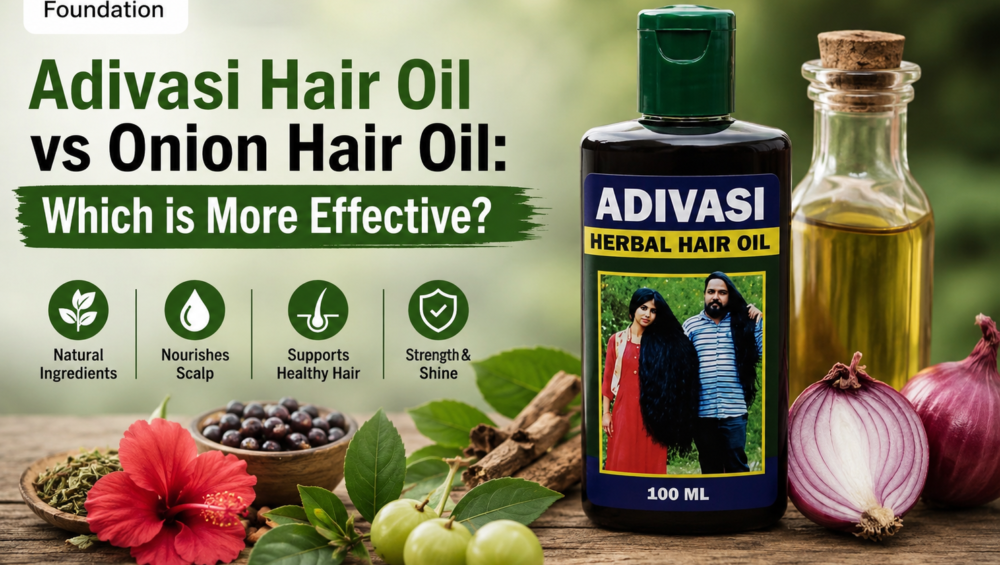
Choosing the right hair oil often comes down to the condition of your scalp, hair texture, lifestyle, and the results you expect from a regular hair-care routine. Adivasi Hair Oil vs Onion Hair Oil is a common comparison because both options have gained attention among people looking for plant-based ways to nourish their hair. While Adivasi Hair Oil is generally associated with a blend of traditional herbs and botanical ingredients, onion hair oil focuses primarily on onion extract combined with a carrier oil and supporting ingredients.
Neither option should be viewed as a universal solution for every hair concern. Hair fall, thinning, dryness, breakage, and scalp discomfort can have many causes. Comparing the formulation, purpose, application experience, and suitability of each oil can help consumers make a more informed choice.
What Is Adivasi Hair Oil?
Adivasi Hair Oil generally refers to herbal hair oil inspired by traditional plant-based hair-care practices. Depending on the formulation, it may combine several herbs, plant extracts, roots, leaves, flowers, or natural oils.
Rather than relying on one hero ingredient, such formulations typically take a multi-ingredient approach to hair and scalp care. The aim is often to provide nourishment, improve manageability, support scalp conditioning, and reduce the appearance of dryness.
The exact ingredients can vary significantly between products. Consumers should therefore read the ingredient list instead of assuming that every oil sold under the Adivasi name contains the same herbal combination.
At Adivasi Foundation, emphasis is placed on helping consumers recognise the importance of product authenticity, ingredient transparency, proper application, and realistic expectations when selecting herbal hair-care products.
What Is Onion Hair Oil?
Onion hair oil is generally made using onion extract, onion seed oil, or onion-derived ingredients mixed with carrier oils such as coconut, sesame, sunflower, almond, or other botanical oils.
Onion contains naturally occurring sulphur compounds and other plant components. This has made onion-based formulations popular in the hair-care category. Commercial onion oils may also include herbs, essential oils, vitamins, or additional botanical extracts to improve their overall formulation.
One important distinction is that bottled onion hair oil is different from applying raw onion juice directly to the scalp. Commercial products are formulated to provide a more practical application experience and may contain ingredients that reduce the strong smell commonly associated with raw onion.
Adivasi Hair Oil vs Onion Hair Oil: The Main Difference
The biggest difference lies in their formulation philosophy.
Adivasi Hair Oil usually relies on multiple herbal ingredients working as part of one formulation. Onion hair oil, in contrast, generally places onion at the centre of the product while using other oils and extracts as supporting ingredients.
This difference matters because consumers may have different priorities.
Someone looking for broad herbal scalp and hair conditioning may prefer a multi-herbal formulation. Someone specifically interested in incorporating onion-based hair care into their routine may naturally lean towards onion hair oil.
Effectiveness should therefore be evaluated according to the user’s hair needs rather than the popularity of either category.
Ingredient Profile
Adivasi Hair Oil
A traditional herbal formulation may contain several botanical ingredients. Depending on the manufacturer and recipe, these can include herbs commonly associated with Indian hair-care traditions.
A multi-herbal ingredient profile can offer a broader conditioning experience because different ingredients contribute different properties to the formulation.
However, more ingredients do not automatically mean better performance. Quality, concentration, extraction methods, base oils, storage, and overall formulation matter just as much.
Consumers should pay attention to the full ingredient declaration and directions for use.
Onion Hair Oil
Onion hair oil typically has a more focused ingredient identity. Onion extract or onion-derived components are usually combined with one or more carrier oils.
Some products also contain ingredients such as curry leaves, black seed, amla, bhringraj, coconut oil, or other botanicals.
The concentration of onion-derived ingredients varies between manufacturers. For that reason, two onion oils may deliver very different application experiences despite carrying the same general product category.
Which Oil Is Better for Hair Fall?
Hair fall is one of the biggest reasons consumers compare these oils. However, it is important to separate hair breakage from hair loss originating at the follicle.
Dry, rough, tangled hair can break during washing, brushing, or styling. Regular oiling may help lubricate the hair shaft, reduce friction, and improve manageability. In such situations, a suitable oil can make hair feel smoother and less prone to mechanical breakage.
Adivasi Hair Oil may appeal to consumers who want a broader herbal conditioning routine for the scalp and lengths.
Onion hair oil may appeal to consumers specifically interested in onion-based formulations.
Persistent or sudden hair loss can be linked to factors such as genetics, nutritional deficiencies, hormonal changes, stress, illness, medication, or scalp disorders. Hair oil alone cannot reliably address all of these causes. Significant or unexplained hair loss should be discussed with a qualified healthcare professional or dermatologist.
Which Is Better for Dry Hair?
For dry hair, the base oils and overall formulation often matter more than the name printed on the bottle.
Hair oils can coat the hair shaft and help reduce moisture loss while improving softness and manageability. Adivasi Hair Oil formulations containing nourishing carrier oils may work particularly well for people with dry, coarse, or difficult-to-manage hair.
Onion hair oil can also be suitable for dry hair when it contains conditioning carrier oils. A lightweight onion formulation, however, may feel different from a richer herbal blend.
People with very dry hair should examine ingredients such as coconut, sesame, almond, or other emollient oils rather than choosing solely according to the headline ingredient.
Which Oil Supports Scalp Care?
Healthy-looking hair starts with sensible scalp care.
Regular oil massage can provide lubrication and make the scalp feel conditioned. The massage itself can also be relaxing and helps distribute the product evenly.
Adivasi Hair Oil’s multi-herbal approach may suit consumers who enjoy traditional scalp-oiling routines and prefer formulations containing several botanical ingredients.
Onion hair oil offers a more targeted approach centred on onion-derived ingredients.
Neither oil should be applied to irritated, wounded, infected, or severely inflamed skin without appropriate professional advice. People with sensitive skin should perform a patch test before applying a new product across the scalp.
Hair Strength and Breakage
People frequently describe hair as “weak” when they experience snapping, split ends, roughness, or excessive tangling.
Oil cannot repair severely damaged hair permanently, but proper lubrication can reduce friction between individual strands. This may make hair easier to comb and reduce damage caused by aggressive handling.
Adivasi Hair Oil can be useful as part of a routine focused on conditioning and maintaining manageable hair.
Onion hair oil can serve the same practical purpose when its carrier oils provide adequate lubrication.
For breakage-prone hair, application technique is equally important. Excessive rubbing, tight hairstyles, harsh brushing, frequent heat styling, and rough towel drying can undermine the benefits of a carefully selected oil.
Texture and Application Experience
Texture can influence whether someone continues using a product consistently.
Traditional herbal oils may have a richer consistency depending on their base ingredients. Some consumers enjoy heavier oils for pre-wash treatments because they provide noticeable coating and softness.
Others prefer lighter formulations that spread quickly and wash out easily.
Onion oils are available in both lightweight and rich textures, depending on their carrier oil composition.
Instead of assuming one category is automatically heavier, consumers should check the product texture, application directions, and ingredient list.
What About the Smell?
Fragrance is an important practical consideration.
Herbal oils can have earthy, botanical, floral, or medicinal aromas depending on the ingredients used. Consumers who appreciate traditional herbal scents may find this pleasant.
Onion has a naturally distinctive smell. Well-formulated onion hair oils may use processing techniques, fragrances, essential oils, or complementary botanicals to make the aroma more acceptable.
People sensitive to strong fragrances should check product information carefully. A hair oil that feels unpleasant to use is unlikely to remain part of a consistent routine, regardless of its ingredient profile.
How Often Should You Apply Hair Oil?
There is no single frequency that suits every person.
For many people, applying oil once or twice a week before shampooing can fit comfortably into a normal hair-care routine. Others with dry or coarse hair may prefer more frequent use, while people with oily scalps may use less.
Applying excessive quantities does not necessarily provide better results. Too much oil may require aggressive shampooing to remove, which can leave certain hair types feeling dry.
Start with a modest amount and adjust according to hair length, density, scalp condition, and personal comfort.
How to Apply Adivasi Hair Oil
Divide the hair into sections so the scalp is easy to reach. Apply a small quantity of oil and distribute it gently across the scalp.
Massage with the fingertips rather than scratching with the nails. Apply a little additional oil through the lengths when dryness or roughness is a concern.
Leave the product on according to its label instructions before washing with a suitable shampoo.
Avoid excessively vigorous massage, particularly when hair is already fragile or shedding heavily.
How to Apply Onion Hair Oil
The application process is similar.
Apply the oil in sections and spread it evenly rather than pouring a large quantity onto one area. Massage gently and follow the manufacturer’s recommended contact time.
People trying onion oil for the first time should consider patch testing because botanical ingredients and fragrances can occasionally cause irritation in sensitive individuals.
If burning, persistent itching, swelling, or significant redness occurs, stop using the product.
Which Option Is Better for Regular Use?
Regular use depends largely on comfort, formulation quality, and hair type.
Adivasi Hair Oil may be suitable for someone who values a traditional multi-herbal approach and wants a product that supports an overall oiling routine.
Onion hair oil may suit someone who specifically wants onion-derived ingredients and prefers a formulation built around one prominent botanical component.
Consistency matters, but consistent use should never mean ignoring irritation or other unwanted reactions.
Can You Use Both Oils?
Using both products is possible, but combining multiple oils is not automatically more beneficial.
People sometimes alternate oils on different wash days. Others prefer sticking to one formulation so they can judge how their hair and scalp respond.
Mixing two finished commercial products can alter their texture, fragrance, and application experience. It also makes it harder to identify which product caused irritation if a reaction develops.
A simpler routine is usually easier to evaluate.
What Should You Check Before Buying?
The quality of the individual product matters more than category labels alone.
Check the complete ingredient list, manufacturer information, packaging, batch details, directions, expiry information, and storage instructions. Buy from a trustworthy source and avoid products with unclear labels or exaggerated promises.
Claims suggesting that an oil can permanently stop hair loss, produce dramatic growth within days, or solve every scalp condition should be approached cautiously.
Consumers looking for genuine Adivasi hair-care products should also pay attention to authenticity because similarly named products can vary substantially in formulation and manufacturing quality.
Which Hair Types May Prefer Adivasi Hair Oil?
People with dry, coarse, frizzy, or difficult-to-manage hair may appreciate richer herbal formulations, particularly when nourishing carrier oils form part of the ingredient profile.
It can also appeal to people who enjoy traditional oil massage and prefer a blend containing several plant-derived ingredients rather than one dominant botanical.
Fine or naturally oily hair can still use herbal oil, but smaller quantities and shorter pre-wash application periods may feel more comfortable.
Which Hair Types May Prefer Onion Hair Oil?
Onion hair oil may appeal to people who specifically want to introduce onion-based ingredients into their routine.
The appropriate hair type depends strongly on the carrier oils. Lightweight formulations may suit fine hair better, while richer onion oils can work well for dry or coarse strands.
Consumers with sensitive scalps should pay particular attention to fragrance and additional ingredients because sensitivity can occur with either herbal or onion-based products.
Adivasi Hair Oil vs Onion Hair Oil: Which One Wins?
There is no universal winner.
Adivasi Hair Oil offers a multi-herbal approach that can be attractive for people seeking traditional hair and scalp conditioning. Onion hair oil provides a more ingredient-focused option for consumers specifically interested in onion-based hair care.
For dryness, manageability, shine, and breakage caused by friction, the carrier oils and overall formulation can be more important than whether the product is labelled Adivasi or onion oil.
The better choice is therefore the product that suits your scalp condition, hair texture, routine, ingredient preferences, and tolerance.
Final Thoughts
Adivasi and onion hair oils serve similar hair-care purposes but take different formulation approaches. Adivasi Hair Oil generally combines multiple herbs and botanical ingredients, while onion hair oil places greater emphasis on onion-derived components.
Rather than choosing based on popularity, evaluate ingredients, authenticity, scalp compatibility, texture, and realistic hair-care goals. Adivasi Foundation encourages consumers to make informed choices, follow proper application practices, and seek professional advice when persistent hair or scalp concerns require more than routine cosmetic care.
FAQs
Can Adivasi Hair Oil and onion hair oil be used together?
They can be used in the same hair-care routine, but mixing them is not necessary. Alternating products makes it easier to assess how your scalp and hair respond to each formulation. Always follow individual product directions and stop use if irritation develops.
How long does Adivasi Hair Oil vs Onion Hair Oil take to show results?
There is no fixed timeframe because results depend on hair condition, formulation, application frequency, lifestyle, and the concern being addressed. Improvements in softness and manageability may be noticed sooner than changes related to breakage or overall hair appearance. Avoid products promising unrealistic results within a specific short period.There is no fixed timeframe because results depend on hair condition, formulation, application frequency, lifestyle, and the concern being addressed. Improvements in softness and manageability may be noticed sooner than changes related to breakage or overall hair appearance. Avoid products promising unrealistic results within a specific short period.
Which is more suitable for dry and frizzy hair: Adivasi Hair Oil or onion hair oil?
Either can suit dry and frizzy hair when the formulation contains appropriate conditioning oils. Multi-herbal Adivasi Hair Oil may appeal to people who prefer richer traditional formulations, while onion hair oil can also provide effective conditioning when combined with nourishing carrier oils. Ingredient composition should determine the final choice.