Adivasi Hair OilCategoriesBlog

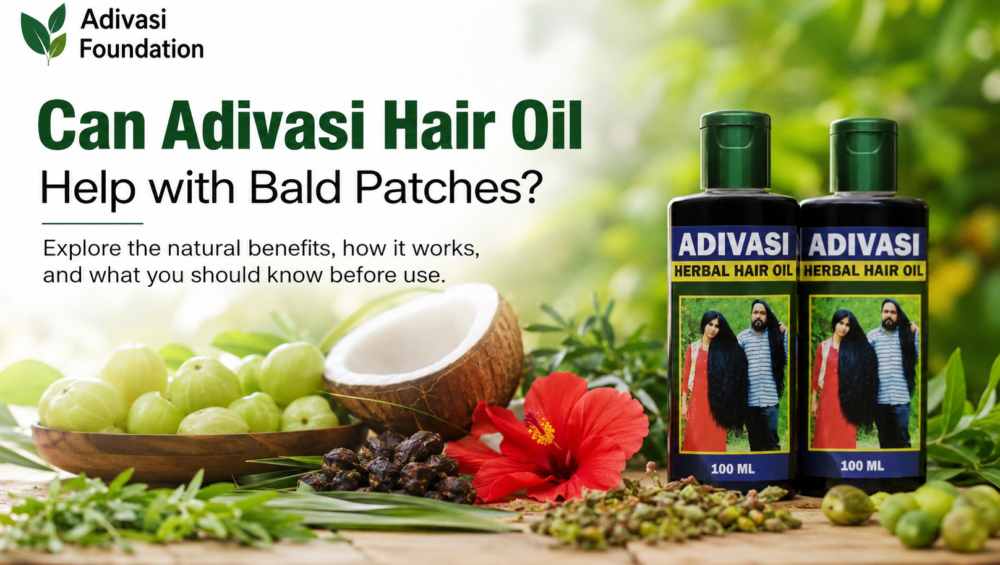
Can Adivasi Hair Oil Help with Bald Patches?

Hair thinning and visible bald patches can be concerning, especially when they appear unexpectedly or become more noticeable over time. Many people look toward traditional herbal hair-care practices as a way to nourish the scalp, strengthen existing hair, and maintain healthier-looking growth. Adivasi Hair Oil has attracted attention among people seeking plant-based hair care inspired by traditional herbal practices.

But can an herbal hair oil actually help with bald patches? The answer depends largely on why the patch has developed. Hair oils may support scalp conditioning and reduce certain forms of hair breakage, but a bald patch caused by an underlying medical condition, scarring, genetics, infection, or autoimmune activity may require professional assessment and treatment.

A realistic approach starts with identifying the possible cause and recognizing what an oil can and cannot do.

What Exactly Is a Bald Patch?

A bald patch refers to an area of the scalp where hair density has noticeably decreased or hair has disappeared altogether. It can be small and circular, irregularly shaped, gradually expanding, or part of broader thinning across the scalp.

Not every bald patch develops for the same reason. Some appear because hair shafts repeatedly break, while others result from changes affecting the hair follicle itself.

Common factors associated with patchy or noticeable hair loss can include:

  • Alopecia areata
  • Hereditary hair loss
  • Fungal scalp infections
  • Tight hairstyles
  • Repeated pulling or friction
  • Scalp inflammation
  • Nutritional deficiencies
  • Hormonal changes
  • Physical or emotional stress
  • Certain medicines or medical conditions
  • Chemical or heat-related hair damage
  • Scarring conditions affecting follicles

This distinction matters because applying oil cannot address every possible cause.

For example, improving scalp and hair conditioning may benefit dry, fragile hair that frequently breaks. It will not necessarily restore follicles affected by permanent scarring.
Adivasi Hair Oil

How Does the Hair Growth Cycle Work?

Hair does not grow continuously without interruption. Individual follicles move through different stages.

The anagen phase represents active growth. During this stage, hair continues to grow from the follicle for an extended period.

The catagen phase acts as a short transitional period in which active growth slows.

The telogen phase represents a resting stage. Eventually, the existing strand sheds and the follicle prepares for another growth cycle.

Several internal and external factors can disrupt this natural cycle. Stress, illness, nutritional issues, hormonal changes and certain scalp conditions can increase shedding or affect normal growth.

This explains why simply applying an oil cannot guarantee new hair growth. Healthy-looking hair depends on the condition of the scalp, follicles, hair shafts and the person’s overall health.

Can Adivasi Hair Oil Regrow Hair on Bald Patches?

No hair oil should be considered a guaranteed treatment for bald patches.

Adivasi Hair Oil may serve as part of a regular scalp and hair-care routine by providing lubrication, conditioning the scalp and reducing dryness. Depending on its formulation, an herbal oil can also help keep existing strands manageable and reduce damage caused by excessive friction.

Whether new hair can appear on a bald area depends on the condition of the follicles and the reason behind the hair loss.

If follicles remain active and the problem involves temporary shedding, breakage or reversible scalp stress, addressing the underlying cause may allow hair to recover over time. If follicles have been permanently damaged or replaced by scar tissue, topical cosmetic oils are unlikely to restore them.

Consumers should therefore be cautious about claims promising guaranteed regrowth on completely bald areas.

The Role of Scalp Care in Maintaining Healthy Hair

Healthy hair begins at the scalp, but scalp care does not mean applying increasingly large quantities of oil.

The scalp naturally produces sebum, which protects the skin and hair. Environmental exposure, frequent washing, harsh products, styling habits and individual skin characteristics can affect this balance.

A suitable hair oil may provide additional conditioning for people experiencing dryness.

Regular scalp care can help:

  • Reduce feelings of dryness
  • Improve hair lubrication
  • Make strands easier to manage
  • Reduce friction during grooming
  • Support softer-feeling hair
  • Minimize breakage associated with dryness
  • Maintain a comfortable hair-care routine

These benefits can improve the appearance and condition of existing hair even though they should not be confused with treatment for a medical hair-loss disorder.

Why Scalp Massage Is Often Combined with Hair Oil

Hair oil application is commonly accompanied by gentle scalp massage. Massage helps distribute oil across the scalp and roots while making the application process more controlled.

Use fingertips rather than nails and avoid aggressive rubbing.

Excessive pressure does not make an oil more effective. In fact, vigorous scratching or rubbing may irritate a sensitive scalp or increase mechanical stress on fragile hair.

A gentle massage for several minutes is generally enough to spread the product. Hair that is already thinning should always be handled carefully.

Herbal Ingredients and Their Role in Hair Care

Traditional herbal hair oils may contain combinations of botanical ingredients and carrier oils. The exact formulation varies between products, so consumers should always check the ingredient list rather than assuming that every herbal oil contains the same substances.

Common botanical ingredients used across traditional Indian hair-care preparations may include amla, bhringraj, hibiscus, fenugreek, neem, aloe vera and different plant-derived oils.

Their presence does not automatically mean that a product can reverse baldness. Herbal ingredients are primarily used in cosmetic hair care for conditioning, lubrication and traditional scalp-care purposes.

Adivasi Foundation encourages users to look at hair care realistically: botanical ingredients can form part of a consistent routine, while unexplained or progressive hair loss deserves appropriate professional attention.

Can Hair Oil Help If the Bald Patch Comes from Breakage?

Sometimes an area appears thinner because strands are repeatedly breaking rather than because follicles have stopped producing hair.

Breakage can result from:

  • Frequent heat styling
  • Chemical treatments
  • Rough towel drying
  • Excessive brushing
  • Tight hairstyles
  • Dryness
  • Repeated friction
  • Poor detangling techniques

Oil can be more relevant in this situation because lubrication may reduce friction between individual hair fibres.

When strands become easier to detangle and manage, mechanical breakage may decrease. As healthier strands remain intact, an area affected mainly by breakage may gradually appear fuller.

However, persistent localized breakage should still be investigated, particularly when accompanied by scalp symptoms.

What If the Patch Is Caused by Alopecia Areata?

Alopecia areata is an autoimmune condition that commonly causes smooth, round or oval patches of hair loss. The immune system mistakenly targets hair follicles.

Cosmetic hair oil should not be presented as a treatment for alopecia areata.

Someone who suddenly develops one or more smooth bald patches should consider consulting a dermatologist. Medical evaluation can help determine whether alopecia areata or another condition is responsible.

An oil may still be used for general hair conditioning if a healthcare professional considers it suitable, but it should not replace appropriate medical care.

What About Hereditary Hair Loss?

Genetic hair loss generally develops gradually rather than appearing as a single isolated patch.

In men, hereditary hair loss frequently affects the temples, hairline and crown. Women may experience increasing thinning or widening of the parting.

An herbal oil can condition the scalp and existing strands, but it cannot be assumed to reverse genetic changes affecting follicles.

Early assessment can be useful because treatment options often depend on the type, stage and progression of hair loss.

Can Dandruff Cause Hair Thinning?

Dandruff itself does not necessarily create permanent bald patches, but significant itching and scratching can contribute to irritation and hair breakage.

Some scalp conditions can resemble ordinary dandruff while requiring different care.

If flaking becomes severe or appears with redness, pain, crusting, discharge or localized hair loss, professional assessment becomes particularly important.

Applying excessive oil to an irritated scalp without knowing the cause may not solve the problem.

How to Use Adivasi Hair Oil as Part of a Hair-Care Routine

Correct application matters when incorporating any oil into a routine.

Start with a manageable quantity rather than saturating the scalp. Apply the oil gradually across the scalp and hair according to the product’s directions.

Massage gently using fingertips. Avoid scratching the scalp with fingernails.

Pay attention to areas experiencing dryness or breakage, but do not aggressively massage bald patches in an attempt to force growth.

Leave the oil on for the period recommended for the specific product, then cleanse appropriately when required.

Consistency matters more than excessive application. Using more oil or applying it repeatedly throughout the day does not mean hair will grow faster.

Avoid Aggressive Treatment of Bald Areas

A visible patch often causes people to concentrate heavily on that particular spot. They may repeatedly rub, massage, brush or apply multiple products to it.

This approach can backfire.

A scalp experiencing irritation or inflammation needs gentle handling. Combining several oils, serums, home remedies and chemical products can also make it difficult to determine which product is causing irritation.

Keep the routine simple and monitor how the scalp responds.

How Long Does Hair Growth Take?

Hair growth is gradual.

Even when the underlying cause of temporary hair loss has been successfully addressed, visible improvement usually does not happen within a few days. New strands need time to emerge and become long enough to noticeably change density.

This is why claims promising dramatic regrowth within an extremely short period deserve caution.

Taking photographs under similar lighting every few weeks can provide a more objective way to observe changes than checking the mirror several times each day.

Signs That Deserve Professional Attention

Some forms of hair loss require more than cosmetic care.

Consider consulting a dermatologist when you notice:

  • Sudden circular bald patches
  • Rapidly expanding areas of hair loss
  • Significant scalp redness
  • Pain or tenderness
  • Pus or discharge
  • Heavy scaling or crusting
  • Scarring
  • Loss of eyebrows or eyelashes
  • Severe or persistent shedding
  • Hair loss following a new medication
  • Bald patches in children
  • No visible improvement despite correcting obvious hair-care damage

A dermatologist can examine the scalp and, when necessary, recommend tests to identify possible causes.

Why the Cause Matters More Than the Product

People often begin their search by asking which oil is best for bald patches. A more useful first question is: Why is the hair disappearing from this area?

Consider two people with visually similar patches.

One person may have hair breakage from tight hairstyles. Another may have alopecia areata. Although both cases appear as reduced hair density, they have entirely different causes.

The first person may benefit from reducing tension, changing styling habits and improving hair conditioning.

The second person may require medical assessment and specific treatment.

Using the same approach for both cases would overlook the actual reason for the hair loss.

Hair Care Habits That Can Support Existing Hair

Oil works best as one element of sensible hair care rather than as an isolated solution.

Handle wet hair carefully because it can be particularly vulnerable to mechanical damage. Use suitable detangling techniques and avoid pulling through knots aggressively.

Reduce unnecessary heat exposure. Frequent straightening, curling and high-temperature blow-drying can weaken hair fibres.

Avoid hairstyles that continuously pull at the roots. Tight ponytails, braids and buns may place repeated tension on particular areas.

Choose cleansing products according to scalp and hair needs. Extremely harsh cleansing can leave some hair types feeling dry, while insufficient cleansing may allow excessive product buildup.

Protecting existing strands is especially important when overall density has already decreased.

Nutrition and Hair Health

Hair follicles require nutrients to function normally. Significant deficiencies can contribute to shedding in some individuals.

Protein, iron, zinc and several vitamins play roles in normal biological processes associated with hair.

However, randomly taking supplements is not an ideal response to hair loss. Excessive intake of certain nutrients can create its own problems.

People experiencing persistent or unexplained hair loss should discuss possible nutritional deficiencies with a qualified healthcare professional rather than self-diagnosing.

Stress and Temporary Hair Shedding

Major physical or emotional stress can sometimes alter the normal hair cycle and contribute to increased shedding.

The shedding may become noticeable some time after the triggering event.

In such circumstances, an oil may make the hair feel conditioned but cannot remove the underlying trigger. Recovery depends on the cause and whether normal growth cycles resume.

Persistent shedding deserves evaluation because several different conditions can produce similar symptoms.

Should You Apply Oil Directly to a Completely Bald Area?

Applying an appropriate cosmetic oil to intact, healthy skin may provide moisturization, but this does not mean the oil will reactivate inactive or permanently damaged follicles.

Check the skin first.

Do not continue applying a product if the area becomes itchy, painful, swollen, unusually red or irritated.

Patch testing can also be sensible before using a new botanical formulation, particularly for people with sensitive skin or known allergies.

Avoid Mixing Too Many Hair Remedies

When people become concerned about bald patches, they sometimes start several treatments simultaneously.

One day they apply herbal oil. The next day they add onion juice, essential oils, masks, serums or other home preparations.

Using numerous products can increase the possibility of irritation and makes it harder to identify which product suits the scalp.

A simple, consistent routine is easier to monitor.

If a bald patch has a medical cause, experimenting with additional cosmetic remedies may also delay proper assessment.

Setting Realistic Expectations from Adivasi Hair Oil

The most practical expectation from a hair oil involves scalp and hair conditioning.

Depending on the formulation and individual response, regular oiling may help maintain softness, reduce dryness, improve manageability and decrease friction-related breakage.

Those effects can support healthier-looking existing hair.

It is different from promising that every bald patch will grow back.

No responsible hair-care approach should guarantee identical results for every individual because hair loss has many possible causes.

Why Choose Adivasi Foundation for Herbal Hair Care?

Adivasi Foundation focuses on traditional herbal hair-care practices for people seeking a plant-based addition to their regular routine.

Rather than treating hair oil as a miracle solution, users should combine sensible product use with gentle grooming, suitable scalp hygiene and realistic expectations.

When unexplained hair loss occurs, professional diagnosis remains important. Herbal hair care can complement a thoughtful routine, but identifying the cause of bald patches should always remain a priority.

Final Thoughts

Adivasi Hair Oil can form part of a regular routine aimed at conditioning the scalp, maintaining hair softness and reducing dryness or friction-related breakage. These benefits may help existing hair look healthier and better maintained.

However, bald patches can develop from autoimmune conditions, infections, hereditary hair loss, traction, nutritional issues, inflammation, scarring and several other causes. Hair oil alone cannot address all of them.

If a patch appears suddenly, grows larger, causes scalp symptoms or persists despite gentle hair care, consult a dermatologist. Identifying the cause provides a far stronger foundation for choosing appropriate care than relying on any single cosmetic product.

FAQs

Usage depends on your scalp type, hair condition and the specific product instructions. A moderate, consistent routine is generally preferable to excessive oiling. Stop using the product if you notice irritation or an adverse reaction.

Hair changes occur gradually, and individual results vary. Improvements in softness or manageability may become noticeable before changes in hair density. Hair growth cannot be guaranteed because bald patches can have many different underlying causes.

Yes, particularly if the bald patch appears suddenly, expands, becomes painful or itchy, develops scaling or redness, or does not improve. A dermatologist can identify the cause and recommend appropriate treatment while you use suitable hair-care products for general conditioning.
Adivasi Hair OilCategoriesBlog

Is Adivasi Hair Oil Suitable for All Hair Types?

Hair care rarely follows a one-size-fits-all approach. Straight, curly, wavy, dry, oily, fine, thick, chemically treated, and textured hair can each respond differently to oils and herbal preparations. Adivasi Hair Oil is commonly associated with a blend of traditional herbs and plant-based ingredients used as part of regular scalp and hair care routines. However, people considering herbal hair oil often want to know whether the same formulation can work effectively across different hair types.

The answer depends on several factors, including hair texture, scalp condition, porosity, oil quantity, application method, and washing routine. Choosing the right approach can make oiling more comfortable and suitable for individual hair needs.

Why Hair Type Matters When Choosing a Hair Oil

Hair type affects how quickly oil spreads, how much product the strands can tolerate, and how easily the oil washes out. Someone with fine, straight hair may find a large quantity of oil heavy, while thick or curly hair may need more product to coat the lengths evenly.

Scalp characteristics matter just as much. A person can have dry hair with an oily scalp or fine hair with a dry scalp. For this reason, evaluating both the scalp and hair strands provides a better basis for deciding how to use an herbal oil.

Important factors include:

  • Hair strand thickness
  • Natural oil production
  • Scalp dryness or oiliness
  • Hair density
  • Curl pattern
  • Hair porosity
  • Chemical treatments
  • Heat styling frequency
  • Washing habits
  • Environmental exposure

Rather than applying the same amount to every hair type, users can adjust the quantity and frequency according to their individual requirements.

Is Adivasi Hair Oil Suitable for Straight Hair?

Straight hair allows natural scalp oils to travel down the hair shaft relatively easily. As a result, some people with straight hair experience oiliness around the roots sooner than people with curly or highly textured hair.

Herbal hair oil can still form part of a straight-hair routine when applied in an appropriate quantity.

For Fine, Straight Hair

Fine strands can become weighed down quickly. Using too much oil may make the hair appear flat or greasy, even after washing.

A small amount applied primarily to the scalp may be more suitable. If the ends feel dry, a very light coating can be applied separately.

People with fine hair may prefer shorter pre-wash oiling sessions instead of leaving a heavy layer on the hair for extended periods.

For Thick, Straight Hair

Thicker strands generally tolerate oil more easily. The oil can be distributed from the scalp through the mid-lengths, with additional attention given to dry ends.

However, the quantity should still depend on hair density and scalp condition rather than thickness alone.

Can Adivasi Hair Oil Be Used on Wavy Hair?

Wavy hair sits between straight and curly textures and can have very different characteristics from one person to another. Some wavy hair becomes oily quickly at the roots while remaining dry at the ends.

This combination calls for balanced application.

Applying a moderate quantity to the scalp and a smaller amount to the lengths can help avoid unnecessary heaviness. People who want to preserve natural wave definition may also prefer to oil before shampooing rather than applying substantial amounts after washing.

The washing method matters as well. Residual oil can make waves appear less defined, so proper cleansing after an oiling session is important.

How Does Adivasi Hair Oil Fit into Curly Hair Care?

Curly hair often experiences greater dryness because natural scalp oils have a more difficult path down curved hair strands. Consequently, oiling can be particularly appealing to people with curls.

A herbal oil can be applied to the scalp as well as the lengths, depending on individual needs.

Applying Oil to Curly Hair

Divide the hair into manageable sections before application. Sectioning helps distribute oil more evenly without repeatedly pulling or manipulating the curls.

Start with the scalp and gently massage using the fingertips. Then spread a smaller amount along the lengths, paying particular attention to dry areas and ends.

Avoid aggressive rubbing because friction can encourage tangling and disrupt the curl pattern.

Finding the Right Quantity

Curly hair does not automatically require a large quantity of oil. Curl density, strand thickness, and porosity should influence the amount.

Fine curls may respond better to lighter application, while thick and dense curls may tolerate a little more.

What About Coily and Highly Textured Hair?

Coily and highly textured hair tends to experience dryness more easily because of its tightly curved structure. The ends can be especially vulnerable to moisture loss and mechanical stress.

Oiling can serve as one component of a broader hair care routine for this texture.

Users may apply oil carefully across the scalp and sections of the hair. Particular attention can be given to the ends, which are the oldest part of the hair shaft.

However, oil should not replace hydration. Oils primarily coat and lubricate hair; they do not provide water-based hydration. A balanced routine may therefore combine suitable cleansing, conditioning, hydration, and oiling.

Can People with Dry Hair Use Adivasi Hair Oil?

Dry hair often feels rough, lacks flexibility, and may become tangled easily. Environmental exposure, frequent shampooing, heat styling, chemical processing, or naturally low sebum production can contribute to dryness.

A pre-shampoo oiling routine can help reduce friction during washing and provide lubrication to dry strands.

For dry hair, users may consider applying oil to both the scalp and lengths. The ends often deserve additional attention because they are more exposed to daily wear.

The frequency should still depend on how the hair responds. More frequent application is not automatically better.

Is It Appropriate for Oily Hair?

Having an oily scalp does not necessarily mean someone must avoid hair oil entirely. It does, however, mean that application should be controlled.

An oily scalp already produces substantial sebum. Adding excessive oil can create a heavy feeling and may require stronger or repeated cleansing.

For oily hair:

  • Use a smaller quantity.
  • Avoid saturating the scalp.
  • Consider shorter oiling periods.
  • Wash thoroughly after application.
  • Adjust frequency according to scalp response.

People with very oily scalps may prefer occasional rather than frequent application.

Can It Be Used on Fine Hair?

Fine hair has a smaller strand diameter and can lose volume easily when coated with heavy products. The key consideration is quantity.

Instead of soaking the entire head, apply a small amount in sections. Gentle scalp massage can distribute the product without requiring excessive oil.

Fine-haired users can also avoid repeatedly coating the lengths unless they experience noticeable dryness.

If the hair continues to feel greasy after shampooing, reducing the amount used during the next application may provide a better balance.

What About Thick and Dense Hair?

Thick or highly dense hair can make even distribution challenging. Applying oil only to the surface may leave several areas untouched.

Sectioning is especially useful for dense hair.

Divide the hair into four or more sections and apply a controlled amount directly to the scalp within each section. The remaining oil can then be distributed along the lengths.

This approach provides better control than pouring or applying a large quantity at once.

Hair Porosity Can Influence the Results

Hair type is not determined by curl pattern alone. Porosity—the hair’s ability to absorb and retain moisture—can influence how products behave.

Low-Porosity Hair

Low-porosity hair has tightly arranged cuticle layers. Products may sit on the surface rather than spreading or absorbing easily.

Heavy oil application can therefore leave low-porosity hair feeling coated.

Smaller quantities and shorter application periods may be more appropriate.

Medium-Porosity Hair

Medium-porosity hair often responds predictably to different hair products. A moderate oiling routine may work well, provided the scalp and strands remain comfortable.

High-Porosity Hair

High-porosity hair can lose moisture quickly and may feel rough or dry. Chemical processing, heat exposure, and physical damage can also increase porosity.

Oil can help lubricate the strands and reduce friction, but it should remain part of a routine that includes appropriate conditioning and moisture care.

Is Adivasi Hair Oil Suitable for Chemically Treated Hair?

Colouring, bleaching, rebonding, perming, relaxing, and other chemical processes can alter the structure and condition of hair.

Chemically treated hair often requires gentle handling because it may become more porous or prone to breakage.

An oiling routine can provide lubrication before washing, but users should consider the instructions associated with their specific chemical treatment. Immediately after certain salon procedures, stylists may recommend avoiding particular products or washing methods for a defined period.

Once regular hair care resumes, moderate oil application can be adjusted according to the condition of the scalp and strands.

Can It Be Used on Heat-Styled Hair?

Frequent use of straighteners, curling irons, blow dryers, and other heated tools can contribute to dryness and structural damage, particularly when high temperatures are used repeatedly.

Pre-wash oiling may complement a routine designed for frequently styled hair. However, hair oil should not automatically be treated as a heat protectant.

A product specifically formulated for heat protection should be used before high-temperature styling when required.

Reducing excessive heat exposure and maintaining appropriate conditioning are equally important for preserving hair quality.

Scalp Type Is Just as Important as Hair Type

Many people select hair products based solely on whether their hair is curly, straight, thick, or fine. Scalp condition deserves equal consideration.

Dry Scalp

A dry scalp may feel tight or uncomfortable and can sometimes show visible flaking. A modest amount of oil may provide temporary lubrication, but persistent scalp problems should not automatically be treated with cosmetic oil alone.

Oily Scalp

People with oily scalps should use smaller quantities and pay attention to how quickly buildup develops.

Sensitive Scalp

Anyone with sensitive skin should be cautious when trying a new herbal formulation. Natural ingredients can still cause irritation or allergic reactions in some individuals.

Performing a patch test before broader application is a sensible precaution.

How to Perform a Patch Test

A patch test is particularly useful when using a new cosmetic or herbal product.

Apply a small amount to a limited area of skin according to the product’s directions and observe the area for signs of irritation. If redness, itching, swelling, burning, or other unusual reactions occur, discontinue use.

Ingredient labels should also be reviewed carefully, especially by people with known allergies or sensitivities.

“Herbal” and “natural” do not mean that every ingredient is suitable for every individual.

How Much Hair Oil Should You Apply?

There is no universal quantity that works for everyone. Hair length, density, texture, scalp type, and personal preference all influence the appropriate amount.

The goal does not have to be complete saturation.

Start with a modest quantity and add more only when necessary. This method makes application easier and can also simplify shampooing.

Excessive oil may require repeated cleansing, which can leave some hair types feeling dry.

A Practical Application Method for Different Hair Types

A controlled technique can make hair oil easier to incorporate into a routine.

First, gently detangle the hair if necessary. Divide dense or curly hair into sections. Apply a modest amount of oil to different areas of the scalp rather than concentrating it in one spot.

Massage gently with the fingertips without scratching the scalp. If the lengths need additional care, spread a small quantity between the palms and apply it gradually from the mid-lengths toward the ends.

Leave the oil on according to the product directions and personal tolerance. Afterwards, cleanse thoroughly with a suitable shampoo.

How Often Should You Oil Your Hair?

Frequency depends more on individual response than on a fixed schedule.

Someone with a dry scalp and thick hair may prefer oiling more regularly, whereas a person with fine hair and an oily scalp may use it less often.

Observe factors such as:

  • How quickly the scalp becomes greasy
  • Whether the hair feels weighed down
  • Ease of shampooing
  • Dryness between washes
  • Scalp comfort
  • Product buildup

Adjusting the routine based on these signs is more practical than following an identical schedule for every hair type.

Common Mistakes to Avoid When Using Hair Oil

Even a suitable product can produce an unpleasant experience when applied incorrectly.

One common mistake is using far more oil than the hair requires. More product does not necessarily produce better results.

Another issue is aggressive scalp massage. Strong rubbing, scratching, or pulling can irritate the scalp and place unnecessary stress on the hair.

Users should also avoid assuming that oil can replace shampoo, conditioner, or medical treatment. Each serves a different purpose.

Leaving heavy oil buildup on the scalp repeatedly without adequate cleansing can also create discomfort for some people.

What Results Should Users Realistically Expect?

Hair oil is primarily a cosmetic hair and scalp care product. Depending on its formulation, it can help lubricate strands, support smoother handling, and complement a regular grooming routine.

Individual results vary because hair condition is influenced by genetics, grooming habits, chemical treatments, nutrition, environmental exposure, scalp health, and many other factors.

Consumers should be cautious about expecting instant or guaranteed transformations from any cosmetic hair oil.

A consistent and suitable overall routine generally matters more than relying on a single product.

Choosing Authentic Hair Care Products Matters

Interest in traditional and herbal hair care has led to many similarly named products appearing across different sales channels. Consumers should examine product information carefully before purchasing.

Look for clear labeling, ingredient details, usage directions, manufacturer information, and appropriate packaging. Avoid making decisions solely on dramatic promotional claims.

Adivasi Foundation encourages consumers to approach traditional hair care with realistic expectations and attention to individual hair and scalp needs. Product suitability should always take priority over following a trend or copying another person’s routine.

So, Is Adivasi Hair Oil Suitable for Every Hair Type?

Adivasi Hair Oil can potentially fit into routines for straight, wavy, curly, coily, fine, thick, dry, and chemically treated hair, but the method of use should vary.

Fine or oily hair generally benefits from lighter application. Dry, curly, thick, or highly textured hair may tolerate more oil, particularly on the lengths and ends. Low-porosity hair may require less product, while high-porosity hair may benefit from oil as part of a broader moisture-focused routine.

Most importantly, scalp sensitivity, allergies, product ingredients, and individual response should always be considered.

Conclusion

Different hair types have different requirements, which makes personalized application essential. Adivasi Hair Oil can be incorporated into many hair care routines when users adjust the quantity, frequency, and application technique to suit their scalp and strands. Fine and oily hair may need lighter use, while dry, curly, or dense hair may tolerate more. Checking ingredients, performing a patch test, following product directions, and observing how the hair responds can help users build a more suitable oiling routine.

FAQs

People with oily scalps can consider using it in smaller quantities and for shorter periods before shampooing. Excessive application may contribute to a greasy feeling or buildup. Users should adjust frequency according to their scalp response and cleanse thoroughly after use.

Yes, oil can form part of a curly hair routine. Sectioning the hair before application can make distribution easier. Curly hair that tends to become dry may benefit from careful application along the lengths and ends, while fine curls may require a lighter quantity.

There is no single frequency suitable for everyone. Hair texture, scalp oil production, washing schedule, density, and product buildup all influence how often oiling feels appropriate. Starting conservatively and adjusting the routine according to the hair and scalp response is a practical approach.

Original Adivasi Hair OilCategoriesBlog

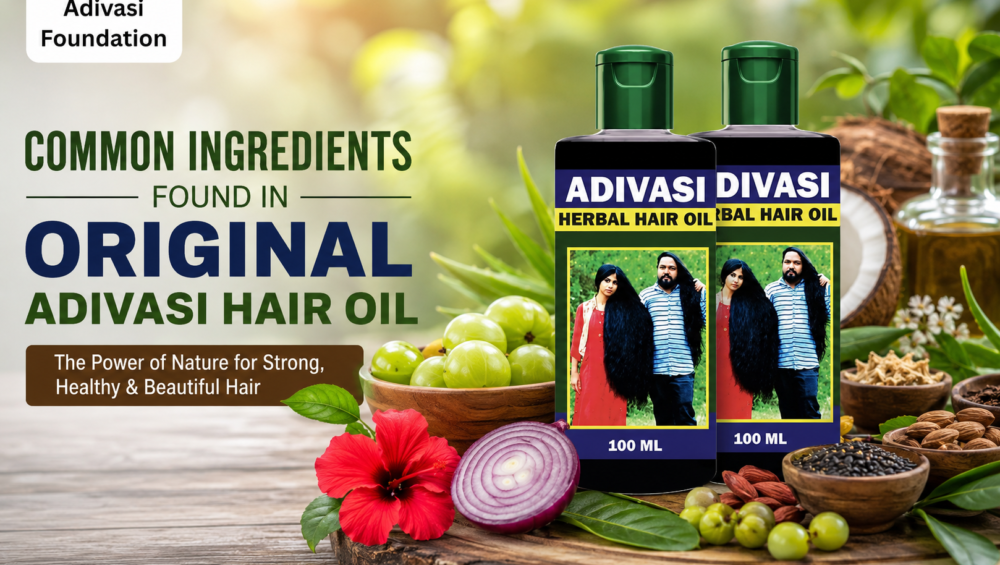
Common Ingredients Found in Original Adivasi Hair Oil

Hair oiling has remained an important part of Indian hair care for generations. Families across different regions have traditionally relied on herbs, plant extracts, seeds, flowers, and nourishing oils to maintain their hair and scalp. Original Adivasi Hair Oil draws attention because it is commonly associated with this herbal approach to hair care, combining traditional ingredients that may help nourish the scalp, condition the hair, and support a healthier-looking appearance.

People considering herbal hair oil often want to know what actually goes into the formulation. While the exact ingredient list can vary by manufacturer or formulation, several herbs and natural ingredients are commonly associated with Adivasi-style hair oils. Knowing their traditional roles can help consumers make more informed choices.

At Adivasi Foundation, the emphasis is on herbal hair care and the value of carefully selected plant-based ingredients. Below is a closer look at ingredients commonly found in or associated with Original Adivasi Hair Oil formulations and the roles they may play in a regular hair care routine.

Why Ingredients Matter When Choosing Hair Oil

A hair oil is more than a product used to add shine. Its formulation determines how it feels on the scalp, how easily it spreads, and how it complements a person’s existing hair care routine.

Traditional herbal oils frequently combine a carrier oil with botanical ingredients. The carrier oil helps distribute herbal extracts across the scalp and hair strands, while individual herbs contribute their own properties.

When evaluating Original Adivasi Hair Oil, consumers should pay attention to the ingredient label rather than relying only on packaging claims. Ingredients can differ between products sold under similar descriptions.

Factors worth checking include:

  • The main carrier oils used in the formulation
  • The presence of recognizable herbal ingredients
  • Added fragrances or colours
  • Storage and usage instructions
  • Manufacturer and product information
  • Suitability for individual scalp and hair needs

Reading the actual label is particularly important for people with sensitive skin or known allergies.

1. Amla

Amla, also known as Indian gooseberry, is one of the most familiar ingredients in traditional Indian hair care. It has been incorporated into homemade hair oils, powders, pastes, and herbal preparations for generations.

Amla naturally contains vitamin C and various plant compounds. In hair oils, it is mainly valued as a conditioning and scalp-care ingredient.

Regular oiling with an amla-containing formulation can help keep dry hair feeling softer and better conditioned. The oiling process itself also helps reduce the rough feeling that can occur when hair lacks adequate moisture.

For people searching for Original Adivasi Hair Oil, amla is therefore one of the ingredients they may commonly encounter on product descriptions or labels.

2. Bhringraj

Bhringraj has a strong association with traditional Indian hair and scalp care. Its botanical name is Eclipta prostrata, and it is frequently included in herbal hair oils.

Bhringraj is commonly used as part of scalp massage preparations. When combined with an appropriate carrier oil, it allows users to massage the scalp while coating the hair.

Scalp massage can also make an oiling routine more relaxing and encourage even product distribution. Rather than viewing bhringraj as a stand-alone solution to every hair concern, it is better considered one component of a broader hair care routine.

Its long-standing use makes bhringraj a familiar ingredient in many herbal formulations inspired by traditional practices.

3. Brahmi

Brahmi is another herb frequently associated with traditional herbal preparations. It may be used in hair oils alongside amla, bhringraj, neem, hibiscus, and other botanical ingredients.

Within a hair care formulation, brahmi is generally incorporated as a scalp-conditioning botanical. Herbal oils containing brahmi are often massaged gently into the scalp and distributed through the hair.

People dealing with dry-feeling hair may find regular oiling useful for improving softness and manageability. However, the overall result depends on the complete formulation rather than one individual herb.

Checking how brahmi appears on the product’s ingredient list can provide a clearer idea of the actual formulation.

4. Hibiscus

The bright hibiscus flower has a well-established place in traditional beauty routines. Both hibiscus flowers and leaves have been incorporated into homemade hair masks and oils.

Hibiscus-based preparations are particularly popular for conditioning. When included in an oil formulation, hibiscus complements ingredients such as amla and coconut oil.

People with dry, rough, or difficult-to-manage hair often use oiling to make strands feel smoother. An oil containing hibiscus may therefore fit naturally into a conditioning-focused routine.

Its popularity also reflects the broader preference for botanical ingredients that have been used in Indian households for generations.

5. Neem

Neem is widely recognized in Indian herbal traditions and is commonly used in personal-care preparations intended for skin and scalp hygiene.

In herbal hair oils, neem is generally included as a scalp-care ingredient. It may be combined with carrier oils and other herbs rather than used alone.

People who apply neem-containing oils should follow the manufacturer’s directions carefully, particularly if they have a sensitive scalp. Natural ingredients can still cause sensitivity in some individuals.

A small patch test before wider application is a sensible precaution whenever trying a new herbal oil.

6. Fenugreek or Methi

Fenugreek, commonly called methi, is another household ingredient that has crossed naturally into traditional hair care.

Fenugreek seeds are frequently soaked, ground, or infused into homemade hair preparations. Commercial herbal oils may use fenugreek extracts or infused ingredients instead.

Methi is commonly associated with conditioning and maintaining manageable hair. When combined with oils, it can form part of a routine aimed at reducing the dry, coarse feeling of hair.

Consumers interested in Original Adivasi Hair Oil may find methi included alongside other familiar herbs, depending on the specific formulation.

7. Curry Leaves

Curry leaves are commonly known as a culinary ingredient, but they also have a history of use in traditional hair preparations.

In homemade routines, curry leaves are sometimes infused into coconut or other oils. Herbal formulations may similarly incorporate curry leaf extracts with complementary botanicals.

Curry leaves contain naturally occurring plant compounds and nutrients. In hair care, however, consumers should focus on their role within the complete formulation rather than expecting one botanical ingredient to produce dramatic results independently.

Consistency, gentle cleansing, appropriate conditioning, and proper hair handling all contribute to overall hair appearance.

8. Aloe Vera

Aloe vera is widely used across skin, scalp, and hair products. Its popularity comes largely from its soothing and conditioning characteristics.

Depending on how a herbal hair oil is formulated, aloe vera or aloe-derived ingredients may be incorporated alongside other botanicals.

Aloe-containing hair products are often selected by consumers seeking a softer, conditioned feel. When used appropriately, such formulations can complement shampoo and conditioner rather than replacing the entire hair care routine.

Because formulations differ, users should always check whether aloe vera is actually listed on their chosen product.

9. Coconut Oil

Herbs need an effective base through which they can be applied to the scalp and hair. Coconut oil is one of the most familiar carrier oils used for this purpose.

It spreads easily across hair strands and is frequently used alone or as part of herbal oil blends.

Coconut oil is especially popular for pre-shampoo oiling. Applying a suitable amount before washing can help coat the strands and reduce the excessively dry feeling that sometimes follows cleansing.

For thick or dry hair, slightly more oil may be suitable. Fine or oily hair usually requires a smaller quantity. The appropriate amount depends on individual hair characteristics.

10. Sesame Oil

Sesame oil has a long history in traditional Indian body and hair oiling practices. Its texture and ability to carry botanical extracts make it useful in herbal preparations.

Some formulations use sesame oil as the main base, while others combine it with coconut or additional plant oils.

The choice of carrier oil influences the texture of Original Adivasi Hair Oil. A heavier formulation may suit dry, coarse hair, while people with fine hair may prefer lighter application.

This is one reason consumers should evaluate the entire ingredient list instead of concentrating exclusively on individual herbs.

11. Castor Oil

Castor oil is recognizable for its thick consistency. It is frequently blended with lighter oils because applying pure castor oil can feel heavy on some hair types.

In a herbal blend, castor oil can help coat the strands and provide a richer conditioning feel. People with dry ends may particularly appreciate oils containing a balanced proportion of castor oil.

However, excessive application can make washing difficult. Starting with a small quantity and adjusting according to hair length, density, and texture generally produces a more comfortable experience.

12. Onion Extract

Onion-based hair care products have attracted considerable consumer interest. As a result, some herbal oil formulations incorporate onion extract or onion-infused components.

Onion naturally contains sulfur-containing compounds, which explains much of the interest surrounding its use in hair preparations.

However, ingredient concentration, extraction method, overall formulation, and individual response can differ significantly. Consumers should therefore avoid assuming that every herbal oil contains onion or that the presence of onion alone determines a product’s effectiveness.

The ingredient label remains the most reliable source for confirming its presence.

13. Tulsi

Tulsi, or holy basil, is another botanical ingredient commonly found across traditional Indian wellness and personal-care preparations.

Within herbal hair oils, tulsi is generally incorporated as a complementary scalp-care botanical. It can appear alongside neem, amla, brahmi, and similar ingredients.

As with other plant ingredients, tulsi should be viewed as part of the total formulation. A balanced oil depends on the selection of herbs, their preparation, the carrier oils, and appropriate product usage.

14. Shikakai

Shikakai is best known as a traditional hair-cleansing ingredient. Before modern shampoos became widespread, shikakai preparations were commonly used to cleanse hair.

It is more frequently encountered in herbal powders and shampoos, but certain oil formulations may contain shikakai extracts as part of a broader botanical blend.

Its presence reflects the connection between traditional cleansing and conditioning practices. Consumers should nevertheless check the label because not every Adivasi-style oil uses the same collection of herbs.

15. Reetha

Reetha, commonly called soapnut, has also been traditionally associated with hair cleansing. Its natural saponins give it cleansing properties, which is why it frequently appears in herbal shampoo preparations.

Some botanical hair oils may incorporate reetha extracts alongside other ingredients, although its use depends entirely on the formulation.

The combination of traditionally recognized herbs can make a product attractive, but more ingredients do not automatically mean better performance. Formulation quality, suitability, and correct application remain important.

How Herbal Ingredients Work Together in Hair Oil

A well-formulated herbal oil does not depend on a single botanical. Instead, the formulation brings together carrier oils and selected herbs to provide conditioning and scalp care.

For instance, coconut or sesame oil may form the base, while amla, bhringraj, brahmi, hibiscus, neem, methi, or other ingredients are incorporated as extracts or infusions.

This combination can help:

  • Lubricate dry hair strands
  • Improve the feel of rough hair
  • Make hair easier to manage
  • Support scalp conditioning
  • Provide a relaxing massage medium
  • Complement a regular cleansing and conditioning routine

Results can differ depending on hair texture, scalp condition, frequency of application, washing habits, environmental exposure, and other personal factors.

How to Check Whether an Adivasi Hair Oil Is Suitable for You

The word “herbal” does not automatically mean that every product will suit every person. Consumers should assess a product based on their own scalp and hair requirements.

Start by reading the full ingredient list. If you have known sensitivities to particular plants, fragrances, or oils, avoid formulations containing those ingredients.

A patch test is also useful. Apply a small amount according to the product directions and watch for irritation before applying it extensively.

Hair type matters as well. Fine hair can become weighed down by heavy oils, whereas coarse or very dry hair may respond better to richer formulations.

Most importantly, stop using a product if persistent itching, redness, burning, or unusual scalp irritation develops.

How to Use Original Adivasi Hair Oil in a Hair Care Routine

Correct application can be just as important as ingredient selection.

Begin with a manageable amount rather than saturating the scalp. Divide the hair into sections if necessary and apply the oil evenly. Massage gently using fingertips without scratching the scalp with fingernails.

The remaining oil can be distributed through the lengths, particularly across dry areas and ends.

Leave the oil on for the period recommended on the product label before cleansing. Some people prefer pre-shampoo application, while others follow a different schedule based on product instructions.

Using excessive quantities is not necessary. More oil does not automatically produce better results and may simply require stronger cleansing afterward.

What Consumers Should Expect from Herbal Hair Oil

Herbal hair oil should be approached as part of routine hair and scalp care rather than as an instant solution.

Regular oiling can support conditioning, softness, manageability, and a smoother appearance. However, hair concerns can have many causes, including grooming habits, nutrition, chemical treatments, heat exposure, stress, environmental factors, and underlying scalp conditions.

Adivasi Foundation encourages consumers to look carefully at ingredients and choose products based on realistic hair care needs.

When evaluating Original Adivasi Hair Oil, the ingredient list, product authenticity, usage instructions, and suitability for your hair type deserve greater attention than exaggerated promises.

Final Thoughts

Original Adivasi Hair Oil is commonly associated with traditional botanical ingredients such as amla, bhringraj, brahmi, hibiscus, neem, methi, curry leaves, tulsi, coconut oil, sesame oil, and other plant-based components. The exact composition, however, can vary between formulations.

Each ingredient has its own place in traditional hair care, but the overall formulation matters more than any single herb. Checking the product label, following application directions, patch testing when appropriate, and maintaining a consistent hair care routine can help consumers make better use of herbal oils.

For people interested in plant-based hair care, Adivasi Foundation focuses on bringing traditional herbal concepts into practical routines that support hair conditioning and scalp care.

FAQs

Usage frequency depends on the specific formulation, hair type, scalp condition, and manufacturer's instructions. Many people incorporate herbal oil into a pre-shampoo routine once or several times per week. People with oily or fine hair may prefer smaller quantities or less frequent application.

Suitability varies between individuals. Dry or coarse hair may respond differently from fine or naturally oily hair. Ingredients, oil texture, fragrance, and individual scalp sensitivity should be considered. Performing a patch test before extensive use is sensible, particularly for people with sensitive skin.

Read the ingredient information printed on the product packaging or official product information provided by the manufacturer. Do not assume that every product using the Adivasi hair oil description contains an identical herbal blend. Checking ingredients, manufacturer details, usage directions, and packaging information can help you make a more informed choice.

CategoriesBlog

Adivasi Hair Oil Benefits for Senior Adults

Hair texture, scalp comfort, dryness, and grooming needs can change with age, so senior adults often benefit from simpler, gentler hair-care routines. Original Adivasi Hair Oil may fit such routines by providing lubrication, supporting scalp massage, reducing the rough feel of dry strands, and making hair easier to manage before washing. Consumers who plan to buy original adivasi hair oil online in India should focus on authenticity, ingredient information, product directions, packaging condition, and personal tolerance. The most useful approach is moderate, consistent, and comfortable application rather than heavy oiling or expectations of guaranteed hair growth.

What Is Original Adivasi Hair Oil?

Original Adivasi Hair Oil generally refers to a herbal-style hair oil associated with traditional hair-care practices. However, formulations can differ between products, so senior adults and caregivers should read the actual label instead of assuming that every bottle contains the same oils, herbs, extracts, fragrance, or other cosmetic ingredients.

Its primary cosmetic role is usually to lubricate the scalp and hair, support gentle massage, and help dry or rough lengths feel softer and easier to handle. These effects relate to grooming and conditioning. They should not be confused with treatment for medical causes of hair loss, scalp disease, inflammation, or persistent irritation.

Why Senior Adults May Consider Hair Oil

Age-related changes can make hair feel finer, drier, more fragile, or less manageable. Meanwhile, some senior adults may wash less frequently or prefer shorter grooming routines. A suitable hair oil can offer a simple way to add slip and reduce friction during handling.

Common reasons for considering oil include:

  • Dry-feeling hair lengths
  • Rough or frizzy texture
  • Difficulty detangling
  • Preference for scalp massage
  • Desire for a pre-shampoo conditioning step
  • Need for a simple, repeatable grooming habit

The best routine depends on individual comfort and hair condition.

Potential Benefits for Senior Hair Care

Hair oil can support several practical grooming goals for older adults when used in sensible amounts. Its value usually comes from conditioning and lubrication rather than dramatic or guaranteed biological changes.

May Improve the Feel of Dry Hair

Dryness can make mature hair feel coarse or less flexible. Applying a small amount of oil to the lengths may coat the hair surface and reduce the rough sensation that becomes noticeable after washing, combing, or exposure to dry weather.

Consequently, strands may feel smoother and easier to arrange. However, fine hair can become flat quickly, so lighter application often works better than heavy saturation.

Can Reduce Friction During Handling

Fragile hair may break more easily when pulled, rubbed, or aggressively detangled. Oil can add slip between strands, which may make combing or finger detangling gentler.

Additionally, applying oil before shampooing can help some users handle dry lengths with less friction. This cosmetic benefit does not mean the oil changes the underlying cause of fragile hair.

Supports Gentle Scalp Massage

A small amount of oil allows fingertips to move across the scalp with less drag. Gentle massage can make a grooming routine feel more comfortable and can help spread the product evenly.

Use light fingertip pressure. In contrast, scratching with fingernails or vigorous rubbing may irritate delicate skin and create unnecessary pulling at the roots.

How to Apply Adivasi Hair Oil Safely

A simple application method is especially useful for senior adults because it reduces mess, overuse, and unnecessary manipulation of fragile hair.

Step-by-Step Application

  1. Detangle the hair carefully before oiling.
  2. Divide longer or thicker hair into manageable sections.
  3. Place a small quantity of oil on the fingertips or palm.
  4. Apply lightly along selected scalp areas if desired.
  5. Massage gently without scratching.
  6. Smooth remaining oil over the mid-lengths and ends.
  7. Leave it on for the period stated on the product label.
  8. Wash as directed and rinse thoroughly.

If shoulder movement, grip, or balance makes self-application difficult, assistance from a trusted caregiver can make the process safer and more comfortable.

Avoid Overapplication

More oil does not necessarily produce greater conditioning. Excess product may drip, stain clothing, make the scalp feel heavy, and require repeated shampooing.

Start with a modest quantity. Therefore, add more only to areas that still feel dry rather than saturating the entire scalp and hair at once.

How Much Oil Should Senior Adults Use?

The appropriate quantity depends on hair length, density, texture, and the thickness of the product. There is no single amount that suits everyone.

Use Hair Response as the Main Indicator

Consider using less when:

  • Roots look greasy soon after application.
  • Hair becomes noticeably flat.
  • Shampooing requires several rounds.
  • Oil transfers heavily onto clothing or bedding.
  • The scalp feels coated or uncomfortable.

Meanwhile, people with long or dense hair may need slightly more product through the lengths. The aim should be light, even coverage rather than soaking the hair.

How Often Can Adivasi Hair Oil Be Applied?

Frequency should reflect scalp condition, hair dryness, wash habits, and product directions. Some senior adults may prefer occasional pre-wash oiling, while others may use smaller amounts more regularly.

Adjust According to Comfort

Reduce the frequency if the scalp becomes greasy, itchy, or uncomfortable. Similarly, if the ends feel dry but the scalp is oily, focus the oil mainly on the lengths.

A flexible routine usually works better than a rigid schedule. Weather, indoor cooling, heating, shampoo frequency, and styling habits can all change how the hair feels.

Scalp Considerations for Senior Adults

Older skin can sometimes feel drier or more delicate, which makes careful product use especially important.

Dry or Tight-Feeling Scalp

A small amount of oil may help reduce the dry feel associated with routine grooming when the scalp is otherwise healthy. However, persistent scaling, redness, soreness, or intense itching should not automatically be treated with more cosmetic oil.

Those symptoms may require professional assessment, particularly when they are new, severe, or worsening.

Oily or Buildup-Prone Scalp

Some senior adults still experience oily roots or residue from styling products. Heavy scalp oiling may add to that buildup.

Consequently, shorter contact periods and smaller quantities may be more comfortable. Another option is applying oil mainly to dry lengths while leaving the scalp largely product-free.

Sensitive Scalp

Sensitivity deserves extra caution. Read the ingredient declaration and follow any patch-testing directions on the label.

Stop use if significant burning, swelling, persistent itching, or unusual discomfort develops. Additionally, seek professional advice when reactions are severe or do not settle.

Hair Texture and Age-Related Changes

Senior hair varies widely. Some people retain thick hair, while others notice finer strands, reduced density, more dryness, or increased breakage.

Fine or Thinning Hair

Fine hair generally needs less oil. Apply sparingly and concentrate on dry ends when possible.

Heavy application near the roots can make fine hair appear flatter. Therefore, a small quantity often provides better cosmetic results than a full, saturated treatment.

Dry or Coarse Hair

Dry, coarse hair may tolerate slightly more oil through the mid-lengths and ends. Sectioning helps distribute the product more evenly.

Curly or Wavy Hair

Curly and wavy strands can feel dry along their bends. A moderate amount of oil may add slip and help reduce rough handling during detangling.

Morning or Night Application for Senior Adults

Both timings can work, but convenience and safety matter.

Morning Application

Morning oiling suits people who prefer short pre-shampoo treatments. It also allows users or caregivers to observe scalp response while awake.

Additionally, applying oil before a planned shower can reduce the chance of transferring product onto pillows and bedding.

Night Application

Night application may suit people who prefer washing their hair the next morning. However, overnight oiling is not automatically better.

For senior adults with mobility issues, oily hair or bedding could create inconvenience. Therefore, use protective coverings when appropriate and avoid any routine that increases slipping, mess, or discomfort.

Hair-Care Habits That Complement Oiling

Oil works best as part of a gentle routine rather than as the only hair-care step.

Helpful habits include:

  • Use a mild shampoo that suits the scalp.
  • Avoid excessively hot water.
  • Pat hair gently instead of rubbing harshly.
  • Detangle from the ends upward.
  • Use wide-toothed combs when suitable.
  • Limit frequent high-heat styling.
  • Avoid hairstyles that pull tightly at the roots.
  • Keep combs, brushes, towels, and pillowcases clean.
  • Trim severely split ends when appropriate.
  • Maintain a balanced diet and adequate general care.

Moreover, keeping the routine simple can make it easier to notice which products actually improve comfort and manageability.

Factors That Can Affect Individual Results

Two senior adults using the same oil may have very different experiences. Hair and scalp needs depend on many personal and environmental factors.

Important influences include:

  • Natural hair texture
  • Hair density
  • Existing dryness
  • Scalp oiliness
  • Chemical colouring or other treatments
  • Shampoo type
  • Washing frequency
  • Indoor climate
  • Outdoor weather
  • Application quantity
  • Contact duration
  • Individual sensitivity
  • General health and medication-related changes

Consequently, fixed promises about identical results within a certain number of days should be treated cautiously.

Buying Considerations for Original Adivasi Hair Oil

Senior adults and caregivers should evaluate practical product information before purchasing. Attractive packaging should not replace basic label checks.

Review Product Information

Useful details to look for include:

  • Ingredient declaration
  • Net quantity
  • Directions for use
  • Relevant warnings
  • Batch or lot details
  • Manufacturing information
  • Expiry or best-before information where applicable
  • Storage directions
  • Responsible-party information required on the package

Avoid assuming that words such as herbal, natural, or traditional automatically prove suitability, safety, or effectiveness for every user.

Check Packaging and Authenticity

Inspect the bottle and outer packaging carefully after delivery. Look for a secure seal, clear printing, consistent labels, readable batch information, and an undamaged container.

Be cautious when packaging appears altered, poorly printed, incomplete, or tampered with. Moreover, retain purchase records where practical in case the delivered item differs materially from what was ordered.

Storage and Handling

Correct storage helps maintain a product in its intended condition throughout its usable period.

Keep the cap tightly closed after each application. Follow any specific temperature, light, or storage directions printed on the label.

Additionally, avoid transferring the oil into an unlabelled container because important information can be lost. Keep the bottle clean and avoid introducing water, dirt, or other products into it.

Discard a product when it has exceeded its stated usable period or shows concerning changes that do not match the expected appearance or smell.

Precautions for Senior Adults

Cosmetic hair oils can cause unwanted reactions, and senior adults may also have delicate skin or other practical considerations.

Sensible Usage Practices

  • Read the complete label before first use.
  • Follow stated application directions.
  • Avoid contact with the eyes.
  • Use moderate quantities.
  • Avoid visibly injured scalp areas unless appropriately advised.
  • Stop using the product if significant irritation develops.
  • Keep the bottle away from walking areas where spilled oil could create a slipping hazard.
  • Clean accidental spills promptly.
  • Store the product securely.
  • Do not rely on hair oil to treat medical scalp conditions.

When Professional Advice Matters

Persistent scalp pain, sores, severe flaking, sudden hair loss, rapid changes in hair density, or unexplained irritation deserve suitable medical assessment.

Similarly, senior adults managing multiple health conditions or experiencing new skin sensitivity may wish to seek professional advice before adding unfamiliar products to their routine.

Making the Routine Easier to Maintain

A senior-friendly routine should remain simple enough to repeat without strain. Keep the bottle, comb, towel, and shampoo within easy reach before starting. Moreover, choose a seated position when balance is limited. A predictable setup can reduce spills, movement, and rushed application while keeping hair care manageable.

Conclusion

Adivasi Hair Oil can support senior hair care by adding lubrication, improving manageability, easing gentle detangling, and fitting into a simple pre-wash routine. Senior adults should use moderate quantities, prioritise scalp comfort, follow label directions, and choose application timing that feels safe and practical. Product authenticity and storage also matter. When hair loss, scalp irritation, sores, or other unusual changes persist, appropriate professional assessment remains more important than increasing cosmetic oil use.

FAQs

1. Is Adivasi Hair Oil suitable for senior adults?

It may fit a senior adult’s grooming routine when the formulation suits the person’s scalp and hair. Use it mainly for lubrication, conditioning, and gentle massage. Read the label carefully, start with a small amount, and stop if significant irritation or discomfort develops.

2. Can senior adults use Adivasi Hair Oil every day?

Daily use is not necessary for everyone. Frequency should depend on product directions, scalp oiliness, hair dryness, washing habits, and comfort. If frequent application causes buildup, greasiness, or repeated shampooing, reduce the quantity or use the oil less often.

3. Can Adivasi Hair Oil help dry senior hair feel softer?

Oil can coat dry strands and reduce the rough sensation that often makes hair difficult to handle. A small amount on the lengths may improve slip and manageability. However, the effect is cosmetic and varies with hair texture, product formula, quantity, and washing habits.

4. Should senior adults apply oil to the scalp or only the hair?

Either approach may be appropriate when the label permits it. People with a comfortable, non-oily scalp may apply a small amount near the roots. Those with oily or sensitive scalps can focus more on dry lengths and ends to avoid unnecessary buildup.

5. How long should the oil remain on senior hair?

Follow the application time stated on the product label. A shorter pre-wash period may suit many senior adults because it reduces mess and simplifies cleansing. Longer contact is not automatically more effective, so remove the oil earlier if it causes discomfort or excessive greasiness.

6. Can Adivasi Hair Oil stop age-related hair loss?

A cosmetic hair oil should not be expected to stop or reverse every form of age-related hair loss. Hair density can change for many reasons. Persistent, sudden, or concerning shedding deserves professional assessment rather than reliance on oil as a medical solution.

7. Is overnight oiling suitable for senior adults?

Overnight oiling may be comfortable for some people when the product directions allow it. However, it can increase transfer onto bedding and create extra washing or mobility concerns. A shorter daytime pre-wash application may be more practical when convenience or safety is a priority.

8. What if the scalp feels itchy after application?

Stop using the oil if significant itching, burning, swelling, or irritation develops. Wash it out gently when appropriate and avoid repeated application to an irritated scalp. Seek qualified professional advice if symptoms are severe, persistent, or accompanied by sores or other unusual changes.

9. How can caregivers make oil application easier?

Caregivers can section the hair, use small amounts, massage gently, protect clothing, and keep the floor free from spills. They should also follow product directions and monitor comfort throughout the process. Simple, controlled application usually reduces pulling, mess, and unnecessary shampooing afterward.

10. What should senior adults check before purchasing hair oil?

Check the ingredient information, directions, warnings, net quantity, batch details, storage instructions, packaging condition, and applicable manufacturing or expiry information. Avoid products with damaged seals, unclear labels, or exaggerated promises. A transparent, intact product is easier to evaluate and use responsibly.

CategoriesBlog

Adivasi Hair Oil vs Onion Oil: Which One Should You Choose?

Choosing between Original Adivasi Hair Oil and onion oil can feel confusing because both are commonly considered for scalp massage, conditioning, and routine hair care. Their actual suitability depends on formulation, hair texture, scalp comfort, fragrance preferences, washing habits, and product directions. Consumers planning to buy original adivasi hair oil online in India should examine the label, packaging, ingredient information, and usage instructions rather than relying on broad claims. A practical comparison focuses on how each oil fits into daily grooming, what benefits are realistic, and which option feels easier to use consistently.

What Is Original Adivasi Hair Oil?

Original Adivasi Hair Oil generally refers to a herbal-style hair oil associated with traditional hair-care practices. However, formulas sold under this description can differ, so no fixed ingredient list should be assumed without checking the product label.

Its main cosmetic role is usually to lubricate the scalp and hair, support massage, and help dry or rough strands feel smoother. Depending on the formula, the oil may also have a distinctive texture, fragrance, or blend of botanical ingredients.

Why People Consider It

People often choose this type of oil because they want a traditional-feeling routine rather than a single-ingredient product. Additionally, some users prefer an oil that can be applied to both scalp and lengths before washing.

Common Reasons for Use

  • Adding lubrication to dry hair
  • Supporting gentle scalp massage
  • Improving manageability before washing
  • Reducing the rough feel of hair lengths
  • Creating a regular pre-shampoo routine

These are cosmetic and grooming benefits, not promises of medical treatment or guaranteed hair growth.

What Onion Oil Is

Onion oil generally refers to hair oil formulated with onion-derived ingredients, often combined with a carrier oil or other cosmetic ingredients. Because formulas vary widely, consumers should check the exact ingredient declaration instead of assuming every onion oil has the same concentration, scent, texture, or supporting ingredients.

Why Onion Oil Attracts Interest

Onion-based hair products receive attention because onion is associated with traditional home-care practices. However, a commercial onion oil should still be judged by its complete formulation, directions, packaging, and individual tolerance.

Some people consider onion oil for:

  • Routine scalp oiling
  • Pre-shampoo conditioning
  • Dry hair lengths
  • Massage before cleansing
  • A preference for onion-based formulations

Strong marketing language should not be treated as evidence that every onion oil produces faster growth or stops hair loss.

Adivasi Hair Oil vs Onion Oil: The Main Difference

The clearest difference lies in product concept. Adivasi-style oils are generally positioned around multi-ingredient or herbal-inspired hair-care traditions, whereas onion oil places onion-derived ingredients at the centre of its identity.

However, the name alone does not reveal which product will suit a person better. The full formulation matters more than a category label.

Formula and Ingredient Considerations

Adivasi hair oils may contain multiple oils, herbs, extracts, fragrances, or other cosmetic components, depending on the product. Onion oils may also contain several ingredients in addition to onion-derived material.

Therefore, compare:

  • Complete ingredient information
  • Added fragrance
  • Carrier oils
  • Texture and spreadability
  • Directions for use
  • Warnings and precautions
  • Storage instructions

A person with known sensitivities should pay particular attention to the ingredient list and any stated warnings.

Texture and Ease of Application

Texture can influence whether an oil feels practical. A lighter oil may spread quickly and wash out more easily, while a heavier formula may provide more coating but require more shampoo.

Neither category guarantees a specific texture. Consequently, product-level information matters more than assumptions about Adivasi or onion oil as a whole.

Potential Benefits for Dry and Frizzy Hair

Both types of oil may support dry or frizzy hair through basic lubrication. Oil can coat strands, reduce friction, and make rough lengths feel smoother.

How Adivasi Hair Oil May Fit

A herbal-style oil can work as a pre-wash treatment for people who want to massage the scalp and coat dry lengths at the same time. Applying a modest quantity may improve slip while detangling and reduce the harsh feel of very dry ends.

How Onion Oil May Fit

Onion oil can serve a similar cosmetic role when its base oils provide sufficient lubrication. Its usefulness for frizz depends heavily on the complete formula rather than the presence of onion alone.

For either option, excessive application can make hair limp, sticky, or difficult to cleanse.

Scalp Application: What to Consider

Scalp oiling should feel comfortable, not irritating. A small quantity distributed in sections usually works better than pouring a large amount directly onto one area.

Gentle Application Method

A practical scalp-oiling routine can follow these steps:

  1. Detangle the hair carefully.
  2. Divide it into several sections.
  3. Apply a small amount along each parting.
  4. Massage with fingertips using light pressure.
  5. Avoid scratching with fingernails.
  6. Spread remaining oil through the lengths if desired.
  7. Leave it on for the period stated on the label.
  8. Wash thoroughly when required.

This method can be used with either product category when the label permits scalp application.

When to Be Cautious

Stop using an oil if it causes significant burning, swelling, persistent itching, or worsening irritation. Moreover, avoid applying cosmetic oil over visibly injured scalp areas unless appropriate professional advice supports doing so.

Persistent scalp pain, sores, sudden shedding, or unexplained hair loss deserve qualified medical assessment rather than repeated experimentation with oils.

Which Oil Is Better for Different Hair Types?

Hair texture influences how much oil feels comfortable and how easily it washes out. Consequently, the better choice often depends on formulation and quantity rather than the product name.

Fine Hair

Fine hair can become greasy quickly. Use a small amount, concentrate on the ends, and avoid heavy root saturation.

A lighter-feeling formula may prove easier to manage, regardless of whether it is Adivasi-style or onion-based.

Thick or Dense Hair

Thicker hair may need more product for even distribution. Sectioning helps prevent overapplication in one area while leaving another area dry.

Curly or Coily Hair

Curved strands can experience dryness along the lengths. A suitable oil may improve lubrication and make detangling gentler.

However, very heavy formulas can create buildup, so quantity and cleansing remain important.

Oily Scalp With Dry Ends

This combination often benefits from targeted application. Use less product near the roots and focus more on the mid-lengths and ends.

How Much Oil Should You Apply?

There is no universal amount because hair length, density, texture, and oil consistency vary. Start with less than you think you need, then add small amounts only where necessary.

Signs You Used Too Much

You may have overapplied if:

  • Oil visibly drips from the hair.
  • Roots remain excessively greasy after washing.
  • Hair feels heavy or flat.
  • Multiple shampoo rounds become necessary.
  • The scalp feels coated or uncomfortable.

Using extra oil does not automatically produce extra benefits. Moderate application usually makes the routine easier and reduces unnecessary cleansing.

How Often Should You Oil Your Hair?

Frequency should reflect the product directions, hair condition, scalp response, and washing schedule. Some people prefer occasional pre-wash oiling, while others use oil more regularly.

Adjust Frequency According to Response

Reduce frequency if buildup, greasiness, or discomfort develops. Similarly, someone with dry ends but an oily scalp may apply oil mainly to the lengths rather than increasing full-scalp sessions.

A sustainable routine matters more than rigid frequency. Seasonal humidity, exercise, styling habits, and shampoo use can also change what feels comfortable.

Adivasi Hair Oil vs Onion Oil for Hair Growth Expectations

Consumers often compare hair oils because they hope for faster or thicker growth. However, cosmetic oils should not be presented as guaranteed solutions for hair growth or hair loss.

Hair growth depends on many factors, including genetics, age, nutrition, grooming, hormonal influences, health conditions, and scalp status. Oil can support conditioning and reduce friction, but those effects should not be confused with treating the cause of persistent shedding.

Look Beyond Promotional Claims

Be cautious with claims such as guaranteed regrowth, permanent hair-loss control, rapid growth within a fixed number of days, or identical results for every user.

A more sensible evaluation asks whether the oil:

  • Feels comfortable on the scalp
  • Spreads easily
  • Conditions the hair effectively
  • Fits the washing routine
  • Has clear usage instructions
  • Provides transparent product information

Hair-Care Habits That Complement Oil Application

Oil alone cannot compensate for every source of dryness, breakage, or frizz. Consequently, daily handling deserves equal attention.

Helpful Habits

  • Detangle gently from the ends upward.
  • Avoid unnecessarily hot water.
  • Limit repeated high-heat styling.
  • Use conditioner when it suits the hair.
  • Dry hair without aggressive towel rubbing.
  • Avoid excessively tight hairstyles.
  • Keep combs and brushes clean.
  • Protect long hair from repeated friction.
  • Maintain a balanced diet and appropriate general care.

These practices support manageability without requiring exaggerated product claims.

Buying Considerations Before Choosing Either Oil

A good purchase decision should focus on product information rather than attractive packaging alone.

Check the Label Carefully

Useful Label Details

  • Ingredient declaration
  • Net quantity
  • Usage directions
  • Relevant warnings
  • Batch or lot information
  • Manufacturing details
  • Expiry or best-before information where applicable
  • Storage directions
  • Responsible-party information required on the package

If essential information appears missing or unclear, consider that before purchase.

Assess Packaging and Authenticity

Inspect seals, printing, cap condition, label alignment, and overall packaging quality when the product arrives. Be cautious with broken seals, altered labels, inconsistent spelling, damaged containers, or missing batch information.

Retaining purchase records can also help if the delivered product differs from what was represented during purchase.

Precautions for Sensible Use

Both Adivasi-style and onion oils are cosmetic products, and either can cause an unwanted reaction in some users.

Basic Precautions

  • Read the label before first use.
  • Follow application directions.
  • Avoid eye contact.
  • Use a moderate amount.
  • Stop if significant irritation develops.
  • Keep the dispensing area clean.
  • Follow stated storage instructions.
  • Avoid using expired or visibly compromised products.

When trying an unfamiliar formula, follow any patch-testing directions given on the label. A small-area test cannot guarantee that a reaction will never occur later, so continued awareness remains important.

How to Choose Between Adivasi Hair Oil and Onion Oil

The better option is the one that matches your hair, scalp, routine, and tolerance. Category names alone do not establish superiority.

Choose Based on Practical Factors

Ask these questions before deciding:

  1. Does the ingredient list suit known preferences or sensitivities?
  2. Is the texture appropriate for the hair type?
  3. Is the fragrance comfortable?
  4. Are the directions clear?
  5. Does the oil fit the usual wash schedule?
  6. Is the packaging intact and informative?
  7. Are the claims realistic rather than exaggerated?

A careful decision places daily usability above marketing promises.

Conclusion

Adivasi Hair Oil and onion oil can both serve as scalp-massage and conditioning products, but neither category is automatically superior. The best choice depends on formulation, texture, fragrance, hair type, scalp tolerance, application quantity, and washing habits. Compare labels carefully, use moderate amounts, keep expectations realistic, and prioritise comfort over promotional promises. For persistent hair loss, scalp pain, severe irritation, or unusual shedding, seek qualified professional advice rather than depending solely on cosmetic oil products.

FAQs

1. Is Adivasi Hair Oil better than onion oil?

Neither category is universally better. Suitability depends on the exact formula, hair texture, scalp comfort, fragrance preferences, and washing routine. Compare ingredient information and directions rather than relying only on product names. A comfortable, manageable oil that fits regular care may be more useful than one chosen for exaggerated claims.

2. Can Adivasi Hair Oil and onion oil be used together?

Mixing products is not automatically necessary or beneficial. Combining oils can change texture, fragrance, spreadability, and scalp tolerance. Unless the labels support combined use, it is simpler to use one product at a time. This also makes it easier to identify which formula suits your hair.

3. Which oil is better for frizzy hair?

Either may help frizzy hair if its formulation provides suitable lubrication. Focus on how well the oil coats dry lengths without creating excessive heaviness. Hair texture, humidity, washing habits, heat styling, and application quantity also affect frizz, so product choice represents only one part of the routine.

4. Can onion oil guarantee faster hair growth?

No. A cosmetic oil should not be treated as a guaranteed hair-growth solution. Hair growth and shedding involve many biological and lifestyle factors. Onion oil may function as part of a grooming routine, but persistent or unusual hair loss should receive appropriate professional assessment rather than reliance on promotional promises.

5. How long should Adivasi Hair Oil stay on the scalp?

Follow the duration stated on the product label because formulations differ. Some users prefer shorter pre-wash sessions, while others may tolerate longer application. Longer contact does not automatically provide greater benefits. Remove the oil earlier if the scalp becomes uncomfortable, excessively greasy, itchy, or irritated.

6. Can both oils be used on dry hair ends?

Yes, when the product directions allow application to the lengths. Start with a very small amount and smooth it over dry ends. Fine hair usually needs less than thick hair. Targeted use can provide lubrication without making the roots unnecessarily oily or increasing the amount of shampoo required.

7. Which oil is easier to wash out?

Washability depends mainly on the complete formulation, amount applied, hair density, and shampoo used. A lightweight product may rinse more easily than a heavy one, regardless of whether it is onion-based or Adivasi-style. Using moderate quantities from the beginning can make cleansing simpler and reduce repeated shampooing.

8. Can I use hair oil every day?

Daily oiling may suit some routines but can cause buildup or heaviness for others. Follow product directions and monitor your scalp and hair. If frequent application increases greasiness, discomfort, or repeated cleansing, reduce the amount or frequency. Consistency does not require daily application for every person.

9. How can I check whether Adivasi Hair Oil is original?

Inspect the seal, label quality, batch information, net quantity, directions, responsible-party details, and applicable manufacturing or expiry information. Be cautious if packaging appears altered, damaged, inconsistent, or incomplete. Authenticity should be judged through credible product information and packaging checks rather than unusually strong performance claims.

10. Which oil should I choose for a sensitive scalp?

A sensitive scalp requires careful ingredient and fragrance consideration. Review the full label, follow any patch-testing directions, and start cautiously. Stop using the product if significant irritation occurs. If sensitivity is persistent, severe, or associated with other scalp symptoms, seek appropriate professional advice before continuing cosmetic experimentation.

CategoriesBlog

How to Use Adivasi Hair Oil for Frizzy Hair?

Frizzy hair often feels rough, looks uneven, and becomes harder to manage when moisture balance, friction, weather, washing habits, or styling practices affect the hair surface. Original Adivasi Hair Oil can fit into a practical routine by coating and lubricating strands, supporting smoother handling, and reducing the dry feel that often accompanies frizz. People planning to buy original adivasi hair oil online in India should also consider product authenticity, label directions, scalp comfort, application quantity, and washing habits. Consistent, careful use matters more than applying excessive oil or expecting identical results for every hair type.

What Is Original Adivasi Hair Oil?

Adivasi hair oil generally refers to herbal-style hair oils associated with traditional hair-care practices. However, individual formulations may differ, so consumers should rely on the actual product label rather than assuming every bottle contains the same ingredients or delivers the same cosmetic effect.

For frizzy hair, oil mainly acts as a surface-conditioning product. It can coat strands, reduce roughness, improve slip, and make hair feel easier to manage. These effects relate to cosmetic care rather than treatment for medical causes of hair loss, scalp inflammation, or persistent irritation.

Why Frizzy Hair May Benefit From Oil

Frizz often becomes more noticeable when the outer hair surface feels dry or uneven. Humidity, frequent heat styling, rough towel drying, chemical treatments, and repeated washing can also influence how smooth hair appears.

A suitable oil may help by adding lubrication and reducing friction between strands. Consequently, combing and styling may feel easier. Oil can also improve the appearance of dry lengths by creating a smoother surface.

However, the amount matters. Too much product can leave hair greasy, heavy, or difficult to wash, especially when the hair is fine.

How to Use Adivasi Hair Oil for Frizzy Hair

A careful application method helps distribute oil without overwhelming the scalp or hair. For most users, a small amount applied in sections works better than pouring a large quantity directly over the head.

Step 1: Start With Dry or Slightly Damp Hair

Check the product directions first because some formulas may specify how to apply them. When no special direction applies, oiling dry hair makes it easier to judge how much product reaches the lengths.

Slightly damp hair may also accept a light coating, particularly on dry ends. However, dripping-wet hair can make distribution harder and may dilute the oil across the surface.

Step 2: Detangle Gently

Remove major knots before applying oil. Use fingers or a suitable comb and work from the ends upward to reduce unnecessary pulling.

Frizzy hair can be more prone to tangling, so gentle handling matters. Moreover, detangling before oiling allows the product to spread more evenly through the lengths.

Step 3: Divide Hair Into Sections

Sectioning helps control application, particularly when hair is thick, curly, long, or dense.

A simple method involves dividing hair into four to six sections. Then apply a small quantity to each area instead of saturating the whole head at once.

Step 4: Apply Small Amounts to the Scalp

If scalp application suits the product and your routine, place small amounts along the partings rather than pouring oil freely.

Use the fingertips to spread the oil gently. Avoid scratching with nails because aggressive friction can irritate the scalp and tangle the roots.

Step 5: Focus on Frizzy Lengths and Ends

Frizzy hair often needs the most cosmetic support through the mid-lengths and ends. Rub a small amount of oil between the palms, then smooth it over those areas.

Use downward motions rather than vigorous rubbing. Consequently, the hair surface may feel more controlled and easier to handle.

Step 6: Allow Appropriate Contact Time

Follow the duration stated on the product label. Some people prefer a short pre-shampoo application, while others choose a longer period when the product directions allow it.

Longer contact does not automatically mean greater benefit. Scalp comfort, hair texture, and cleansing needs should influence the decision.

Step 7: Wash Without Overcleansing

Use a suitable shampoo to remove unwanted residue. One thorough wash may be enough for moderate application, while heavier oiling can require more cleansing.

However, repeated harsh washing can make dry or frizzy hair feel rougher. Therefore, using a reasonable quantity of oil from the start can simplify the wash process.

How Much Oil Should You Use?

The right quantity depends on hair length, density, texture, and scalp condition. Fine hair usually requires less, while thick or long hair may need more for even coverage.

Start conservatively. You can always add a little more if certain sections still feel dry.

Useful Quantity Principles

Instead of measuring by habit, consider how the hair responds:

  • Use less when hair becomes flat or greasy quickly.
  • Apply more carefully to dry ends than to oily roots.
  • Add product section by section rather than all at once.
  • Stop when strands feel lightly coated rather than soaked.
  • Reduce the amount if washing becomes difficult.

Heavy application does not guarantee smoother hair. In contrast, controlled use often gives a cleaner, more manageable finish.

How Often Can Adivasi Hair Oil Be Used for Frizz?

Frequency should reflect hair condition, scalp response, wash schedule, and product directions. Some people may prefer oiling once or twice between regular wash cycles, while others may use it less often.

Signs You May Be Using It Too Often

Reduce frequency when:

  • Hair stays greasy even after washing.
  • The scalp feels coated or uncomfortable.
  • Styling becomes difficult because hair feels heavy.
  • You need repeated shampooing after each application.
  • Product residue appears to build up quickly.

Meanwhile, if only the ends feel dry, targeted application can be more practical than increasing full-scalp use.

Best Ways to Use Hair Oil for Different Frizz Patterns

Frizz does not look the same on everyone. Some people experience surface flyaways, while others deal with dry ends, puffiness, tangling, or uneven curl definition.

For Surface Frizz and Flyaways

Use a very small amount on the palms and smooth it lightly over the outer layer of dry hair.

Avoid applying too close to the roots unless needed. This method can help control appearance without turning the hair visibly oily.

For Dry Mid-Lengths and Ends

Concentrate most of the oil below the ears and toward the ends. These areas often experience more friction from clothing, brushing, heat, and environmental exposure.

For Thick or Curly Hair

Work in sections and apply gradually. Curly or dense hair can hide dry areas, so distributing the oil with fingers can help reach uneven sections.

For Fine Frizzy Hair

Fine hair can look greasy quickly, even when the actual quantity is small. Use minimal oil and keep most of it on the ends.

Should You Apply Adivasi Hair Oil Before or After Washing?

Both approaches can serve different cosmetic purposes.

Before Washing

Pre-wash oiling suits people who want conditioning without leaving visible oil on styled hair. It may help lubricate strands before shampooing and reduce the dry feel that sometimes follows washing.

Apply a moderate amount, leave it for the recommended period, and cleanse thoroughly.

After Washing

A tiny amount may be used on dry or nearly dry lengths if the product directions allow it. This approach focuses on surface frizz and rough ends rather than scalp oiling.

How Hair Texture Influences Results

Fine Hair

Fine strands usually need minimal oil. Concentrate on the ends and avoid heavy scalp coverage unless specifically desired.

Medium or Thick Hair

Medium and thick hair may tolerate slightly more product, especially through the lengths. Sectioning can improve even distribution.

Curly or Coily Hair

Curly and coily textures may experience dryness along bends in the strand. Gentle oiling can support lubrication and reduce rough handling during detangling.

Hair-Care Habits That Can Help Reduce Frizz

Oil works best as one part of a sensible routine. Frizz often reflects several factors, so handling methods can matter as much as product choice.

Helpful habits include:

  • Use lukewarm rather than excessively hot water.
  • Dry hair gently instead of rubbing aggressively with a towel.
  • Detangle from the ends upward.
  • Limit repeated high-heat styling.
  • Avoid hairstyles that pull tightly for long periods.
  • Use conditioner when it suits the hair type.
  • Keep brushes and combs clean.
  • Protect long hair from unnecessary friction while sleeping.
  • Trim severely split or damaged ends when appropriate.

Factors That Affect Individual Results

No hair oil produces identical results for every user. Hair condition, environment, routine, and product use all influence how the hair looks and feels.

Important factors include:

  • Natural hair texture
  • Hair density
  • Existing dryness
  • Humidity and weather
  • Chemical colouring or straightening
  • Heat-styling frequency
  • Shampoo strength
  • Conditioner use
  • Application quantity
  • Contact time
  • Washing frequency
  • Individual scalp sensitivity

Buying Considerations for Original Adivasi Hair Oil

Consumers should assess product information carefully rather than relying on strong promotional wording.

Check the Label

Look for clear information about the product and its use. Depending on the packaging, useful details may include:

  • Ingredient declaration
  • Net quantity
  • Directions for use
  • Relevant warnings
  • Batch or lot details
  • Manufacturing information
  • Expiry or best-before details where applicable
  • Storage instructions
  • Responsible-party details required on the package

Do not assume that words such as herbal, traditional, or natural automatically prove safety, authenticity, or suitability.

Inspect Packaging Carefully

When the product arrives, check the seal, cap, bottle, label, print quality, and overall condition.

Be cautious if packaging appears tampered with, poorly printed, inconsistent, damaged, or incomplete. Moreover, compare the received item with the product information provided at the point of purchase.

Be Careful With Exaggerated Claims

Claims promising guaranteed hair growth, permanent frizz removal, immediate repair, or identical results for everyone deserve caution.

Cosmetic hair oil can support conditioning and manageability, but it should not replace appropriate advice for persistent hair loss, painful scalp problems, unusual shedding, or other concerning symptoms.

Storage and Handling Considerations

Keep the container closed securely after each use. Follow any storage directions printed on the packaging and avoid exposing the product to conditions specifically discouraged by the label.

Do not transfer the oil into an unlabelled bottle unless necessary. The original container preserves useful details such as batch information, directions, and expiry information.

Additionally, keep the dispensing area clean and avoid introducing water or other products into the bottle.

Precautions for Sensible Use

Even a cosmetic hair oil can cause discomfort in some users. Therefore, basic precautions remain important.

Important Safety Practices

  • Read the full label before applying the product.
  • Follow stated usage directions.
  • Avoid eye contact.
  • Keep the bottle away from young children unless the label states otherwise.
  • Do not apply over visibly injured or severely irritated scalp areas without professional advice.
  • Stop use if significant irritation develops.
  • Avoid excessive quantities.
  • Do not rely on cosmetic oil to treat medical scalp conditions.

When to Seek Professional Advice

Persistent itching, severe flaking, scalp pain, sores, sudden hair loss, or unusual shedding may require assessment by an appropriate healthcare professional.

Common Mistakes When Using Hair Oil for Frizz

Using Too Much Product

Overapplication often causes heaviness, greasy roots, and difficulty washing. Start with less and add only when needed.

Rubbing Hair Aggressively

Rough massage and vigorous rubbing can increase tangling and friction. Use smooth, controlled motions instead.

Applying Only to the Scalp

When frizz affects the lengths, scalp-only application may miss the areas that need lubrication most. Distribute a small amount through dry sections where appropriate.

Expecting Permanent Frizz Removal

Frizz can return because of humidity, washing, heat, friction, and natural hair characteristics. Oil can improve manageability, but it does not permanently alter every cause of frizz.

Conclusion

Adivasi Hair Oil can support frizzy-hair care by adding lubrication, improving manageability, and helping dry lengths feel smoother when used sensibly. The best results depend on controlled quantity, gentle application, suitable washing, realistic expectations, and attention to individual hair texture and scalp response. Focus mainly on frizzy lengths, avoid unnecessary overapplication, inspect product packaging carefully, and adjust frequency according to comfort. Persistent or unusual scalp and hair concerns deserve appropriate professional assessment.

FAQs

1. Can Adivasi Hair Oil help make frizzy hair feel smoother?

Hair oil can coat and lubricate strands, which may make rough or frizzy hair feel smoother and easier to manage. Results depend on hair texture, quantity, washing habits, and overall routine. It should be viewed as a cosmetic conditioning step rather than a guaranteed solution for every type of frizz.

2. Should I apply the oil to wet or dry hair?

Dry hair makes it easier to control quantity and target frizzy sections. Slightly damp hair may also accept a light coating when the product directions allow it. Avoid saturating dripping-wet hair unless specifically instructed, because excess water can make oil distribution harder to judge.

3. Can I leave Adivasi Hair Oil overnight for frizzy hair?

Overnight use may suit some people when the product directions permit it,t and the scalp remains comfortable. However, longer contact does not automatically improve results. If the hair feels excessively greasy or the scalp becomes uncomfortable, choose a shorter pre-wash period instead.

4. How much oil should I use on frizzy ends?

Start with a very small amount rubbed between the palms, then smooth it over the ends. Fine hair may need only a light coating, while thicker hair may need more. Stop adding product once the ends feel lightly conditioned rather than visibly saturated.

5. How often should I oil frizzy hair?

Frequency depends on scalp oiliness, hair texture, wash schedule, product directions, and how the hair responds. Some users prefer occasional pre-wash oiling, while others use it more regularly. Reduce frequency if buildup, greasiness, or repeated shampooing becomes a problem.

6. Can I use hair oil without applying it to the scalp?

Yes, people mainly concerned with frizzy lengths or dry ends can focus on those areas when the product directions allow it. Targeted application can reduce root heaviness and simplify washing, especially for people with fine hair or naturally oily scalps.

7. Will Adivasi Hair Oil permanently remove frizz?

No cosmetic oil can reasonably promise permanent frizz removal for every user. Frizz can result from humidity, hair texture, damage, washing methods, heat, and friction. Oil may improve smoothness and manageability while it remains part of a suitable hair-care routine.

8. Can I use the oil after shampooing?

A tiny amount may be used on dry or nearly dry lengths if the product directions permit post-wash application. Concentrate on frizzy ends and avoid overusing it near the roots. Too much product can make freshly washed hair appear heavy or greasy.

9. What should I check before buying an original product?

Inspect product information, packaging quality, seal condition, batch details, usage directions, net quantity, and relevant manufacturing or expiry information. Be cautious when labels look altered, incomplete, or inconsistent. Strong promotional promises alone do not confirm authenticity or product quality.

10. What should I do if the oil irritates my scalp?

Stop using the product if significant itching, burning, swelling, or persistent discomfort develops. Remove the oil gently when appropriate and avoid repeated application to irritated skin. Seek qualified medical advice when symptoms are severe, unusual, or do not settle.

CategoriesBlog

Adivasi Hair Oil Morning vs Night: Benefits Compared

Choosing between morning and night application can change how comfortably hair oil fits into a routine. Original Adivasi Hair Oil is generally considered a topical hair-care oil used on the scalp and hair lengths for conditioning, lubrication, massage, and routine grooming. People planning to buy original adivasi hair oil online in India should consider application timing alongside authenticity, scalp type, lifestyle, washing habits, and product instructions.

Morning use may suit shorter treatments, while night use offers longer contact time. Neither schedule automatically guarantees better hair growth or identical results for every person.

What Is Original Adivasi Hair Oil?

Adivasi hair oil commonly refers to herbal-style hair oils marketed around traditional hair-care practices. However, formulations can vary significantly between products. Consumers should therefore read the actual ingredient declaration and usage directions rather than assuming every oil carrying this description contains identical ingredients.

Hair oil primarily supports cosmetic hair care by coating, lubricating, and conditioning hair. Depending on its formulation, it may also make massage easier and help dry hair feel softer. Such benefits differ from treating medical causes of hair loss, persistent dandruff, scalp inflammation, or other conditions.

Why Application Timing Matters

Morning and night application mainly differ in convenience, contact duration, washing schedule, and the amount of oil someone feels comfortable wearing.

Morning application provides greater control over how long oil remains on the hair. In contrast, nighttime application can provide an extended pre-wash period without interfering with daytime activities. Neither option is universally superior.

The most suitable schedule depends on:

  • Scalp oiliness and sensitivity
  • Hair texture and length
  • Daily work or travel commitments
  • Exercise and sweating patterns
  • Shampoo frequency
  • Product directions
  • Personal comfort with overnight oiling

Benefits of Applying Adivasi Hair Oil in the Morning

Morning oiling can work particularly well for people who prefer applying oil shortly before washing their hair. Consequently, users can incorporate the process into a planned grooming schedule without leaving oil on the scalp for many hours.

Better Control Over Application Time

A major advantage of morning application involves control. Someone can apply a measured quantity, leave it according to product directions, and wash it away later.

This approach may suit people who dislike sleeping with oily hair. Moreover, shorter application periods can reduce concerns about oil transferring onto pillows or bedding.

Morning use also makes observing scalp response easier. For example, a new user can notice excessive greasiness, itching, redness, or discomfort while awake and remove the product if necessary.

Convenient Before a Scheduled Hair Wash

Morning application can fit naturally before a shower or planned shampoo session. Users can massage the oil gently into their scalp and distribute a small amount through the hair lengths.

A practical routine may involve:

  1. Detangling the hair gently before application.
  2. Applying a modest quantity to selected scalp areas.
  3. Massaging with fingertips without scratching.
  4. Spreading excess oil through dry hair lengths.
  5. Leaving it for the period recommended on the packaging.
  6. Washing thoroughly with a suitable shampoo.

Using excessive quantities does not necessarily provide additional cosmetic benefits. Instead, it can make cleansing more difficult.

Suitable for People Who Avoid Overnight Oiling

Some users find overnight oiling uncomfortable because of heat, sweating, oily bedding, or scalp heaviness. Morning application provides an alternative without eliminating oil from the routine.

Additionally, people with naturally oily scalps may prefer controlled contact periods. Product suitability still matters, however, because individual scalp responses can differ considerably.

Benefits of Applying Adivasi Hair Oil at Night

Night application appeals to people who want to incorporate oiling into an evening routine and wash their hair the following morning. It can offer convenience, especially when daytime schedules leave little room for hair care.

Longer Contact With Hair

Applying oil before bed naturally creates a longer contact period. This may allow oils to remain over the hair shaft for several hours, helping maintain lubrication and reducing the dry feeling associated with rough hair.

However, longer contact does not automatically mean stronger results. Product formulation, quantity, hair condition, scalp characteristics, and washing practices all influence the experience.

Consumers should also check whether the product instructions recommend overnight use. If the label specifies a particular application duration, following those directions makes more sense than automatically extending contact time.

Convenient for Busy Daytime Schedules

Night application can reduce interference with work, commuting, social activities, and outdoor exposure. Someone can apply oil after completing evening responsibilities and shampoo it out the following morning.

Moreover, evening oiling creates time for gentle scalp massage without rushing. Massage can feel relaxing and helps distribute oil evenly, although vigorous rubbing should be avoided.

A simple nighttime routine includes applying a moderate quantity, massaging gently, securing long hair loosely, protecting the pillow if necessary, and washing the hair as appropriate the next morning.

Morning vs Night: Which Is Better?

There is no single application time that works best for every person. The practical difference lies mainly in lifestyle, contact duration, scalp comfort, and washing preferences rather than a guaranteed difference in hair-growth outcomes.

Choose Morning Application When

Morning oiling may make more sense when someone:

  • Prefers short pre-shampoo treatments
  • Has enough time before washing
  • Dislikes oily hair while sleeping
  • Wants to observe initial product tolerance
  • Experiences discomfort with prolonged oil exposure
  • Wants to keep pillows and bedding oil-free

Additionally, morning application can suit people experimenting with a new product because it allows greater control over the first few uses.

Choose Night Application When

Night oiling may suit someone who:

  • Has limited time during daytime hours
  • Prefers washing hair in the morning
  • Finds longer pre-wash routines convenient
  • Can sleep comfortably with oil applied
  • Wants to include gentle massage in an evening routine

Nevertheless, users should stop or shorten application if prolonged contact causes irritation, excessive greasiness, or scalp discomfort.

Potential Benefits of Regular Hair-Oil Application

Hair oil can play a useful cosmetic role when selected and applied appropriately. Its most realistic benefits relate to conditioning, lubrication, manageability, and grooming rather than guaranteed biological changes.

Hair Lubrication and Manageability

Oil can coat the hair shaft and reduce the rough feeling that often accompanies dry or weathered hair. Consequently, strands may feel smoother and easier to manage.

Applying a small amount to hair lengths can also make dry ends appear more conditioned. However, fine hair may become weighed down more easily, so quantity matters.

Supporting a Consistent Grooming Routine

Regular oiling encourages users to pay attention to their scalp and hair condition. Consequently, changes such as unusual dryness, irritation, excessive breakage, or persistent flaking may become easier to notice.

Consistency does not require daily application. A sustainable routine that suits the person’s scalp, washing frequency, and schedule usually makes more practical sense.

Benefits of Gentle Scalp Massage

Oil provides lubrication during scalp massage, allowing fingertips to move more comfortably across the skin. Gentle massage can make application pleasant and distribute the product evenly.

However, aggressive rubbing, scratching with fingernails, or pulling hair during massage can create unnecessary friction. Therefore, light fingertip pressure remains preferable.

How Much Adivasi Hair Oil Should You Use?

More oil does not necessarily mean better care. Excessive application can leave hair heavily coated and require repeated shampooing, potentially making the overall routine inconvenient.

Start with a modest amount and adjust according to hair length, density, texture, scalp condition, and product directions.

A Practical Application Approach

Instead of pouring oil heavily over the scalp, divide the hair into sections and apply small quantities where needed. Then massage gently and distribute any remaining oil through the lengths.

People with short or fine hair may require considerably less product than those with long, dense hair. Similarly, dry ends may benefit from targeted application without saturating the entire scalp.

The goal should involve even, comfortable coverage rather than visible dripping or heavy saturation.

How Often Should Hair Oil Be Applied?

Application frequency varies because scalps and hair types differ. Some people prefer occasional pre-wash oiling, while others incorporate it more frequently.

Product instructions should provide the starting point. Afterward, users can consider how their hair and scalp respond.

Signs That Frequency May Need Adjustment

Consider reducing application frequency or quantity when hair consistently feels excessively greasy, requires repeated shampooing, or develops uncomfortable buildup.

Meanwhile, people with dry hair lengths may prefer targeted application to the lengths rather than increasing scalp oiling.

A routine should remain flexible. Seasonal weather, exercise, shampoo frequency, styling practices, and changes in hair length can alter how frequently oil feels useful.

Scalp Type and Hair Texture Considerations

Hair oils do not behave identically across every scalp or hair type. Consequently, application timing should reflect individual characteristics rather than a rigid morning-or-night rule.

Dry Hair and Scalp

People experiencing ordinary cosmetic dryness may appreciate the lubricating effect of oil. Applying it to dry lengths can reduce roughness and improve the conditioned feel of hair.

However, persistent itching, scaling, soreness, redness, or unexplained scalp changes deserve appropriate professional assessment rather than repeated cosmetic experimentation.

Oily Scalp

An oily scalp does not automatically prevent hair-oil use, but heavy application may feel uncomfortable. Smaller quantities and shorter contact periods may prove more manageable.

Morning pre-wash application can therefore offer better control for some oily-scalp users.

Fine, Thick, Curly, or Long Hair

Fine hair can become visibly greasy or flat with relatively little oil. Thick or long hair may require more product for even distribution.

Curly and textured hair can experience dryness along the lengths, so users may focus more attention there. Nevertheless, individual response matters more than broad hair-type assumptions.

Hair-Care Habits That Complement Oiling

Hair oil works as one component of a broader grooming routine. Therefore, sensible washing, drying, detangling, and styling practices remain important.

Useful habits include:

  • Using shampoo according to scalp needs
  • Avoiding unnecessarily rough towel drying
  • Detangling gently, particularly when hair breaks easily
  • Limiting excessive pulling from tight hairstyles
  • Using heat styling thoughtfully
  • Keeping combs, brushes, and pillowcases clean
  • Eating a balanced diet rather than relying on cosmetic products for nutrition
  • Seeking appropriate advice for persistent scalp or hair concerns

Additionally, users should avoid assuming that adding more products automatically improves results. A simple routine can make it easier to identify which products suit the hair.

What Can Affect Individual Results?

Two people using the same oil on identical schedules may report different cosmetic experiences. Hair condition and scalp characteristics vary considerably, while routines also differ.

Factors that can influence results include:

  • Hair texture and density
  • Existing dryness or oiliness
  • Chemical treatments and colouring
  • Heat-styling frequency
  • Shampoo and conditioner choices
  • Application quantity
  • Frequency of use
  • Contact duration
  • Environmental exposure
  • Individual sensitivity

Consequently, claims promising identical outcomes within a fixed number of days deserve caution.

Buying Original Adivasi Hair Oil Carefully

Consumers should evaluate more than attractive packaging or promotional descriptions. Product identity, ingredient information, seller reliability, packaging condition, and usable label information matter when making a purchase.

Check Product Information Before Purchase

Look for clear packaging that provides relevant product details rather than relying solely on promotional claims.

Important points to check include:

  • Ingredient declaration where provided
  • Net quantity
  • Usage directions
  • Relevant warnings
  • Batch or lot information
  • Manufacturing and expiry or best-before information where applicable
  • Packaging integrity
  • Manufacturer or responsible-party information required on the label

Avoid assuming that words such as herbal, traditional, or natural automatically establish safety or effectiveness.

Examine Packaging and Authenticity Indicators

Authenticity deserves attention because similar-looking products may appear across different sales channels. Compare packaging details carefully and inspect the delivered item before opening it.

Look for broken seals, inconsistent printing, damaged containers, altered labels, unusual spelling, missing product information, or suspicious changes in packaging quality.

Moreover, retain purchase records when practical. They can help if the received product differs materially from what was ordered.

Storage and Handling

Proper storage helps preserve a hair oil’s intended condition during its usable period. Always follow storage directions printed on the package.

Generally, keep the container securely closed and protect it from conditions that the label warns against. Avoid transferring the oil into an unlabelled container because doing so removes useful information such as directions and batch details.

Additionally, keep the bottle and dispensing area clean. Avoid introducing water, dirt, or other cosmetic products into the container.

Discard products that have exceeded their stated usable period or show concerning changes inconsistent with the labelled product.

Precautions for Sensible Hair-Oil Use

Cosmetic hair oils can still cause unwanted reactions in some individuals. Therefore, responsible use matters regardless of whether application occurs in the morning or evening.

Consider these precautions:

  1. Read the complete label before first use.
  2. Follow the stated application directions.
  3. Avoid contact with eyes.
  4. Do not apply to visibly injured or severely irritated scalp areas unless appropriately advised.
  5. Stop using the product if significant irritation develops.
  6. Avoid excessive quantities simply to prolong contact.
  7. Keep the product stored as directed.
  8. Seek qualified advice for persistent or unusual hair or scalp problems.

Consider Testing a Small Area

When using an unfamiliar cosmetic product, cautious initial use can help identify obvious sensitivity. Follow any patch-testing instructions provided by the product.

A small-area test cannot guarantee that a reaction will never occur later. Therefore, continue paying attention to discomfort, redness, itching, swelling, or other unexpected responses during regular use.

Common Mistakes With Morning and Night Oiling

Application timing matters less when basic usage practices create unnecessary problems. Several common habits can make hair oiling inconvenient.

Using Too Much Oil

Heavy saturation can make washing difficult and encourage repeated shampooing. Instead, use enough oil to distribute a light coating where desired.

Massaging Too Aggressively

Strong rubbing does not guarantee better results. Gentle fingertip movement distributes oil while avoiding unnecessary pulling and friction.

Assuming Overnight Use Is Always Better

Longer exposure does not automatically create greater benefits. If a shorter pre-wash period suits the scalp and product directions, there is little reason to force overnight application.

Ignoring Persistent Scalp Problems

Cosmetic oil should not replace assessment of persistent itching, unusual shedding, painful scalp changes, sores, or other concerning symptoms. Appropriate healthcare advice can help determine whether a problem requires attention beyond routine hair care.

Conclusion

Morning and night Adivasi Hair Oil application can both fit a sensible hair-care routine. Morning use offers controlled timing and convenient pre-wash application, whereas night use can accommodate longer contact and busy schedules. Product directions, scalp comfort, hair texture, quantity, washing habits, and authenticity deserve more attention than rigid timing rules. Use moderate amounts, avoid exaggerated expectations, monitor scalp response, and seek appropriate professional advice when persistent or unusual hair or scalp concerns occur.

FAQs

1. Is Adivasi Hair Oil better in the morning or at night?

Neither time is automatically better. Morning application offers controlled contact and convenient pre-wash use, while nighttime application may suit people who prefer longer contact before a morning wash. Choose according to scalp comfort, lifestyle, washing schedule, and the directions printed on the specific product.

2. Can I leave Adivasi Hair Oil overnight?

Overnight use may be suitable when the product directions permit it, and your scalp tolerates prolonged application comfortably. However, longer contact does not guarantee superior results. If overnight oiling causes itching, heaviness, excessive greasiness, or discomfort, consider a shorter application period and follow appropriate label instructions.

3. Should I wash my hair after applying the oil?

Washing depends on the product directions and your preferred routine. Many people use hair oil as a pre-shampoo treatment and cleanse afterward. Use enough shampoo to remove unwanted residue without repeatedly washing unnecessarily. Hair type, oil quantity, and scalp oiliness can affect how much cleansing feels appropriate.

4. Can Adivasi Hair Oil be used every day?

Daily application may not suit everyone. Frequency should reflect the product instructions, scalp condition, hair texture, washing habits, and individual response. If frequent oiling causes buildup, heaviness, or discomfort, reduce the quantity or frequency. Regular use does not need to mean daily use to fit a consistent routine.

5. How long should hair oil remain on the scalp?

There is no universal duration suitable for every formulation or user. Follow the instructions supplied with the product first. Short pre-wash periods may suit some routines, whereas other users may prefer longer contact. Stop early if the scalp becomes uncomfortable rather than continuing solely to meet a planned duration.

6. Can hair oil guarantee faster hair growth?

No cosmetic hair oil should be assumed to guarantee faster growth or reverse every form of hair loss. Hair growth and shedding can involve many biological, nutritional, genetic, grooming, and health-related factors. Persistent or unexplained hair loss deserves suitable professional evaluation rather than dependence on promotional product claims.

7. Can I apply Adivasi Hair Oil only to hair lengths?

Yes, someone mainly concerned with dry-feeling lengths may choose targeted application instead of heavily oiling the scalp, provided this suits the product directions. Start with a small quantity, particularly on fine hair. Concentrating oil where it feels useful can also reduce unnecessary greasiness near the roots.

8. How can I identify an original product before purchasing?

Check whether packaging carries clear product identification, usable label information, batch details, quantity, directions, and other applicable information. Inspect seals and printing after delivery. Be cautious when packaging appears altered, incomplete, damaged, or inconsistent. Avoid treating unusually strong promotional promises as proof that a product is authentic.

9. What should I do if the oil irritates my scalp?

Stop application if significant irritation, burning, swelling, or persistent discomfort occurs. Remove the product gently when appropriate and avoid repeatedly testing it on an irritated scalp. If symptoms remain severe, unusual, or persistent, seek advice from a qualified healthcare professional rather than attempting to manage the problem with additional cosmetics.

10. Can morning and night application be alternated?

Yes, application timing can remain flexible when the product instructions allow it. Someone might choose morning oiling before a planned wash on one occasion and evening application on another. Monitor comfort, greasiness, cleansing needs, and overall manageability rather than maintaining a rigid schedule that does not suit daily life.

Adivasi Hair Oil for Hair GrowthCategoriesBlog

Best Way to Apply Adivasi Hair Oil for Maximum Hair Growth

Healthy, thick, and naturally strong hair starts with proper scalp care. While choosing the right hair oil matters, the method of application plays an equally important role. Many people purchase herbal hair oils expecting fast results but often overlook the importance of correct usage. Applying oil properly allows the scalp to absorb nourishing ingredients more effectively while supporting healthier hair from the roots.

Adivasi Foundation believes that consistent hair care, combined with natural ingredients and proper application techniques, creates a strong foundation for healthier hair. Using Adivasi Hair Oil for Hair Growth the right way helps improve scalp nourishment, supports healthy follicles, and enhances the overall condition of your hair.

This content explains the ideal application process, common mistakes to avoid, the right frequency of use, and additional practices that can help you achieve better hair health naturally.

Why Proper Hair Oil Application Matters

Hair oil works by nourishing the scalp, conditioning the hair shaft, and helping maintain moisture. However, pouring oil onto the hair without focusing on the scalp often reduces its effectiveness.

The scalp contains thousands of hair follicles that require proper nutrition. A well-planned oiling routine allows natural herbal ingredients to reach these follicles through gentle massage, improving blood circulation and creating a healthier environment for hair growth.

Proper application also helps:

  • Reduce dryness
  • Improve scalp hydration
  • Minimize hair breakage
  • Support stronger roots
  • Improve hair texture
  • Reduce roughness
  • Enhance natural shine

Using Adivasi Hair Oil for Hair Growth consistently with the correct technique offers better results than irregular or improper application.

Preparing Your Hair Before Applying Oil

Preparation makes a noticeable difference.

Before oiling your hair:

  • Remove dust and dirt by gently combing your hair.
  • Detangle knots carefully.
  • Ensure your scalp is free from heavy styling products.
  • Keep your hair completely dry or slightly damp if preferred.
  • Divide hair into small sections for even application.

Clean scalp conditions allow herbal oils to spread more evenly.

Choose the Right Quantity

Using excessive oil does not improve results.

Hair length determines the amount needed.

Short Hair

One to two teaspoons are generally sufficient.

Medium Hair

Two to three teaspoons provide adequate coverage.

Long Hair

Three to five teaspoons usually work well.

Focus more on scalp coverage than coating every strand excessively.

Warm the Oil Slightly

Many hair care professionals recommend warming herbal hair oil before application.

The oil should never become hot.

Simply place the bottle in warm water for a few minutes. Slight warmth helps improve comfort during massage and allows easier spreading across the scalp.

Step-by-Step Application Process

Following a structured process improves consistency.

Step 1: Part Your Hair

Create small sections using a comb.

This helps reach every area of the scalp without wasting oil.

Step 2: Apply Oil Directly to the Scalp

Using fingertips or a dropper, place small amounts of oil directly on the scalp.

Avoid pouring large quantities in one place.

Work section by section until the entire scalp receives even coverage.

Step 3: Massage Gently

Massage using circular fingertip movements.

Avoid scratching with fingernails.

Continue massaging for approximately 8 to 10 minutes.

Gentle massage supports better circulation while helping distribute Adivasi Hair Oil for Hair Growth evenly across the scalp.

Step 4: Spread Remaining Oil Through Hair Length

After completing scalp massage, lightly apply the remaining oil along the hair strands.

This helps improve softness while reducing dryness and frizz.

Step 5: Leave It for Adequate Time

Allow the oil to remain on the scalp for at least two to four hours.

Many people prefer overnight application if comfortable.

Avoid leaving excessive oil for multiple days.

Benefits of Regular Scalp Massage

Massage offers advantages beyond simple oil distribution.

Regular massage may help:

  • Improve scalp circulation
  • Relax scalp muscles
  • Reduce tension
  • Support healthier follicles
  • Improve oil absorption
  • Encourage better scalp nourishment

Consistency often matters more than pressure.

Gentle massage remains the preferred approach.

How Often Should You Apply Hair Oil?

Frequency depends on scalp type.

Dry Scalp

Three times each week generally works well.

Normal Scalp

Two applications weekly often provide balanced nourishment.

Oily Scalp

One or two applications every week may be sufficient.

Using Adivasi Hair Oil for Hair Growth consistently according to your scalp condition produces more reliable long-term results.

Best Time to Apply Hair Oil

Many people wonder about the ideal timing.

Popular choices include:

Evening

Allows sufficient resting time before washing.

Night

Provides several hours for absorption.

Before Hair Wash

Applying oil two to four hours before shampooing remains one of the most common methods.

Choose a routine that fits comfortably into your schedule.

Shampooing After Oiling

Removing excess oil correctly is equally important.

Use a mild shampoo.

Avoid very hot water.

Massage gently while washing.

Double shampoo only if necessary.

Harsh cleansing products may remove natural scalp moisture.

Common Mistakes That Reduce Effectiveness

Several habits limit the benefits of herbal hair oils.

Applying Too Much Oil

Heavy oil layers do not improve nourishment.

Instead, they become difficult to wash away.

Skipping Scalp Massage

Simply coating hair strands without massaging the scalp reduces absorption.

Using Fingernails

Scratching damages the scalp surface.

Always massage using fingertips.

Washing Immediately

Removing oil after only a few minutes prevents proper nourishment.

Inconsistent Routine

Occasional application rarely delivers noticeable long-term improvement.

Consistency supports healthier results.

Additional Hair Care Habits That Support Growth

Hair oil performs best alongside healthy daily habits.

Eat a Balanced Diet

Hair requires nutrients including:

  • Protein
  • Iron
  • Zinc
  • Biotin
  • Vitamin D
  • Vitamin C

Healthy nutrition supports stronger hair from within.

Stay Hydrated

Adequate water intake helps maintain healthy scalp conditions.

Manage Stress

Stress can affect normal hair growth cycles.

Relaxation activities, exercise, and sufficient sleep may help maintain healthier hair.

Keep Your Scalp Clean

Product buildup can interfere with healthy scalp conditions.

Regular cleansing supports better oil performance.

Avoid Excessive Heat Styling

Frequent use of straighteners and curling tools may weaken hair.

Reducing heat exposure helps maintain healthier strands.

Hair Care Routine Using Adivasi Hair Oil for Hair Growth

Following a weekly schedule simplifies consistency.

Day One

Apply oil.

Massage for ten minutes.

Leave for several hours.

Wash with mild shampoo.

Midweek

Light scalp massage without shampoo.

Weekend

Repeat full oiling routine.

Regular schedules often produce better long-term scalp care habits.

Signs Your Hair Is Responding Well

Healthy improvements usually appear gradually.

Positive signs include:

  • Softer hair texture
  • Better scalp comfort
  • Reduced dryness
  • Improved manageability
  • Stronger-looking roots
  • Healthier shine
  • Less visible breakage during combing

Patience remains important since hair naturally grows in cycles.

Choosing a Suitable Hair Care Routine

Every individual has unique hair characteristics.

Factors influencing routines include:

  • Hair thickness
  • Scalp type
  • Daily exposure to pollution
  • Lifestyle
  • Water quality
  • Hair length
  • Climate

Adjusting your oiling schedule according to these factors helps maintain healthier results.

Why Natural Ingredients Matter

Many people prefer herbal formulations because they focus on plant-based nourishment.

Traditional herbal ingredients have long been used in hair care practices to support scalp health and improve overall hair condition.

When combined with proper application, natural oils become part of a balanced hair care routine rather than a quick solution.

Seasonal Hair Oiling Tips

Hair care needs often change with the weather.

Summer

Use moderate quantities of oil.

Wash regularly to remove sweat buildup.

Monsoon

Keep the scalp clean.

Avoid leaving oil on excessively long if humidity is high.

Winter

Dry weather often requires more consistent scalp nourishment.

Regular oil massage helps reduce seasonal dryness.

Hair Types That Benefit from Regular Oiling

Different hair types respond positively when oiling routines are followed consistently.

Curly Hair

Helps maintain moisture and reduce dryness.

Straight Hair

Supports softness while improving manageability.

Wavy Hair

Helps reduce frizz and maintain smoother texture.

Chemically Treated Hair

Regular nourishment may improve softness and reduce roughness.

Building Long-Term Hair Care Habits

Hair growth depends on consistent care rather than occasional treatments.

Simple habits often produce lasting improvements.

Maintain a fixed oiling schedule.

Avoid unnecessary chemical exposure.

Choose mild shampoos.

Eat nutritious meals.

Sleep adequately.

Protect hair from excessive sunlight and pollution.

Remain patient while following your routine.

Why Consistency Delivers Better Results

Hair naturally grows in phases.

Visible improvements often require several weeks or months of consistent care.

Changing products frequently or skipping applications interrupts progress.

A structured routine using Adivasi Hair Oil for Hair Growth allows your scalp to receive regular nourishment while supporting healthier hair over time.

Final Thoughts

Healthy hair begins with a healthy scalp, and the way you apply hair oil makes a meaningful difference. Gentle massage, proper quantity, regular application, and good overall hair care habits work together to support stronger, smoother, and healthier-looking hair. A consistent routine with Adivasi Hair Oil for Hair Growth, paired with balanced nutrition and scalp hygiene, helps create favorable conditions for long-term hair wellness. Adivasi Foundation encourages a natural, disciplined approach to hair care, where patience and proper technique are just as important as the product itself.

FAQs

It is generally recommended to apply the oil to a clean, dry, or slightly damp scalp so it can spread evenly and be absorbed more effectively.

Leaving the oil on for two to four hours before washing is suitable for most people. Overnight application is also a common option if it feels comfortable.

Yes. Gentle fingertip massage helps distribute the oil evenly, supports healthy blood circulation, and allows the scalp to absorb the herbal ingredients more effectively.

Adivasi Hair OilCategoriesBlog

Can Adivasi Hair Oil Regrow Hair? Here’s What You Should Know

Hair loss is a concern that affects people of different ages and lifestyles. Whether it begins with excessive hair fall, thinning near the hairline, or reduced hair density, it often leads people to search for natural solutions before considering expensive treatments. Among the many herbal products available, Adivasi Hair Oil has gained attention because of its traditional herbal formulation and its association with age-old tribal knowledge.

Many people wonder whether this oil can actually regrow hair or if the claims surrounding it are exaggerated. The answer depends on several factors, including the cause of hair loss, consistency of application, scalp health, nutrition, and overall lifestyle.

This information explains what Adivasi Hair Oil is, how it works, who may benefit from it, and what realistic expectations users should have before including it in their hair care routine.

What Is Adivasi Hair Oil?

Adivasi Hair Oil is a herbal hair care product prepared using a blend of natural herbs, roots, leaves, flowers, and plant extracts traditionally used by tribal communities for maintaining healthy hair. The ingredients are selected for their nourishing properties and their ability to support the scalp naturally.

Unlike products that rely heavily on synthetic chemicals, herbal oils focus on supplying nutrients directly to the scalp while creating a healthier environment for hair growth. The formulation offered by Adivasi Foundation follows this traditional approach by combining carefully chosen botanical ingredients that promote overall scalp wellness.

Rather than delivering instant cosmetic results, herbal oils generally work gradually by improving scalp condition and strengthening existing hair.

Can Hair Actually Regrow?

Before discussing herbal oils, it is important to understand how hair grows.

Hair develops from follicles located beneath the skin. Each follicle repeatedly passes through three stages.

Growth Phase (Anagen)

This is the active growth period where new hair continues growing for several years.

Transition Phase (Catagen)

Hair growth slows, and the follicle begins preparing for rest.

Resting Phase (Telogen)

The hair eventually sheds, making room for new strands.

Hair regrowth depends largely on whether the follicles remain alive. If follicles are healthy but inactive, improving scalp health may encourage stronger growth. However, follicles permanently damaged by scarring or certain medical conditions may not produce new hair regardless of the product used.

This distinction is essential when evaluating any natural hair oil.

How Adivasi Hair Oil Supports Hair Growth

Although no herbal oil can promise miracle results for every individual, Adivasi Hair Oil may help create favorable conditions that encourage healthier hair growth.

Nourishes Hair Roots

Healthy roots require nutrients to produce stronger strands. Herbal extracts help nourish follicles naturally, allowing them to function more effectively.

Supports Scalp Health

A healthy scalp is one of the biggest requirements for strong hair. Dryness, irritation, excessive oil buildup, and poor circulation can interfere with normal growth.

Regular scalp massage using herbal oil helps maintain better scalp condition while supporting natural moisture balance.

Improves Blood Circulation

Massaging the scalp stimulates blood flow, allowing oxygen and nutrients to reach hair follicles more efficiently.

Improved circulation supports healthier follicles and stronger hair production.

Strengthens Existing Hair

Weak hair often breaks before reaching its full length. Herbal oils coat the strands, helping reduce dryness, brittleness, and split ends.

When breakage decreases, hair naturally appears thicker over time.

Reduces Hair Fall

Hair loss caused by dryness, environmental damage, poor nourishment, or weakened roots may gradually reduce after consistent use.

Lower hair fall creates better opportunities for maintaining fuller-looking hair.

What Causes Hair Loss?

Hair loss rarely has a single cause. Multiple factors often work together.

Common reasons include:

  • Nutritional deficiencies
  • Hormonal imbalance
  • Stress
  • Pollution
  • Heat styling
  • Chemical treatments
  • Poor scalp hygiene
  • Genetics
  • Aging
  • Certain medications
  • Lack of sleep

When hair loss is linked to temporary lifestyle factors, improving scalp care with herbal oils may contribute to healthier hair.

Ingredients Often Found in Herbal Hair Oils

Traditional formulations commonly include herbs known for supporting scalp health.

These may include:

Bhringraj

Often called the “King of Herbs” for hair, Bhringraj has long been valued for promoting healthier-looking hair and reducing excessive hair fall.

Amla

Rich in natural antioxidants and nutrients, Amla helps improve hair strength while supporting scalp nourishment.

Brahmi

Brahmi is traditionally used to calm the scalp and promote healthier roots.

Hibiscus

Hibiscus flowers contain natural compounds that help condition hair while reducing dryness.

Neem

Neem supports scalp cleanliness and helps maintain a healthier scalp environment.

Aloe Vera

Known for its soothing properties, Aloe Vera helps maintain moisture and comfort.

Fenugreek

Fenugreek seeds contain proteins and natural nutrients that support stronger hair.

The combination of such herbs allows Adivasi Hair Oil to nourish both the scalp and hair shaft.

Can Adivasi Hair Oil Regrow Hair on Bald Areas?

This is one of the most common questions.

The answer depends on why the baldness developed.

Temporary Hair Loss

If follicles remain alive but inactive because of stress, poor nutrition, seasonal shedding, or scalp problems, improving scalp health may encourage better hair growth over time.

Long-Term Baldness

If follicles have permanently stopped functioning due to advanced genetic baldness or scarring, no herbal oil alone can regenerate completely inactive follicles.

Therefore, realistic expectations are important.

Adivasi Hair Oil should be viewed as a supportive part of hair care rather than a guaranteed cure for complete baldness.

Signs That Your Hair May Respond Well

Individuals experiencing the following may notice improvements with consistent use:

  • Mild thinning
  • Seasonal hair fall
  • Weak roots
  • Dry scalp
  • Rough hair texture
  • Hair breakage
  • Lack of shine
  • Early-stage thinning

These conditions often improve when the scalp receives proper nourishment.

How to Use Adivasi Hair Oil Properly

Correct application plays an important role in achieving better results.

Step 1

Take a small amount of oil.

Step 2

Warm it slightly without overheating.

Step 3

Apply directly to the scalp.

Step 4

Massage gently using your fingertips for five to ten minutes.

Step 5

Spread the remaining oil through the hair lengths.

Step 6

Leave it on for several hours or overnight.

Step 7

Wash with a mild shampoo.

Using the oil two to three times each week helps maintain regular nourishment.

When Can You Expect Visible Results?

Natural products require patience.

Some users notice reduced hair fall within a few weeks.

Improved softness and shine may appear earlier because the hair receives better conditioning.

Visible improvements in hair thickness usually require several months of consistent care.

Hair growth varies from one person to another depending on age, genetics, nutrition, and scalp condition.

Lifestyle Habits That Support Hair Growth

Hair care products perform best when combined with healthy daily habits.

Eat Nutrient-Rich Foods

Protein, iron, zinc, biotin, and vitamins support healthy hair production.

Include:

  • Eggs
  • Lentils
  • Green vegetables
  • Nuts
  • Seeds
  • Fruits
  • Dairy products

Stay Hydrated

Water supports healthy skin, including the scalp.

Manage Stress

High stress levels often increase hair shedding.

Meditation, exercise, and proper sleep may help reduce stress-related hair fall.

Avoid Excessive Heat

Frequent straightening, curling, and blow-drying weaken hair.

Reduce Chemical Exposure

Frequent coloring, bleaching, and harsh treatments can damage the hair shaft.

Common Myths About Hair Oils

Myth 1: Hair Oil Creates New Hair Overnight

Hair growth is a slow biological process.

No oil produces instant hair growth.

Myth 2: More Oil Means Faster Results

Applying excessive amounts does not increase effectiveness.

Consistent application matters more than quantity.

Myth 3: Hair Oil Works for Every Type of Baldness

Different causes require different treatments.

Natural oils support scalp health but cannot replace medical care when underlying conditions exist.

Myth 4: Results Stop After Washing

Healthy scalp care builds gradually over repeated use rather than disappearing after one wash.

Who Can Use Adivasi Hair Oil?

The oil may be suitable for:

  • Men with thinning hair
  • Women experiencing hair fall
  • Young adults facing stress-related shedding
  • Individuals with dry scalp
  • People seeking herbal hair care
  • Anyone wanting stronger, healthier-looking hair

People with allergies to specific herbs should perform a patch test before full application.

Why Consistency Matters

Many users stop using herbal products after only a few applications.

Hair follicles require time to respond to improved nourishment.

Consistent scalp massage, regular application, proper nutrition, and healthy habits work together over time.

Skipping applications frequently may reduce the overall effectiveness of any hair care routine.

How Adivasi Foundation Focuses on Traditional Hair Care

Adivasi Foundation believes in preserving traditional herbal knowledge while making natural hair care accessible to people looking for plant-based alternatives.

Its approach focuses on carefully selected herbs traditionally associated with healthier hair and improved scalp nourishment.

Rather than relying on harsh synthetic ingredients, the emphasis remains on supporting long-term scalp wellness through herbal care and regular use.

When Should You Consult a Medical Professional?

Natural hair care works best as part of an overall healthy routine.

However, professional advice is recommended if you experience:

  • Sudden severe hair loss
  • Circular bald patches
  • Persistent scalp infections
  • Painful scalp inflammation
  • Hair loss after certain medications
  • Hair fall associated with medical conditions

Identifying the underlying cause helps determine the most suitable treatment plan.

Final Thoughts

Adivasi Hair Oil offers a natural approach to supporting healthier hair by nourishing the scalp, strengthening roots, reducing breakage, and promoting an environment where hair can grow more effectively. While it cannot guarantee hair regrowth in every situation, particularly where follicles are permanently damaged, it may help individuals experiencing mild thinning, seasonal shedding, or weakened hair caused by everyday lifestyle factors.

Consistent use, realistic expectations, balanced nutrition, proper scalp care, and healthy daily habits remain the foundation of successful hair maintenance. By following a regular routine and choosing quality herbal formulations from Adivasi Foundation, users can take positive steps toward healthier, stronger, and more resilient hair over time.

FAQs

Many users notice reduced hair fall within a few weeks, while visible improvements in thickness and overall hair health may take several months with regular use.

Applying Adivasi Hair Oil two to three times per week with a gentle scalp massage is generally recommended for consistent nourishment and healthier-looking hair.

Yes. Adivasi Hair Oil can be used by both men and women who want to improve scalp health, reduce hair fall, strengthen hair, and support natural hair growth.


Original Adivasi Hair Oil for Hair Fall and Hair GrowthCategoriesBlog

Best Original Adivasi Hair Oil for Hair Fall and Hair Growth

Hair fall has become one of the most common concerns among people of all age groups. Pollution, stress, poor eating habits, chemical-based hair products, and changing lifestyles often weaken the scalp and damage hair roots. As a result, many people search for natural alternatives that nourish the scalp instead of simply covering the problem.

Among herbal hair care solutions, Original Adivasi Hair Oil has earned attention for its traditional herbal formulation and natural approach to hair nourishment. Rather than relying on synthetic chemicals, it combines carefully selected herbs known for supporting healthy hair and scalp conditions. Regular application, along with proper hair care habits, can help improve hair strength, reduce breakage, and promote healthier-looking hair.

Adivasi Foundation is committed to preserving traditional herbal knowledge by offering quality products prepared with carefully selected natural ingredients. The focus remains on providing a hair care solution that supports healthier hair through consistent use and proper scalp care.

Why Hair Fall Happens

Hair fall rarely occurs because of a single reason. Several factors may contribute to excessive shedding, including:

  • Nutritional deficiencies
  • Stress and anxiety
  • Hormonal imbalance
  • Pollution and dust
  • Excessive heat styling
  • Chemical treatments
  • Poor scalp hygiene
  • Seasonal changes
  • Aging
  • Genetic factors

When hair roots become weak, they struggle to retain healthy strands. This eventually leads to thinning hair, increased shedding, and slower hair growth.

A balanced routine that includes healthy nutrition, gentle cleansing, and herbal scalp nourishment often provides better long-term support than relying only on cosmetic products.

Why Herbal Hair Oils Continue to Be Preferred

Traditional herbal oils have remained popular because they work alongside the scalp’s natural balance instead of exposing it to harsh chemicals.

Many herbs contain natural compounds that may help:

  • Nourish hair follicles
  • Improve scalp hydration
  • Reduce dryness
  • Support stronger hair roots
  • Improve scalp comfort
  • Maintain healthier hair texture

Original Adivasi Hair Oil follows this traditional approach by combining multiple herbs that complement one another.

What Makes Original Adivasi Hair Oil Different?

Not every herbal oil available in the market follows authentic preparation methods. Some products contain artificial fragrances, mineral oils, or excessive preservatives that reduce the effectiveness of natural ingredients.

Original Adivasi Hair Oil focuses on preserving herbal richness through carefully selected botanical ingredients.

Its traditional preparation aims to support:

  • Healthy scalp conditions
  • Stronger hair roots
  • Reduced breakage
  • Improved hair texture
  • Better moisture balance
  • Healthier-looking hair

Instead of delivering overnight results, herbal oils generally work gradually as part of a consistent hair care routine.

Traditional Herbal Ingredients Often Used

The effectiveness of herbal hair oil depends largely on the quality of its ingredients. Traditional formulations commonly include herbs valued for scalp nourishment.

Examples include:

Bhringraj

Often associated with supporting stronger roots and healthier hair texture.

Amla

Naturally rich in nutrients that help maintain healthy hair.

Brahmi

Traditionally used for scalp nourishment while promoting healthier hair conditions.

Hibiscus

Supports smoother-looking hair and helps improve softness.

Neem

Known for maintaining a cleaner and healthier scalp environment.

Fenugreek

Contains proteins that may support stronger hair strands.

Aloe Vera

Helps maintain scalp hydration and reduces dryness.

Coconut Oil

Acts as a nourishing base oil that supports moisture retention.

The exact combination depends on the formulation developed by the manufacturer.

How Original Adivasi Hair Oil Supports Hair Fall Reduction

Many users searching for Adivasi Hair Oil for Hair Fall want a natural option that addresses root health instead of merely coating the hair.

Consistent scalp massage with herbal oil may help by:

Improving Blood Circulation

Gentle massage stimulates circulation around the scalp, allowing better nourishment to hair follicles.

Nourishing Hair Roots

Natural herbs provide nutrients that support stronger roots.

Reducing Hair Breakage

Proper moisture helps improve hair flexibility and reduces breakage caused by dryness.

Supporting Scalp Health

A healthy scalp creates better conditions for healthy hair.

Maintaining Moisture Balance

Dry scalp often contributes to weak hair. Herbal oils help restore natural moisture.

How Adivasi Hair Oil for Hair Growth May Support Healthier Hair

Healthy hair growth depends on multiple factors including scalp condition, nutrition, genetics, and proper care.

Adivasi Hair Oil for Hair Growth works by supporting the environment where healthy hair develops.

Benefits may include:

  • Improved scalp nourishment
  • Better hydration
  • Reduced dryness
  • Healthier roots
  • Improved shine
  • Softer hair texture
  • Reduced frizz
  • Better manageability

Hair growth naturally varies from person to person, and consistent care remains essential.

Signs Your Hair Needs Herbal Nourishment

Many people ignore early warning signs until hair fall becomes severe.

Common indicators include:

  • Excessive hair on pillows
  • Hair collecting in the shower drain
  • Noticeable thinning
  • Dry scalp
  • Itching
  • Rough texture
  • Split ends
  • Weak roots
  • Dull appearance
  • Reduced volume

Early care often provides better long-term results than waiting until significant thinning develops.

Proper Way to Apply Original Adivasi Hair Oil

Correct application improves the overall experience and allows better scalp coverage.

Step 1

Take a small amount of oil.

Step 2

Warm it slightly if preferred.

Step 3

Apply directly to the scalp.

Step 4

Massage gently using fingertips for 5–10 minutes.

Step 5

Spread the remaining oil through the hair length.

Step 6

Leave it on for several hours or overnight.

Step 7

Wash using a mild shampoo.

Repeat the routine two to three times each week or according to individual hair needs.

Hair Care Habits That Complement Herbal Oil

Hair oil performs better when combined with healthy daily habits.

Eat Balanced Meals

Protein, vitamins, and minerals play a major role in healthy hair.

Stay Hydrated

Water supports overall scalp health.

Sleep Well

Proper sleep supports natural body repair.

Avoid Excessive Heat

Reduce frequent use of straighteners and curling tools.

Limit Chemical Treatments

Repeated coloring and chemical processing weaken hair.

Protect Hair Outdoors

Dust and pollution can affect scalp health.

Keep the Scalp Clean

Regular washing helps remove dirt and product buildup.

Choosing Authentic Herbal Hair Oil

With many products available, selecting the right one becomes important.

Look for:

  • Transparent ingredient information
  • Traditional herbal formulation
  • Trusted manufacturer
  • Clear usage instructions
  • Proper packaging
  • Consistent product quality

Buying from a reliable source helps ensure you receive an authentic product.

Why Many People Prefer Adivasi Foundation

Adivasi Foundation focuses on preserving traditional herbal practices while maintaining quality standards.

The company emphasizes:

  • Carefully selected herbal ingredients
  • Traditional preparation methods
  • Quality-focused manufacturing
  • Customer satisfaction
  • Natural hair care approach
  • Consistent product standards

The objective is to provide a herbal hair oil that supports healthy scalp care and stronger-looking hair through regular use.

Common Hair Care Mistakes

Even the best hair oil cannot deliver its full potential if daily habits damage the hair continuously.

Avoid these mistakes:

  • Washing hair with extremely hot water
  • Using harsh shampoos regularly
  • Tight hairstyles
  • Over-brushing wet hair
  • Frequent chemical treatments
  • Skipping scalp massage
  • Poor nutrition
  • Irregular hair care routine

Small improvements in daily habits often produce noticeable changes over time.

Who Can Use Original Adivasi Hair Oil?

Many people include herbal oils as part of their regular hair care routine.

It may be suitable for individuals experiencing:

  • Mild to moderate hair fall
  • Dry scalp
  • Rough hair texture
  • Weak hair roots
  • Frizzy hair
  • Dull hair
  • Reduced hair volume

People with specific scalp conditions or allergies should perform a patch test before regular use or consult a healthcare professional if needed.

Patience Is Important With Herbal Hair Care

Natural hair care products usually require consistency rather than quick expectations.

Hair grows through different phases, and visible improvement often depends on:

  • Individual hair condition
  • Diet
  • Lifestyle
  • Genetics
  • Scalp health
  • Regular application

Following a healthy routine while applying Original Adivasi Hair Oil consistently allows the scalp to receive ongoing nourishment.

FAQs

Yes. Adivasi Hair Oil for Hair Fall can be used by both men and women who wish to nourish their scalp, strengthen hair roots, and maintain healthier-looking hair.

Healthy hair thickness depends on several factors, including genetics, nutrition, and scalp health. Regular use of Adivasi Hair Oil for Hair Growth supports scalp nourishment, which may contribute to stronger and fuller-looking hair over time.

Adivasi Foundation focuses on traditional herbal formulations prepared with carefully selected natural ingredients and quality standards to support healthy scalp care and overall hair wellness.