
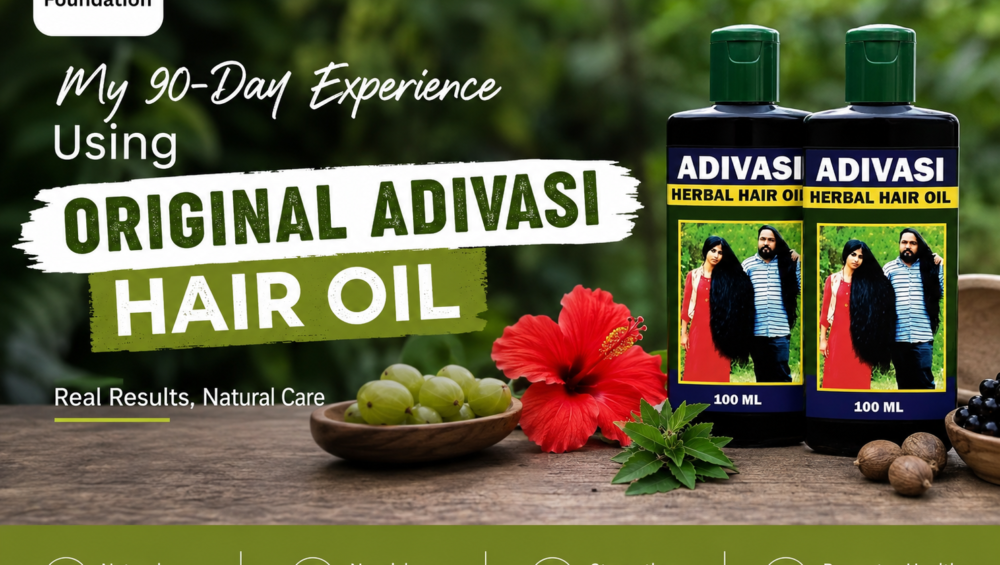
Hair care rarely delivers a dramatic change overnight. For most people, the real difference comes from consistency, a suitable routine, and giving the scalp and hair enough time to respond. That was the thinking behind my 90-day experience with Original Adivasi Hair Oil.
I wanted to look beyond the first few applications and see how the oil fitted into a regular hair-care routine. Rather than judging it only by fragrance, texture, or the immediate softness after application, I paid attention to how my scalp felt, how manageable my hair became, how much effort was required, and how my hair looked over several weeks.
This experience also made me more conscious of an important point: hair oils are not magic solutions. Hair condition is influenced by genetics, nutrition, stress, styling habits, scalp condition, cleansing frequency, and many other factors. An oil can become a useful part of a routine, but expectations should remain realistic.
Why I Decided to Try Original Adivasi Hair Oil
My main reason for trying Original Adivasi Hair Oil was simple. I wanted an oil that could become a practical part of my weekly hair-care routine without making the process unnecessarily complicated.
I have always found that the hardest part of hair care is maintaining consistency. Many products sound promising, but if they leave the scalp excessively greasy, have an overpowering smell, or require a complicated application process, they can be difficult to continue using.
The approach I took was deliberately simple. I treated oiling as a routine rather than a one-time treatment. I applied the oil to the scalp and hair, allowed it to remain for a period that suited my schedule, and then cleansed my hair.
I also avoided changing several other aspects of my routine at the same time. That made it easier to notice changes in texture, manageability, and overall hair appearance without attributing every difference to one product.
The First Week: Getting Used to the Routine
During the first few applications, the biggest adjustment was simply becoming familiar with the oil.
The texture matters when you are using a hair oil regularly. I prefer an application that allows me to distribute the oil without repeatedly adding more product. A small amount can be worked through the scalp and lengths, depending on hair thickness and length.
I found that applying the oil gradually was more practical than pouring a large quantity onto the scalp at once. It also made washing easier.
One thing I quickly learned was that more oil does not necessarily mean better results. Over-application can leave the hair heavy and increase the amount of shampoo needed during cleansing.
The first week was therefore less about expecting visible transformation and more about establishing a comfortable application method.
Weeks Two to Four: Making Oiling Consistent
By the second week, the process felt much more natural.
Consistency became more important than trying to achieve an immediate visual change. I kept my application routine reasonably regular and paid attention to how my hair behaved after washing.
One noticeable benefit of oiling was improved softness and manageability. Hair that feels dry or rough can often become easier to handle after a suitable pre-wash oiling routine. That does not mean the oil permanently changes the structure of the hair, but it can make the hair feel conditioned and more manageable.
I also became more careful about how I handled my hair after washing. Instead of aggressively rubbing it with a towel, I used gentler handling and avoided unnecessary pulling while detangling.
This period reinforced something I had previously overlooked: a good hair-care product works best when the surrounding habits are sensible as well.
The 30-Day Mark: What I Started Noticing
At around the one-month point, I began paying closer attention to the overall condition and appearance of my hair.
The most practical observation was that my hair felt more manageable when oiling was combined with regular cleansing and gentle handling. The lengths appeared less rough after the oiling-and-washing cycle, particularly when I avoided excessive heat styling.
The scalp experience was equally important. A hair oil should not automatically be considered suitable for every scalp type. Some people may find oiling comfortable, while others may feel that frequent oil application makes their scalp excessively oily or uncomfortable.
For that reason, I focused on how my own scalp responded rather than assuming that everyone would have the same experience.
I also resisted the temptation to describe ordinary hair shedding as either a success or failure of the product. Hair naturally sheds, and the amount a person notices can vary from one wash to another.
Days 31 to 60: The Routine Became Easier
The second month was where the routine started feeling less like an experiment and more like a normal part of hair care.
One advantage of using an oil consistently is that you learn how much your hair actually needs. Initially, it is easy to assume that the scalp and lengths need to be saturated. With experience, a more measured application often becomes sufficient.
I also became more aware of the difference between hair appearance and genuine hair growth.
When hair is smoother, less tangled, and better conditioned, it can look healthier and fuller. That visual improvement should not automatically be interpreted as accelerated growth.
Hair growth occurs from the follicle, and individual growth rates vary considerably. An oil applied to the hair shaft can improve the feel and appearance of the hair, but claims about dramatic growth should always be approached carefully.
For me, the more meaningful measure was whether the routine made my hair easier to maintain.
Days 61 to 90: Looking at the Bigger Picture
The final month was the most useful because there was enough time to judge whether I could actually maintain the routine.
By this point, I was no longer focused on whether every application produced an obvious difference. Instead, I looked at the cumulative experience.
The oil had become part of a predictable cycle: apply, leave for an appropriate period, cleanse, dry gently, and continue with normal hair care.
The biggest takeaway was that consistency changed my perception of hair oiling. I stopped treating it as an occasional remedy and started viewing it as one component of a broader routine.
My hair felt conditioned after the oiling process, and I appreciated the improved manageability. I also became more disciplined about avoiding practices that could work against my hair-care goals, such as excessive heat, rough brushing, and unnecessary product buildup.
What I Liked About Original Adivasi Hair Oil
Several aspects stood out during the 90-day period.
1. It fitted easily into a routine
A hair product becomes much more useful when it is easy to incorporate into normal life. I found that oiling could be scheduled around my washing routine without requiring an elaborate process.
2. It helped with hair manageability
The most practical benefit I noticed was the feel of my hair after oiling and cleansing. Hair that is easier to comb and handle can make everyday grooming less frustrating.
3. It encouraged consistency
There is something useful about having a dedicated oiling routine. It creates a regular moment to pay attention to the scalp and hair rather than waiting until the hair feels particularly dry or difficult to manage.
4. It made me more conscious of scalp and hair care
Using hair oil regularly encouraged me to observe my scalp, washing habits, hair texture, and styling practices more closely.
What I Would Not Expect From Any Hair Oil
A realistic review also needs boundaries.
I would not expect Original Adivasi Hair Oil or any other hair oil to reverse every type of hair problem. Hair concerns can have many causes, including hereditary factors, hormonal changes, nutritional issues, scalp disorders, medications, stress, and damage caused by styling.
Similarly, an oil should not be presented as a guaranteed solution for hair loss or as a replacement for professional medical advice.
If someone experiences sudden or significant hair loss, persistent scalp irritation, severe dandruff, sores, or other unusual symptoms, consulting a qualified dermatologist is a more appropriate step than relying solely on cosmetic hair products.
This distinction is especially important for consumers researching hair-care products online. A product can have a useful place in a routine without being positioned as a universal treatment.
How I Used the Oil
My routine remained straightforward.
I started with a moderate amount rather than applying excessive oil. I distributed it across the scalp and through the hair lengths where needed. A gentle scalp massage helped spread the product evenly without aggressive rubbing.
I then left the oil on for a period that worked with my schedule before washing my hair.
The cleansing stage mattered just as much as the oiling stage. If too much oil is used, removing it can require repeated shampooing, which may leave some hair types feeling dry.
After washing, I handled the hair gently and allowed it to dry without excessive heat whenever possible.
This routine may need adjustment according to hair texture, scalp type, lifestyle, and washing frequency. Someone with fine, oily hair may prefer a lighter application, while someone with thicker or drier hair may use a different amount.
My 90-Day Takeaway
After 90 days, my conclusion is less about making a dramatic promise and more about recognising what consistent hair care can accomplish.
Original Adivasi Hair Oil became a useful part of my personal routine because I could use it consistently and because I liked the way my hair felt and behaved after the oiling process.
The experience also taught me that evaluating a hair product requires patience. Looking at a single application tells you very little. A longer period gives you a better idea of whether the product is comfortable to use, whether it fits your lifestyle, and whether you genuinely enjoy incorporating it into your routine.
For professionals and hair-care enthusiasts, this is an important distinction. Product evaluation should consider application experience, user compliance, hair feel, scalp response, cleansing requirements, and long-term practicality rather than focusing only on promotional claims.
My 90-day experience was therefore positive from a routine and hair-manageability perspective, while I would still recommend keeping expectations realistic.
Hair care is rarely about one product alone. A sensible routine, suitable cleansing, gentle handling, adequate nutrition, and attention to individual scalp needs all have a role.
For me, the biggest value of the 90-day experience was discovering that a simple, consistent oiling routine could become something I was comfortable maintaining.
Final Thoughts
Trying Original Adivasi Hair Oil for 90 days gave me enough time to move beyond first impressions.
The experience was not about expecting overnight transformation. It was about observing how the oil performed as part of an ongoing routine and whether I could continue using it comfortably.
I noticed the most value in hair softness, manageability, and the overall experience of regular oiling. At the same time, I believe consumers should distinguish between cosmetic benefits and medical claims.
If you are considering adding a hair oil to your routine, start with realistic expectations, use an amount appropriate for your hair, pay attention to your scalp, and give your routine enough consistency to evaluate it fairly.
For me, 90 days was long enough to say that Original Adivasi Hair Oil earned a place in my regular hair-care routine—not because of exaggerated promises, but because the experience was practical, consistent, and easy to maintain.
FAQs
How often should Original Adivasi Hair Oil be used?
There is no single frequency suitable for everyone. Hair texture, scalp oiliness, washing habits, and personal preference all matter. Starting with a manageable routine and observing how the scalp and hair respond is a sensible approach.
Can Original Adivasi Hair Oil make hair grow faster?
Hair growth varies from person to person and is influenced by multiple biological factors. A hair oil should not be treated as a guaranteed way to accelerate hair growth. Its more realistic role is as part of a hair-care routine that supports conditioning and manageability.
How long should I use Original Adivasi Hair Oil before judging my experience?
A longer, consistent trial gives a more useful impression than judging the product after one or two applications. A period of several weeks allows you to assess application, scalp comfort, hair feel, manageability, cleansing, and whether the routine works for your lifestyle.