
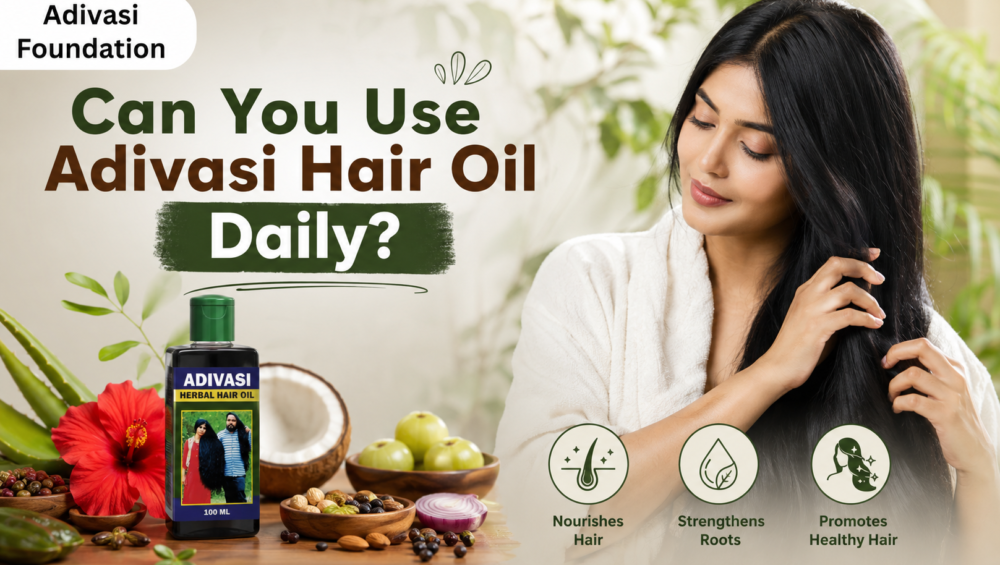
Can You Use Adivasi Hair Oil Daily?
Hair oiling remains an important part of many Indian hair care routines. People use herbal oils to nourish the scalp, manage dryness, improve hair texture, and support stronger-looking hair. However, one common question arises when someone starts using herbal hair oil regularly: can you use Adivasi Hair Oil daily?
The answer depends on your scalp type, hair condition, lifestyle, application method, and the formulation you use. Daily application may suit some people, while others may achieve better results with two or three applications per week. A balanced routine can help you receive the benefits of oiling without making your scalp excessively greasy or difficult to cleanse.
Can Adivasi Hair Oil Be Applied Every Day?
Adivasi Hair Oil can form part of a regular hair care routine, but daily use does not automatically mean better results. Hair and scalp requirements vary significantly from one person to another.
Someone with very dry, coarse, or frizzy hair may prefer frequent oiling because the hair loses moisture quickly. Someone with an oily scalp may find that applying a large quantity every day creates excessive buildup.
The quantity also matters. Applying a few drops to dry hair ends differs greatly from covering the scalp and hair with oil every day.
Before choosing a daily routine, consider:
- Your natural scalp oil production
- Hair thickness and texture
- Current scalp condition
- Frequency of shampooing
- Exposure to dust and pollution
- Styling habits
- Amount of oil applied per session
Instead of following a fixed schedule, pay attention to how your scalp and hair respond.
Why Do People Prefer Regular Hair Oiling?
Regular oiling can make hair easier to manage, especially when dryness, roughness, and tangling create problems. Oil coats the hair shaft and may reduce friction between individual strands.
People often include herbal hair oils in their routines to maintain scalp and hair condition. Consistent application can also encourage a structured self-care routine.
The benefits depend on the ingredients, application frequency, washing routine, and individual hair characteristics. Hair oil should therefore support an overall hair care routine rather than act as the only solution for every concern.
Benefits of Using Adivasi Hair Oil Regularly
1. Helps Nourish Dry Hair
Dry hair often feels rough because it lacks sufficient moisture and lubrication. Regular oil application can help coat the strands and improve their feel.
People with naturally dry hair may particularly appreciate consistent oiling. Applying an appropriate amount can make strands feel softer without unnecessarily weighing them down.
2. Supports Scalp Care
Healthy-looking hair starts with proper scalp care. Regular oiling provides an opportunity to massage the scalp gently while applying the product.
A clean scalp, suitable cleansing routine, balanced diet, and appropriate hair products all contribute to overall hair maintenance.
3. Helps Manage Frizz
Frizz often becomes more noticeable when hair lacks moisture or faces humidity. A small quantity of oil applied through the lengths can make dry and unruly strands easier to manage.
People with curly, wavy, coarse, or naturally dry hair may find this particularly useful.
4. Makes Hair Easier to Manage
Hair that feels excessively dry can become difficult to comb and style. Oiling may improve lubrication between strands, helping reduce friction during grooming.
Gentle handling remains important. Avoid aggressive brushing, especially when the hair is tangled or vulnerable to breakage.
5. Supports a Consistent Hair Care Routine
Consistency often matters more than excessive application. Establishing regular oiling days makes it easier to maintain a structured routine alongside shampooing, conditioning, trimming, and other hair care practices.
Should You Oil Your Scalp Every Day?
Daily scalp oiling is not necessary for everyone.
The scalp naturally produces sebum, which helps lubricate the skin and hair. Some people produce more sebum than others. Applying additional oil every day to an already oily scalp can make hair feel greasy faster.
People with dry scalps may tolerate more frequent oiling, but the amount still matters. Heavy application can lead to product accumulation and increase the need for frequent cleansing.
Start with a moderate schedule and observe the results. If your scalp remains comfortable and your hair feels manageable, you can adjust the frequency according to your needs.
How Often Should You Use Adivasi Hair Oil?
There is no universal schedule suitable for every hair type. A practical frequency may range from two to three times per week for many people.
Your routine could vary according to these general patterns:
Dry Hair
Dry hair may benefit from two or three oiling sessions each week. People with extremely dry lengths can also apply a very small amount to the ends between wash days when necessary.
Oily Hair
An oily scalp may require less frequent application. One or two oiling sessions per week may feel more comfortable than daily scalp application.
Normal Hair
People with balanced scalp conditions can usually adjust their schedule according to washing frequency and personal preference.
Curly or Coarse Hair
Curly and coarse hair often experiences greater dryness through the lengths. Regular oiling may help improve manageability, but application should focus on individual requirements.
Fine Hair
Fine hair can become weighed down quickly. Smaller quantities and less frequent application generally make more sense than heavy oiling.
Daily Use Does Not Mean Heavy Application
People sometimes assume that using hair oil every day requires saturating the scalp and hair. That approach can make hair unnecessarily greasy.
If daily use suits your hair, consider using a minimal quantity.
Place a few drops on your palms, rub your hands together, and gently apply the oil where needed. Concentrate on dry lengths or ends rather than repeatedly coating the entire scalp.
This approach can provide light conditioning while reducing excessive buildup.
How to Apply Adivasi Hair Oil Properly
Application technique can influence how your hair feels after oiling.
Start by ensuring that your scalp does not have excessive dirt or product buildup. Take a suitable quantity of oil depending on your hair length and density.
Divide your hair into sections if necessary. Apply the oil gradually rather than pouring a large quantity directly onto your scalp.
Use your fingertips to massage gently. Avoid scratching the scalp with your nails because aggressive rubbing may irritate the skin.
After scalp application, spread the remaining oil through the lengths and ends. Dry ends may require slightly greater attention because they receive less natural sebum than hair near the roots.
How Much Hair Oil Should You Use?
More oil does not necessarily produce better hair.
The appropriate quantity depends on hair length, thickness, porosity, and dryness. Short or fine hair generally requires less product than long, thick, or coarse hair.
Excessive oil can make shampooing more difficult. You may then use more shampoo or wash repeatedly to remove it, potentially leaving the hair feeling dry.
Use enough oil to coat the required areas lightly without making the hair excessively saturated.
Should You Leave Hair Oil Overnight?
Some people prefer overnight oiling, while others prefer applying oil shortly before washing.
Leaving oil overnight is not mandatory for receiving the conditioning benefits associated with oiling. A shorter pre-wash application can also fit effectively into a regular routine.
If overnight application makes your scalp itchy, uncomfortable, or excessively greasy, choose a shorter duration instead.
Personal comfort should influence the routine.
Can You Apply Hair Oil Without Washing Every Day?
Yes, provided you use a small amount and your scalp remains comfortable.
You do not necessarily need to shampoo after every light application. A few drops applied to dry ends can remain until your normal wash day.
Heavy scalp oiling requires a different approach. Leaving layers of oil on the scalp while continuously adding more product may encourage buildup.
Maintain a reasonable balance between oil application and cleansing.
Can Daily Hair Oiling Make Hair Greasy?
Yes, especially when you apply more oil than your hair needs.
Greasy hair does not necessarily indicate that the oil itself is unsuitable. The quantity or application frequency may simply exceed your scalp’s requirements.
Reduce either the amount or frequency if your hair starts appearing oily shortly after washing.
People with naturally oily scalps should pay particular attention to this issue.
Does Hair Type Affect Oiling Frequency?
Hair type plays an important role when deciding how often to apply oil.
Straight, fine hair often shows oiliness quickly because natural oils travel relatively easily along the hair shaft. Heavy daily application may therefore feel excessive.
Curly and coily hair may experience more dryness because natural scalp oils do not travel as easily along bends and curls. These hair types may tolerate regular application through the lengths more comfortably.
Hair porosity also influences how products behave. Some hair absorbs oils readily, while other hair types experience surface buildup faster.
Hair Oiling and Shampoo Frequency
Your oiling routine should work alongside your cleansing schedule.
If you apply substantial amounts of oil frequently, you may need to shampoo more often. Excessive washing, however, may leave some hair types feeling dry.
Instead of creating a cycle of heavy oiling followed by aggressive cleansing, use moderate quantities that your regular shampoo routine can manage comfortably.
Choose a shampoo according to your scalp and hair requirements and rinse thoroughly after washing.
Common Mistakes to Avoid During Daily Hair Oiling
Even a good hair care routine can become ineffective when application habits create unnecessary problems.
One common mistake involves using too much oil. Saturating the scalp does not guarantee better nourishment.
Another mistake involves aggressive scalp massage. Vigorous rubbing can tangle the hair and cause unnecessary mechanical stress.
Applying new layers of oil repeatedly without proper cleansing can also contribute to buildup.
Avoid applying oil over irritated, infected, injured, or unusually sensitive scalp areas without appropriate professional advice.
Finally, do not expect hair oil alone to address every hair concern. Nutrition, stress, styling practices, heat exposure, chemical treatments, genetics, hormonal factors, and medical conditions can all influence hair and scalp health.
Signs You May Be Using Too Much Oil
Your hair often provides clear indications when the routine needs adjustment.
Consider reducing the amount or frequency when:
- Hair remains greasy after washing
- The scalp feels unusually heavy or uncomfortable
- Hair loses volume quickly
- Product buildup becomes noticeable
- You need repeated shampooing to remove oil
- Hair attracts excessive dust between washes
Reducing the quantity may solve the problem without requiring you to stop oiling completely.
When Should You Reduce Daily Application?
If daily application worked initially but your scalp becomes increasingly oily, reduce the frequency.
Seasonal conditions can also change hair requirements. Humidity, heat, indoor air conditioning, winter dryness, pollution, and activity levels may affect how your hair responds.
Your routine does not need to remain identical throughout the year.
Adjusting oil quantity and frequency according to your hair’s condition can produce a more comfortable routine.
Adivasi Hair Oil for Different Lifestyles
Lifestyle also influences the ideal oiling schedule.
People who exercise regularly may sweat more around the scalp. Heavy daily oil application combined with sweat may feel uncomfortable and require more frequent cleansing.
People who spend significant time outdoors may experience greater exposure to dust and pollution. Excessive oil can sometimes make airborne particles adhere more easily to hair.
Those who spend most of their time indoors may prefer a different schedule.
A practical routine should fit naturally into your lifestyle rather than create additional maintenance.
What Role Does Scalp Massage Play?
Scalp massage often accompanies hair oil application. Gentle massage helps distribute the oil across the scalp and creates a relaxing grooming routine.
Use the pads of your fingertips and apply light pressure in small circular movements. Avoid pulling or twisting the hair aggressively.
A massage does not need to last a long time. A few minutes of careful application can distribute the product effectively.
Can Men and Women Use Adivasi Hair Oil Regularly?
Hair care requirements depend more on scalp condition, hair type, styling habits, and individual needs than gender.
Men and women can include Adivasi Hair Oil in their regular hair care routines when the formulation suits them.
People with short hair may require considerably less oil than people with long or dense hair. Adjust the quantity instead of following someone else’s routine exactly.
What About Chemically Treated or Colored Hair?
Colored, straightened, bleached, or chemically treated hair may require additional attention because chemical processing can affect the hair shaft.
Oil may help improve the feel and manageability of dry lengths, but people should consider the specific instructions associated with their professional treatments.
If you recently received a salon treatment, follow the recommended waiting period and aftercare instructions before adding new products.
When Should You Stop Using a Hair Oil?
Stop using a product if you develop persistent itching, redness, swelling, burning, rash, or another unusual reaction after application.
Wash the product from the affected area and avoid continued use until you determine the cause.
Anyone with an existing scalp disorder, severe dandruff, unexplained hair loss, open wounds, or persistent irritation should consider consulting a qualified dermatologist rather than relying solely on cosmetic hair care products.
Building a Balanced Hair Care Routine
Hair oil works best as one component of a balanced routine.
Combine appropriate oiling with gentle cleansing, conditioning, careful detangling, sensible heat styling, and protection from excessive chemical processing.
Nutrition also plays an important role in normal hair health. A balanced diet containing sufficient protein, vitamins, minerals, healthy fats, and adequate hydration supports the body’s normal functions.
Adivasi Foundation encourages users to choose hair care routines based on their individual hair and scalp requirements rather than assuming that maximum product use produces maximum benefits.
So, Can You Use Adivasi Hair Oil Daily?
Yes, daily use may suit some people, particularly when they apply a small quantity and have dry or coarse hair. However, daily scalp oiling is not necessary for everyone. People with oily or fine hair may prefer fewer applications each week.
The most effective schedule depends on your scalp, hair texture, washing routine, environment, and product quantity. Start moderately, monitor how your hair responds, and adjust accordingly. Consistent, sensible application usually makes more sense than excessive oiling.
FAQs
How often should I apply Adivasi Hair Oil?
Many people may prefer applying hair oil two or three times per week. However, frequency should depend on scalp oiliness, hair texture, dryness, washing habits, lifestyle, and the amount applied.
Can I leave Adivasi Hair Oil overnight?
You may leave hair oil overnight if your scalp remains comfortable. Overnight application is not essential, however. You can also apply the oil before washing and leave it on for a shorter period based on your routine.
How much Adivasi Hair Oil should I apply?
Use enough to lightly coat the scalp or required hair sections without completely saturating them. Fine or short hair generally requires less oil, while thick, long, curly, or dry hair may need a slightly larger quantity.