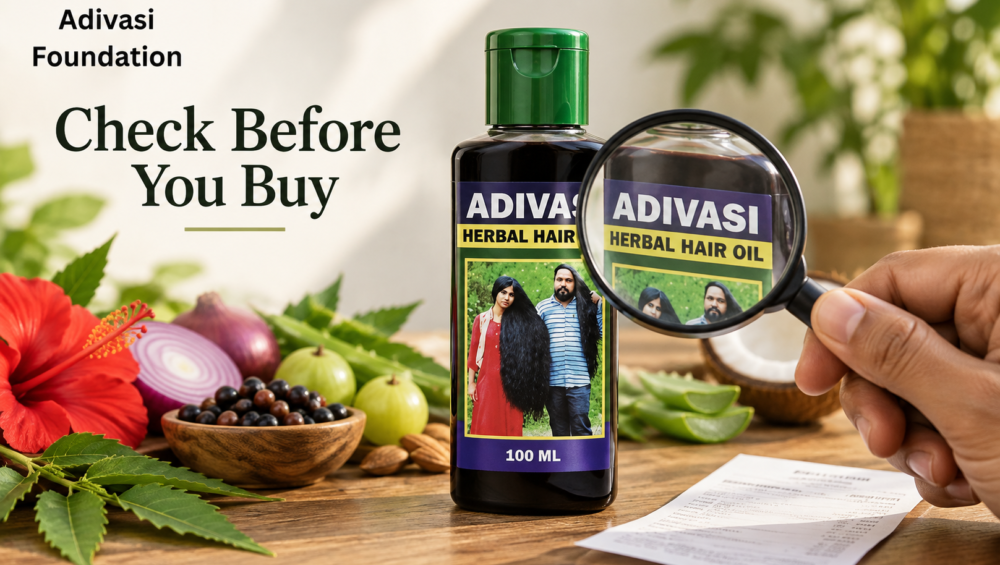
A photograph of a familiar bottle is easy to copy. That is why checking Original Adivasi Hair Oil requires more than recognising its name or label. Before paying, look at who is selling it, whether the product information is complete and how you can reach the seller if something goes wrong. Once the parcel arrives, inspect the seal and compare the bottle with the listing. These steps take a few minutes, but they can save you from paying for a product you cannot confidently identify.
Why is authenticity difficult to judge from a photograph?
Online sellers often use polished product images that do not show the bottle you will receive. A listing may display the right name while leaving out the manufacturer, batch details or a clear view of the back label. Similar names can also appear across different sellers and formulations.
The difficulty is greater when an advert takes you straight to a messaging app or a payment page. You may see testimonials and an attractive price without seeing a business address, return terms or a proper product listing.
Treat each piece of information as part of a larger check. A convincing image alone does not establish where a bottle came from. A low price alone does not prove it is fake. What matters is whether the seller, product label, purchase record and physical bottle tell a consistent story.
Start with the seller, before inspecting the oil
The most useful authenticity check happens before you place the order. Open the seller’s website or marketplace profile and look for a clear business identity, contact details and a way to raise a problem after delivery.
If you intend to buy an Adivasi Foundation product, start with Adivasi Foundation’s official website or ask the company to confirm whether a particular seller or listing is associated with it. The company publishes a contact page for customer enquiries. A seller claiming to be “official” should be willing to explain that claim and provide an order record.
Check the web address carefully. A page can use a brand name in its title while operating at a different address. Look beyond the first search result or social media advert, especially if it asks you to move the conversation to an unfamiliar number. If you are unsure, type the known website address into your browser yourself and compare the product there.
On a marketplace, check the seller’s name, not just the name of the product. Read the listing details, return conditions and recent customer feedback. Reviews can point to recurring delivery or packaging problems, although a favourable review is not proof that every bottle from a seller is genuine.
Read the product information before you buy
A legitimate product listing should give you enough information to make an informed choice. Look for the bottle size, the stated ingredients, directions for use, price and seller details. If photographs show only the front label, ask for a clear image of the remaining label information.
For cosmetics sold in India, labelling rules cover details such as the manufacturer’s name and address, a batch or lot number, and an expiry or use-before declaration, subject to the applicable requirements and limited exceptions. India’s drug regulator also advises consumers to check manufacturer details, manufacturing licence information, batch number, and manufacturing and expiry dates when purchasing authorised cosmetics.
Do not assume that every product described as “Adivasi hair oil” has the same ingredients. Compare the information on the particular bottle you are considering with the corresponding product listing. If you have an older bottle at home, remember that packaging and labels may change. Ask the brand about a difference instead of treating an old photograph as the final standard. Adivasi Foundation’s own advice also recommends checking the label and combining packaging checks with seller and batch verification.
Which label details deserve a closer look?
Before buying, try to establish whether you will be able to check:
- The product name and stated quantity
- The manufacturer’s identity and address
- A batch or lot number
- Manufacturing and expiry or use-before information
- The stated ingredients and directions
- The seller’s identity and a purchase record
Some of this information may be visible only when the bottle arrives. That is a reason to check the seller’s return process in advance. If a listing omits basic details and the seller will not provide them when asked, consider another source.
Compare the price with the actual offer
An unexpectedly cheap bottle deserves a closer look, particularly when an advert combines a steep discount with pressure to order immediately. Check the quantity as well as the price: a smaller bottle can appear cheaper without offering better value.
Compare the advertised amount with the current price on the brand’s own listing for the same size. Then check delivery charges, any advance-payment request and the total at checkout. If the seller describes the product as a clearance item, ask whether the stock is close to its expiry date.
Price is a warning signal, not an authenticity test. Sellers may run genuine promotions, while an imitation may be priced close to the original. Use price to decide when to investigate further, then rely on the seller’s identity, label details and order documentation.
Check the listing and payment process
A dependable purchase should leave a trace you can refer to later. Save the product-page address or a screenshot showing the seller, bottle size, price and claims made at the time of purchase. Keep the order confirmation and invoice or receipt.
Be cautious if a seller changes the price or product details during a private conversation, asks you to pay a different person or cannot explain how a return would work. These gaps make it harder to resolve a dispute, even if the bottle itself looks convincing.
Also read the claims with care. Statements such as “guaranteed regrowth” or “works for every type of hair loss” should prompt questions. Hair concerns have different causes, and a cosmetic hair oil should not be treated as a diagnosis or a guaranteed treatment. Judge the listing by the information it provides, rather than by dramatic promises.
What should you inspect when the parcel arrives?
Open the parcel somewhere with good light and keep the outer packaging until you have checked the contents. Compare the delivered product with the listing you saved. Start with the bottle size and shape, then inspect the cap, seal, label and printed details.
Look for signs of leakage, a broken or disturbed seal, a label placed over important information, or text that is too blurred to read. Check whether the batch and date information appears clear and whether the manufacturer details are present. If the outer carton and bottle both carry batch information, compare them.
A damaged parcel does not automatically mean the oil is counterfeit; it may have been mishandled during delivery. Likewise, a label variation may reflect a packaging change. Both situations warrant clarification before you use the product.
Take photographs of the unopened parcel if it looks damaged, followed by the bottle, seal, labels and invoice. Good photographs make it easier for the seller or brand to identify the issue. Do not discard the packaging while a return or authenticity enquiry is open.
Does colour or smell reveal whether the oil is genuine?
Colour, scent and texture may draw your attention, but they are weak tests on their own. Lighting can change how an oil looks in a photograph, and your memory of a previous bottle may be imprecise. Storage conditions can also affect a product’s appearance.
If the oil has an unusual smell, visible contamination or a texture that concerns you, do not apply it while seeking clarification. Share the batch number and photographs with the seller or brand. Avoid judging authenticity through internet “tests” that tell you to heat the oil, mix it with other substances or apply it to your scalp to see what happens.
Use the batch number as a way to ask a precise question
A batch number is useful because it gives the brand or manufacturer a specific detail to investigate. When you contact customer support, provide the number exactly as printed, along with the bottle size, seller name, order date and clear photographs.
Ask a direct question: Can you confirm whether this product and batch information match your records, and whether this seller is an authorised source? The response may help resolve an apparent packaging difference or identify a listing that needs further investigation.
Do not rely on a batch number alone. Printed numbers can be copied. It is the combination of a traceable purchase, consistent product details and a response from the appropriate company that gives you greater confidence.
The same caution applies to QR codes. A code may lead to a product page, a marketing page or an unrelated address. Check the destination before entering personal information, and do not assume that the presence of a code proves authenticity.
What if you bought a bottle from a social media advert?
Social media is often where people first encounter a product, but an advert is only a starting point. Before ordering, check who operates the account, where its purchase link leads and who will issue the invoice. An account name that resembles a brand’s name does not, by itself, establish a connection.
If the advert sends you to a marketplace, inspect the marketplace seller. If it sends you to a separate website, read the contact and returns pages there. When the seller claims that the product is from Adivasi Foundation, you can contact Adivasi Foundation through its published contact page to ask about the claim.
Be particularly careful with urgency tactics: a countdown, a claim that only a few bottles remain, or a message pressing you to pay before your questions are answered. Give yourself time to compare the offer with a source you can verify.
What should you do if the bottle seems suspicious?
First, stop using it while you check. Photograph the bottle, seal, batch information, parcel label and invoice. Keep screenshots of the listing and any messages with the seller.
Next, contact the seller through the channel shown on your order and describe the specific problem. “The batch number is unreadable” or “the delivered quantity differs from the listing” is more useful than simply saying that the bottle looks fake. Ask for an explanation, replacement or refund as appropriate under the seller’s stated terms.
If the product is represented as an Adivasi Foundation item, send the same details to the company using the contact information published on its website. Do not use a phone number printed only in a suspicious advert as your sole route for verification.
If the issue remains unresolved, India’s National Consumer Helpline accepts consumer grievances through its portal and other channels, including the helpline number 1915. Its service can help you raise a purchase complaint; it does not replace product testing or a manufacturer’s batch verification.
If the oil causes irritation, stop applying it. Seek advice from a qualified healthcare professional if symptoms persist or are severe, and retain the bottle and purchase details.
A practical checklist before you place an order
Use these questions when comparing sellers of Original Adivasi Hair Oil:
- Who is selling this bottle? Identify the business or marketplace seller behind the listing.
- Can the brand confirm the source? If the seller claims an official connection, check it through the brand’s published contact details.
- What information can you see? Look for the quantity, ingredients, manufacturer details and clear label images.
- Will you receive an order record? Keep an invoice or receipt and the original listing.
- Are the terms clear? Read the delivery, return and complaint process before paying.
- Does the price make sense? Compare the same bottle size and check the final amount, including delivery.
- Can you inspect it on arrival? Check the seal, batch details and expiry information before applying the oil.
You do not need a perfect memory of how a bottle looked months ago. You need enough reliable information to trace the product you are buying and a clear route to ask questions if the delivered item differs from what was promised.
Conclusion
Checking authenticity is a sequence of small decisions: verify the seller, read the product details, keep your purchase record and inspect the bottle on arrival. If anything conflicts, pause before using the oil and ask the seller or brand to investigate the specific details. A clear answer about the product’s source is more useful than a familiar label or an appealing discount.
FAQs
Can a QR code confirm that Original Adivasi Hair Oil is authentic?
A QR code can provide information, but it should not be your only check. See where it leads and whether the destination belongs to the brand. Confirm the seller, label and batch information as well. If you remain unsure, contact the company directly.
Is a lower price proof that Original Adivasi Hair Oil is fake?
No. A genuine seller may offer a discount, and a misleading seller may charge the usual price. Compare prices for the same bottle size, then check the seller’s identity, product information, invoice and return terms before deciding whether to buy.
What should I do if my Original Adivasi Hair Oil bottle has a broken seal?
Do not use the oil. Photograph the parcel, seal, bottle and label, and keep the invoice. Report the issue to the seller promptly and request an explanation or resolution. If authenticity remains in doubt, contact the brand using the details on its official website.