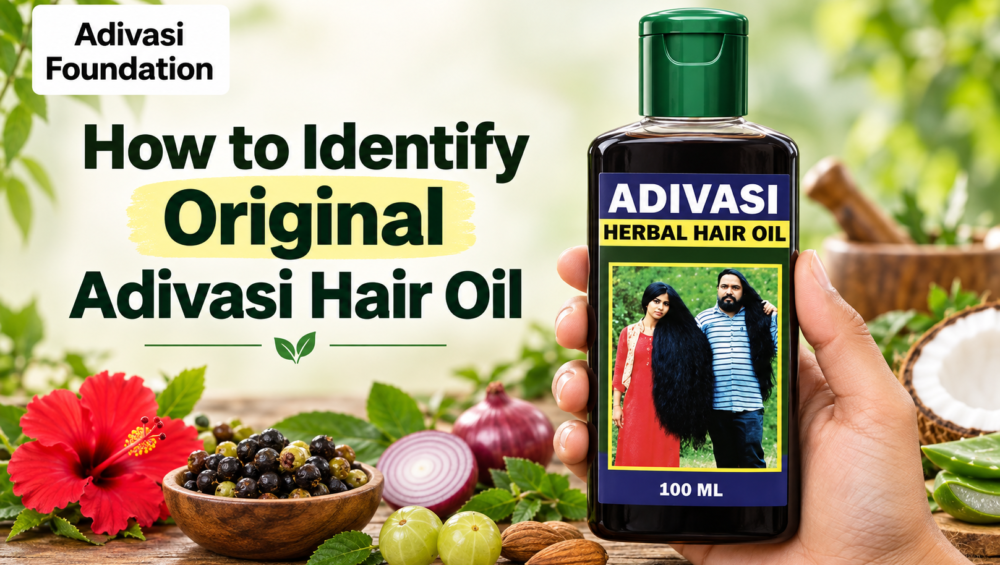
The growing popularity of herbal hair oils has attracted many sellers, product variations and imitation packages. Buyers may encounter similar names, copied labels, unrealistic promises and heavily discounted bottles across online and offline markets. These similarities can make product selection difficult.
A careful buyer should never judge authenticity from colour, fragrance or packaging alone. Checking the manufacturer’s identity, label information, batch details, seal, seller credibility and purchase record offers a more reliable way to assess Original Adivasi Hair Oil before applying it to the scalp.
Why Product Authenticity Matters
A hair oil comes into direct contact with the scalp and hair. An unverified product may contain undeclared fragrances, low-quality oils, contaminated ingredients or substances that do not match the label. Poor manufacturing or storage conditions can also affect product stability.
Authenticity matters for several reasons:
- It helps buyers know who manufactured or marketed the product.
- It provides access to customer support if a problem arises.
- It allows consumers to check the ingredient declaration.
- It makes batch-level enquiries possible.
- It reduces the risk of buying diluted or substituted products.
- It supports safer purchasing decisions.
- It provides traceability through invoices and order records.
No single visual clue can conclusively prove that a product is genuine. Buyers should combine several checks and seek confirmation from the brand when any information appears doubtful.
Purchase From an Authorised Source
The seller often provides the first important clue. Purchase hair oil through the brand’s official website, an authorised representative or a verified marketplace account whenever possible.
Before placing an online order, inspect the seller’s profile carefully. Check the business name, customer ratings, return policy, contact details and history on the platform. A newly created account with limited information, copied photographs or unusually poor reviews requires extra caution.
A marketplace may list several products with almost identical names. Do not assume that the first listing belongs to the actual brand. Compare the seller’s information with the details published through the brand’s official communication channels.
When purchasing offline, choose an established shop and request a printed or digital bill. Avoid loose, unlabelled oil sold in reused bottles when the seller cannot provide reliable manufacturing information.
Customers interested in products offered by Adivasi Foundation should use the organisation’s confirmed sales channel or contact information. Direct verification remains especially useful when a third-party seller claims to represent the company.
Examine the Outer Packaging
Packaging can reveal inconsistencies, although appearance alone cannot establish authenticity. Genuine products generally use consistent branding, readable text and properly fitted containers.
Inspect the package for:
- Blurred printing or pixelated images
- Spelling and grammatical errors
- Uneven label placement
- Different fonts across the package
- Faded colours
- Low-quality adhesive
- Damaged caps or seals
- Signs that one label covers another
- Missing product or manufacturer information
- Scratched or altered batch details
Compare the bottle with clear photographs from the brand’s official source. Pay attention to the logo, label layout, bottle shape, cap design, printed wording and quantity.
Manufacturers sometimes update packaging, so a small design difference does not automatically indicate an imitation. Contact the brand with photographs if the package differs from an earlier purchase.
Check the Seal Before Opening
A secure seal helps protect a product against leakage, contamination and unauthorised opening. Depending on the bottle design, the package may contain a shrink band, tamper-evident ring, inner plug, foil liner or outer box seal.
Inspect the cap and neck carefully. A broken ring, loose cap, cut shrink wrap or damaged liner may indicate that someone has opened or mishandled the bottle. Oil around the neck can result from leakage during transport, but it still deserves attention.
Do not use a product if the seal appears deliberately replaced or if the container shows signs of tampering. Photograph the package before opening it and contact the seller immediately. Keeping the bottle, outer package and invoice can support a return or complaint.
Read Every Part of the Label
A credible label should provide enough information for a buyer to identify the product and responsible business. Indian cosmetic products operate within a formal regulatory framework, while packaged products must also carry applicable consumer declarations.
Look for details such as:
- Product name
- Net quantity
- Ingredient information
- Manufacturer’s name and address
- Marketer’s details, where applicable
- Manufacturing or packing information
- Batch or lot number
- Use-before or expiry information
- Maximum retail price
- Consumer-care contact details
- Directions for use
- Necessary warnings
- Manufacturing licence details, where applicable
The precise declarations can vary with the product’s classification, package size and applicable rules. The Cosmetics Rules, 2020 provide the central regulatory framework for cosmetics in India. Packaged-commodity rules also require important consumer-facing declarations such as manufacturer or packer information, quantity and price particulars. A missing field does not independently prove counterfeiting, but several missing or inconsistent details should raise concern.
Verify the Manufacturer’s Identity
A product name can be copied easily, but traceable business information provides a stronger basis for verification. Read the manufacturer’s complete name and address instead of relying only on the brand name printed prominently on the front.
Search for the address and compare it with the information supplied through official channels. A vague address, incomplete location or unrelated contact number requires further checking. If the label names separate manufacturers and marketers, identify the role of each entity.
Contact the business through independently confirmed details rather than relying solely on a phone number printed on a suspicious package. Share photographs of the front label, back label, batch number, invoice and seller listing. The business may be able to confirm whether the packaging and batch information correspond with its records.
Inspect the Batch Number and Date Details
A batch number connects a product to a particular manufacturing run. It supports traceability, quality control and complaint handling.
Check whether the batch information appears clearly printed, embossed or otherwise securely marked. Be cautious if it looks erased, overwritten, smudged or added through a poorly placed sticker. Compare the batch number on the bottle with any number printed on the outer carton.
Review the manufacturing and use-before details as well. The dates should appear logical and legible. Avoid products with missing dates or altered printing. Never purchase an expired bottle merely because the seller offers a large discount.
A batch code alone does not prove authenticity because counterfeiters may copy visible numbers. Treat it as one part of a broader verification process.
Review the Ingredient Information
Read the ingredient declaration before buying the oil. A responsible label should help consumers identify substances that may not suit them.
The term “Adivasi hair oil” does not represent one universally standardised formula. Different products may use different carrier oils, herbs, extracts, fragrances and processing methods. Therefore, colour or smell cannot reliably prove whether a bottle is genuine.
Be cautious when promotional material lists many ingredients but the actual package provides little useful information. Compare the seller’s description with the physical label after delivery. Large differences may indicate an inaccurate listing, outdated product page or questionable item.
People with allergies or sensitive scalps should examine the ingredient list carefully. If the information remains unclear, ask the manufacturer before use.
Compare the Price Carefully
An unusually low price can signal an imitation, old stock, diluted contents, damaged packaging or an unauthorised sale. However, a discount alone does not prove that a bottle is fake. Brands may offer genuine promotions, introductory prices or larger-pack savings.
Compare the price across official and authorised channels. Investigate substantial differences, especially when a seller demands direct payment, refuses to issue a bill or pressures the buyer to complete the transaction quickly.
The opposite principle also applies: a high price does not guarantee genuineness. Some sellers charge more for copied products to create an impression of quality. Verification should focus on traceability rather than price alone.
Assess Colour, Texture and Fragrance With Caution
Consumers often try to identify herbal oil by its colour, thickness or aroma. These characteristics can provide supporting clues, but they remain unreliable as primary tests.
Natural ingredients can produce slight differences between batches. Temperature also affects viscosity. Coconut-based oils, for example, may thicken or solidify in cooler conditions. Plant extracts can settle over time, while fragrances may change slightly after prolonged storage.
A dramatic difference from a previous bottle deserves investigation. Look for an unusual chemical odour, separation that does not resolve as directed, foreign particles, unexpected cloudiness or signs of spoilage. Do not continue using a questionable product merely because its packaging appears genuine.
Never perform unsafe home experiments involving heating, burning, tasting or mixing the oil with chemicals. Such tests cannot establish authenticity and may cause injury.
Check Online Listings for Warning Signs
Product photographs and descriptions can reveal whether a seller has presented the item responsibly. Examine every available image, including the back label and seal. Listings that show only a decorative front image provide limited evidence.
Common warning signs include:
- Claims of instant or guaranteed hair growth
- Promises to cure every scalp condition
- Before-and-after photographs without context
- Missing manufacturer information
- Contradictory quantities or ingredients
- Reviews that repeat identical wording
- Requests for payment outside the marketplace
- No return or replacement policy
- Images copied from unrelated sellers
- Refusal to share a real package photograph
Online reviews can help identify repeated concerns, but they do not prove authenticity. Some reviews may relate to delivery problems, personal preferences or improper use. Assess patterns rather than relying on one highly positive or negative comment.
Do Not Trust QR Codes or Barcodes Alone
A QR code may lead to a product page, authentication system or marketing material. A barcode may identify a product category for retail purposes. Neither feature automatically proves that the bottle is genuine because someone can copy a visible code.
Scan the code only with a trusted application. Check the destination address before entering personal information. A secure brand verification page should match the company’s confirmed domain or official system.
If the code leads to an unrelated website, requests unnecessary financial information or produces details that conflict with the package, stop the verification process and contact the brand directly.
Treat Extraordinary Hair Claims Carefully
Hair oil can lubricate the hair shaft, reduce friction, support grooming and improve the appearance or manageability of hair, depending on its formulation and individual use. It should not automatically be treated as a remedy for every form of hair loss.
Hair fall may relate to genetics, nutritional deficiencies, hormonal changes, scalp conditions, illness, medication, stress or damaging grooming practices. Persistent shedding, bald patches, scalp pain, inflammation or sudden changes require assessment by a qualified medical professional.
A product that promises guaranteed regrowth within a fixed period should invite caution. Authenticity and effectiveness are separate questions. A genuine cosmetic product may not produce the same result for every person.
Perform a Patch Test Before Regular Use
Even a genuine herbal product can cause irritation or an allergic response. “Natural” does not mean suitable for every scalp.
Follow the manufacturer’s directions and test a small amount on a limited area first. Allow enough time to observe the skin before broader application. Stop using the oil if it causes burning, swelling, persistent itching, rash or unusual discomfort.
Avoid applying oil to broken, infected or severely inflamed skin unless a healthcare professional advises otherwise. Keep the product away from the eyes and store it according to the package instructions. Seek medical help if a serious reaction occurs.
Keep the Invoice and Delivery Evidence
A bill creates a record of the seller, date, amount and product. Save the invoice, order confirmation, payment receipt and photographs of the sealed parcel. Record an opening video for expensive or suspicious orders when practical.
If the product appears counterfeit or tampered with, contact the seller and brand promptly. State the problem clearly and provide supporting evidence. Do not discard the package until the matter has been addressed.
Consumers can also use the National Consumer Helpline to register eligible grievances through its available channels. The service accepts complaints through its online portal and other official options.
A Practical Authenticity Checklist
Before using the oil, confirm the following:
- The purchase came from an official or verified source.
- The seller supplied an invoice.
- The package matches current official product images.
- The cap and seal show no tampering.
- The label contains clear manufacturer information.
- The batch number and date details remain legible.
- The listed ingredients match the seller’s description.
- The quantity and price declarations appear consistent.
- The product contains no unexplained foreign matter.
- The brand can verify doubtful details.
When several checks fail, do not apply the oil. Request clarification, replacement or refund through the appropriate channel.
Conclusion
Identifying an authentic bottle requires more than judging its colour, fragrance or popularity. Buyers should examine the seller, seal, label, manufacturer, batch code, dates, ingredients, invoice and product condition together. No visual shortcut can replace direct verification.
Adivasi Foundation encourages careful purchasing and responsible product use. Consumers should obtain products through confirmed channels, retain transaction records and ask questions whenever packaging or seller information appears inconsistent. These simple checks protect both scalp safety and purchasing confidence.
Frequently Asked Questions
Does the colour prove that Original Adivasi Hair Oil is genuine?
No. Colour can vary because of ingredients, extraction methods, storage conditions and natural batch differences. Imitation products can also copy a genuine oil’s colour. Use colour only as a supporting observation and prioritise seller verification, label details, secure packaging, batch information and direct brand confirmation.
Can a QR code confirm Original Adivasi Hair Oil?
A QR code can support verification when it connects to the brand’s legitimate authentication system. However, counterfeiters can copy visible codes. Confirm the web address, compare the displayed product details and avoid sharing unnecessary personal or banking information. Contact the brand if the code fails or opens an unrelated page.
What should I do if I receive suspicious Adivasi hair oil?
Do not use the product. Photograph the bottle, seal, label, batch code and parcel, then preserve the invoice and payment record. Contact the seller and brand to request verification, replacement or refund. If the issue remains unresolved, submit a grievance through the National Consumer Helpline or the relevant marketplace process.