
Hair care is often less about using more products and more about choosing the right formulation for your scalp and hair type. Herbal hair oils have remained a familiar part of Indian hair-care routines because they combine oil-based conditioning with plant-derived ingredients traditionally used for scalp and hair nourishment.
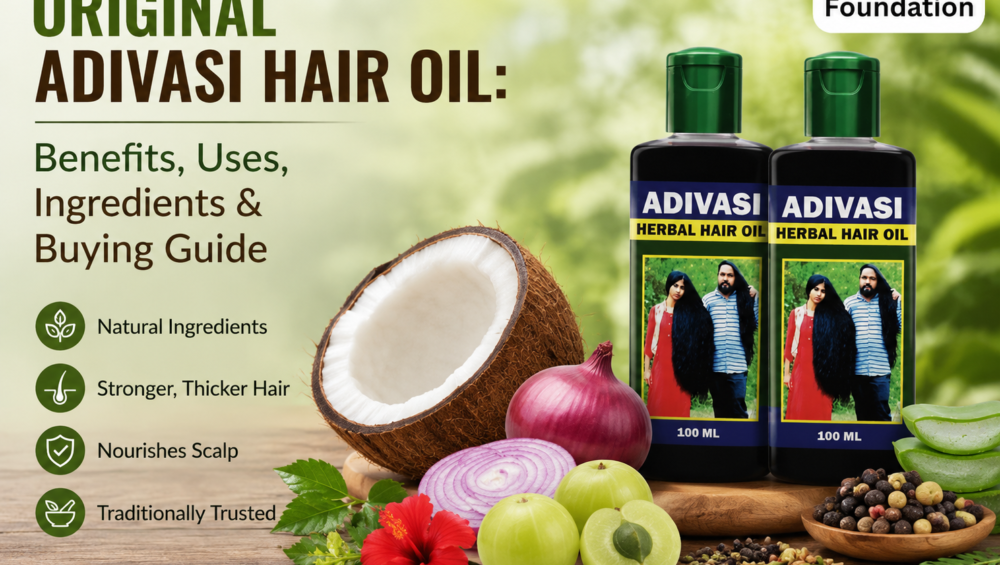
Original Adivasi Hair Oil is associated with a traditional herbal approach that focuses on nourishing the scalp, conditioning the hair shaft and supporting healthier-looking hair. Adivasi Foundation describes its formulation as being made with traditional herbal ingredients, including coconut, onion and amla, while its product information also highlights several other botanical ingredients used in its formulation.
For professionals, natural-hair enthusiasts and consumers comparing herbal formulations, the important question is not simply whether an oil is labelled “natural.” The quality of the ingredients, formulation, manufacturing information, packaging, usage instructions and authenticity all matter.
What Is Original Adivasi Hair Oil?
Original Adivasi Hair Oil is a herbal hair-care formulation designed for regular scalp and hair nourishment. The product offered by Adivasi Foundation is positioned around traditional plant-based hair-care practices and contains a blend described as involving numerous herbs. The company states that its formulation contains 108 herbs and identifies ingredients such as coconut, onion and amla among its key components.
The role of a hair oil is primarily cosmetic and conditioning. Oils can help reduce dryness, improve manageability and make hair appear smoother and shinier. Coconut oil, for example, has a particular affinity for hair proteins and has been studied for its ability to reduce protein loss from the hair shaft.
That distinction is important. A quality herbal oil can be a useful part of a hair-care routine, but it should not automatically be considered a treatment for every form of hair loss. Hair shedding can have many causes, including genetic factors, hormonal changes, nutritional issues, scalp inflammation, stress and damage.
Key Ingredients in Original Adivasi Hair Oil
The ingredient profile is one of the first things experienced buyers should examine. Adivasi Foundation identifies coconut, onion and amla as notable ingredients, while its product information also mentions herbs such as bhringraj and other traditional botanicals.
Coconut Oil
Coconut oil is widely used in hair care because it can interact with the hair shaft and help reduce protein loss. This makes it particularly relevant for dry, rough or chemically treated hair that is prone to breakage.
Its conditioning effect can help hair feel softer and easier to manage. It may also make the hair surface appear smoother after application.
Amla
Amla, or Indian gooseberry, has a long history in Indian hair-care traditions. It contains several naturally occurring compounds, including polyphenols and tannins.
In an oil formulation, amla is generally valued for conditioning and maintaining the appearance of healthy hair. It is important, however, not to interpret traditional use as proof that amla oil can reverse genetic hair loss.
Onion
Onion is another ingredient associated with traditional and contemporary herbal hair-care formulations. Adivasi Foundation lists onion among the ingredients used in its formulation and describes it as having antimicrobial properties.
Consumers with sensitive scalps should still pay attention to how their skin responds to any onion-containing product.
Bhringraj
Bhringraj is widely recognised in Ayurvedic and Indian herbal hair-care practices. It is traditionally associated with scalp nourishment and hair maintenance.
It is frequently incorporated into polyherbal hair oils, although evidence for dramatic hair-regrowth claims remains limited. Reviews of hair oils have also cautioned that many traditional claims require stronger clinical evidence.
Other Herbal Ingredients
Depending on the specific formulation, traditional herbal hair oils may contain ingredients such as hibiscus, neem, fenugreek, curry leaves, brahmi and other plant extracts. Adivasi Foundation also presents its product as a multi-herb formulation.
Because formulations can change, consumers should always check the ingredient information printed on the current product packaging rather than relying solely on a seller’s description.
Benefits of Original Adivasi Hair Oil
The benefits of an herbal hair oil are best viewed in terms of scalp care, conditioning and hair maintenance rather than exaggerated promises.
1. Helps Condition Dry Hair
Regular oiling can make dry hair feel smoother and more manageable. Oils form a coating over the hair surface and can reduce the rough sensation associated with dryness.
This can be particularly useful for people whose hair is exposed to frequent washing, heat styling, colouring or environmental dryness.
2. Supports Scalp Nourishment
A gentle scalp massage combined with an appropriate hair oil can become a useful grooming ritual. The oil helps moisturise the skin surface while massage distributes the formulation across the scalp.
The experience can also make hair care more consistent because the application becomes part of a repeatable routine.
3. May Help Reduce Breakage
Hair that is dry and brittle is more susceptible to mechanical damage. Conditioning oils can improve slip and reduce friction during handling.
Coconut oil has particularly strong relevance here because research has found it can reduce protein loss from hair.
4. Improves Hair Texture and Shine
One of the most noticeable cosmetic effects of hair oil is improved surface appearance. Hair can look smoother, glossier and better conditioned after appropriate application.
Adivasi Foundation also lists improved hair texture among the intended benefits of its product.
5. Supports a Consistent Hair-Care Routine
Results from cosmetic hair care generally depend on consistency. Applying a suitable oil occasionally may provide temporary conditioning, while a regular routine can make it easier to maintain moisture and manageability.
However, more oil does not necessarily mean better results. Excessive application may leave buildup and make cleansing difficult.
Can Original Adivasi Hair Oil Stop Hair Fall?
This is one of the most important questions consumers ask.
Hair fall is not a single condition. Normal daily shedding is different from persistent thinning, patchy loss or progressive recession. An oil may help improve the feel and condition of the hair, but that does not mean it can address every biological cause of hair loss.
Clinical evidence for many traditional hair oils remains limited, and experts caution against treating significant hair loss solely with cosmetic oils.
If hair shedding is sudden, severe, patchy or accompanied by scalp symptoms, professional assessment is more appropriate than repeatedly changing hair oils.
How to Use Original Adivasi Hair Oil
Application should be simple and consistent.
Step 1: Start With a Suitable Quantity
Take enough oil to lightly cover the scalp and hair without saturating it. The required quantity depends on hair length, density and texture.
Step 2: Apply to the Scalp
Part the hair into sections and apply the oil directly to the scalp. Use your fingertips rather than scratching with your nails.
Step 3: Massage Gently
Massage with light circular movements for several minutes. Avoid aggressive rubbing because excessive friction can irritate the scalp and contribute to mechanical hair damage.
Step 4: Distribute Through the Hair
For dry or coarse hair, a small amount can be worked through the lengths and ends.
Step 5: Wash Thoroughly
Leave the oil according to the product’s instructions and wash with a suitable shampoo. If your scalp becomes greasy or uncomfortable, reduce the quantity or frequency.
Many hair-oiling routines use oil as a pre-shampoo treatment. Dermatology literature notes that oiling has a long cultural history, although strong clinical evidence for many claimed trichological benefits remains limited.
How Often Should You Use It?
There is no universal schedule that suits every scalp.
People with dry, coarse hair may prefer oiling once or twice a week. Those with fine or naturally oily hair may need a smaller amount and less frequent application.
A practical approach is to start conservatively and observe how the scalp and hair respond. If you notice excessive greasiness, buildup, itching or irritation, reduce use or discontinue the product.
Original Adivasi Hair Oil for Different Hair Types
Dry Hair
Dry hair can generally benefit from the conditioning properties of an appropriate oil. Concentrating a modest amount on the lengths and ends can help improve softness.
Oily Scalp
Use a smaller quantity and avoid excessive scalp application. Thorough cleansing is particularly important when the scalp produces substantial oil naturally.
Curly or Wavy Hair
Curly textures can experience dryness along the lengths because natural scalp oils do not always travel easily down the hair shaft. A small quantity distributed through the lengths may improve manageability.
Chemically Treated Hair
Coloured, bleached or chemically treated hair may require extra conditioning. Oil can form part of a broader hair-care routine, but it should not replace appropriate cleansing and conditioning products.
How to Identify Original Adivasi Hair Oil Before Buying
Demand for popular herbal products can create confusion, especially when several sellers use similar names or descriptions.
Adivasi Foundation itself has published information warning consumers about duplicate products and recommending attention to authenticity when purchasing Original Adivasi Hair Oil.
Before placing an order, check the following:
1. Manufacturer information: Look for clear company and product details.
2. Packaging quality: Examine printing, seals, labels and product information.
3. Ingredient information: A credible product should provide meaningful ingredient details rather than relying entirely on promotional claims.
4. Batch and product details: Check manufacturing, batch, quantity and other applicable information printed on the packaging.
5. Seller authenticity: Prefer the manufacturer’s official sales channel or a clearly authorised seller.
6. Price that makes sense: An unusually low price deserves additional scrutiny, particularly if the packaging or seller information is inconsistent.
7. Avoid exaggerated promises: Claims such as guaranteed baldness reversal or instant hair growth should be treated cautiously.
Adivasi Foundation presents its official website as a source for its Original Adivasi Hair Oil and provides product information and purchasing details there.
Why Buying From an Authentic Source Matters
The quality of a hair oil depends on more than the name printed on the bottle. Storage conditions, raw-material quality, formulation, processing, packaging and handling can all affect the final product.
A duplicate product may have a similar-looking bottle while containing a completely different formulation. That is why consumers should verify the seller and product information before purchasing.
For industry professionals, traceability is especially important. A transparent product should make it easier to identify the manufacturer, formulation information and relevant product details.
Original Adivasi Hair Oil vs. Ordinary Hair Oil
The main distinction is formulation philosophy.
A conventional hair oil may focus primarily on a single base oil or conditioning ingredient. A polyherbal formulation, by contrast, combines multiple plant-derived ingredients intended to provide different cosmetic functions.
Original Adivasi Hair Oil is positioned by Adivasi Foundation as a traditional multi-herb formulation rather than a simple single-oil product.
That does not automatically make one formulation superior to another. The right choice depends on hair type, scalp condition, ingredient tolerance, personal preference and the intended purpose of the product.
What Results Should You Expect?
Realistic expectations are essential.
With regular use, a suitable hair oil may help hair feel softer, improve shine, reduce the sensation of dryness and make strands easier to manage. It may also complement a healthy scalp-care routine.
Claims of rapid regrowth, complete reversal of baldness or guaranteed prevention of hair loss should not be taken as established facts. Evidence for many herbal hair-care ingredients is still developing, and hair loss caused by medical or genetic factors requires a different approach.
Think of the product primarily as part of hair and scalp maintenance rather than a guaranteed cure for every hair concern.
Safety and Sensitivity Considerations
Natural ingredients are not automatically free from irritation or allergy. Oils, fragrances and botanical extracts can cause reactions in sensitive individuals.
A small patch test before extensive use is a sensible precaution, particularly if you have previously reacted to cosmetic or herbal products. Dermatology sources also recommend testing hair oils for potential allergy before full application.
Stop using the product if you experience persistent burning, swelling, severe itching or another significant reaction.
People experiencing unexplained or substantial hair loss should consider speaking with a qualified dermatologist rather than relying exclusively on cosmetic hair products.
Who May Consider Original Adivasi Hair Oil?
Original Adivasi Hair Oil may appeal to people who:
- Prefer herbal hair-care formulations
- Want an oil-based pre-shampoo routine
- Experience dry or rough-feeling hair
- Want to improve hair manageability and shine
- Prefer multi-herb formulations
- Enjoy traditional Indian hair-oiling practices
- Want a conditioning product for regular hair maintenance
It may not be the appropriate solution for every scalp or every type of hair loss. Personal tolerance and the underlying cause of a hair concern should always be considered.
Final Buying Checklist
Before purchasing Original Adivasi Hair Oil, check:
- Product name and packaging
- Manufacturer information
- Ingredient details
- Batch and quantity information
- Seller authenticity
- Usage directions
- Storage instructions
- Customer support details
- Whether the claims are realistic
- Whether the product is purchased through a trusted channel
For consumers, these checks reduce the chance of purchasing an imitation and help establish a more reliable hair-care routine.
Final Thoughts
Original Adivasi Hair Oil represents a traditional herbal approach to scalp and hair maintenance. Adivasi Foundation highlights a multi-herb formulation featuring ingredients such as coconut, onion and amla, with additional herbal components associated with traditional hair care.
Its most reasonable role is as a conditioning and nourishing addition to a regular hair-care routine. The potential cosmetic benefits include improved softness, manageability, shine and reduced dryness, while expectations around hair growth and hair-loss reduction should remain realistic.
For the best experience, choose an authentic product, read the formulation details, use an appropriate quantity and pay attention to your scalp’s response. Good hair care is rarely about one product alone; consistency, gentle handling, suitable cleansing, nutrition and attention to underlying scalp or hair concerns all have a role.
FAQs
What are the main ingredients in Original Adivasi Hair Oil?
Adivasi Foundation identifies coconut, onion and amla among the key ingredients and describes the formulation as containing 108 herbs. Product formulations can change, so buyers should check the ingredient information on the current packaging before use.
Can Original Adivasi Hair Oil regrow lost hair?
Hair oil should not be considered a guaranteed treatment for baldness or medically caused hair loss. It may condition the hair and support scalp care, but persistent, sudden or significant hair loss can have several underlying causes and may require professional evaluation.
How can I buy Original Adivasi Hair Oil safely?
Purchase through Adivasi Foundation's official sales channel or another verified seller, and check the packaging, manufacturer information, ingredient details, batch information and other product details before buying. Adivasi Foundation has specifically highlighted the importance of identifying authentic products because duplicate products can circulate under similar descriptions.