
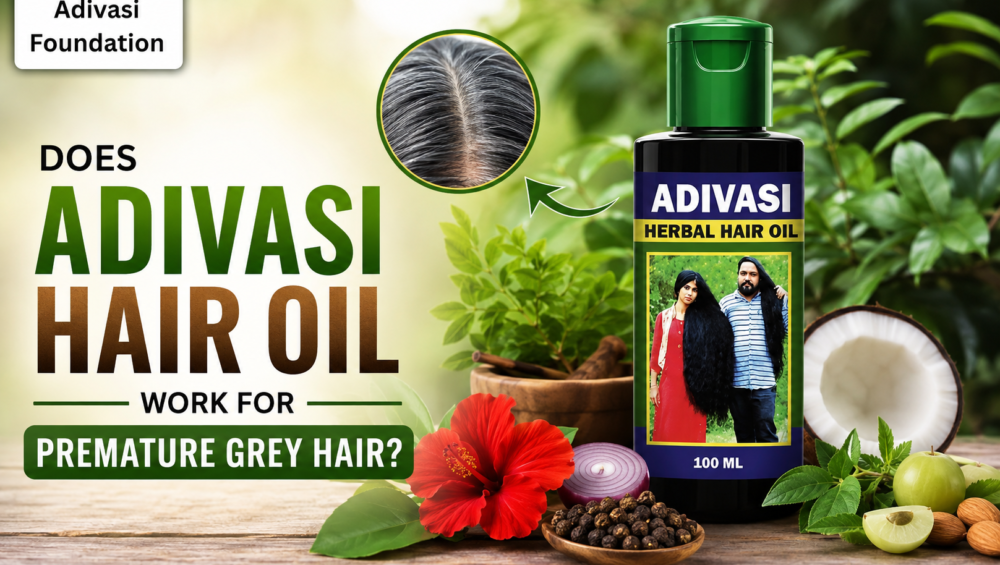
Premature grey hair can appear much earlier than people expect, sometimes in the twenties or even teenage years. For many people, the first few silver strands raise questions about nutrition, stress, genetics, scalp health, and hair-care habits. This has also increased interest in traditional herbal solutions such as Adivasi Hair Oil. Herbal oils may help nourish the scalp, condition the hair, and support healthier-looking strands, but whether they can restore the natural colour of premature grey hair requires a closer look at what causes greying in the first place.
Adivasi Foundation focuses on traditional herbal hair-care practices that emphasize consistent scalp and hair nourishment. Rather than treating premature greying as an isolated cosmetic concern, it helps to consider the overall condition of the scalp, hair shaft, lifestyle, and possible underlying factors.
What Is Premature Grey Hair?
Hair receives its natural colour from melanin, a pigment produced by specialised cells known as melanocytes within hair follicles. Different amounts and types of melanin create black, brown, blonde, red, and other natural hair shades.
As people age, pigment-producing activity gradually declines. New hair then grows with less pigment and eventually appears grey or white. When noticeable greying begins considerably earlier than expected, it is commonly described as premature greying.
There is no single age that defines premature greying for every person because genetics, ethnicity, family history, nutrition, lifestyle, and individual biology can influence when hair starts losing pigment.
Why Does Hair Turn Grey Prematurely?
Several factors may contribute to early greying. Knowing the possible reason matters because applying hair oil cannot address every cause of colour loss.
Common factors associated with premature greying include:
- Genetic predisposition
- Nutritional deficiencies
- Oxidative stress
- Smoking
- Certain medical conditions
- Changes in melanin production
- Environmental exposure
- Poor dietary patterns
- Excessive chemical hair treatments
- Natural biological variation
Family history can be particularly influential. If parents or close relatives developed grey hair at an early age, another family member may experience a similar pattern.
Nutritional factors can also deserve attention. Deficiencies involving vitamin B12, iron, folate, copper, or other nutrients may sometimes be associated with changes in hair health. Anyone experiencing sudden or unusually rapid greying should consider professional medical advice rather than relying entirely on cosmetic or herbal products.
Can Adivasi Hair Oil Reverse Grey Hair?
This is one of the most important questions for anyone searching for a natural solution to premature greying.
Hair oil can condition the scalp and hair, reduce dryness, improve manageability, and provide botanical ingredients traditionally associated with hair care. However, there is not strong clinical evidence showing that a herbal hair oil can reliably turn established grey or white strands permanently back to their original colour.
Once a follicle stops producing sufficient melanin, restoring pigment is biologically more complicated than simply nourishing the hair shaft.
Therefore, expectations surrounding Adivasi Hair Oil and premature grey hair should remain realistic. Its more practical role lies in supporting scalp nourishment and maintaining healthier-looking hair rather than promising guaranteed reversal of established greying.
How Adivasi Hair Oil May Support Prematurely Greying Hair
Even though oil cannot guarantee restoration of lost pigmentation, a suitable herbal oil routine can still contribute positively to hair maintenance.
1. Supports Scalp Nourishment
Healthy-looking hair begins with proper scalp care. Regular oil application helps lubricate dry areas and can make the scalp feel more comfortable.
Massaging oil into the scalp also encourages a consistent self-care routine. Gentle massage spreads the oil evenly around the roots and scalp instead of concentrating it only on the hair lengths.
A nourished scalp creates better conditions for maintaining existing hair, although scalp nourishment should not be confused with proven melanin restoration.
2. Helps Reduce Hair Dryness
Prematurely grey strands can sometimes feel comparatively coarse or dry. As hair changes, maintaining softness becomes an important part of cosmetic hair care.
Applying Adivasi Hair Oil through the lengths can provide lubrication that helps hair feel smoother and softer. Well-conditioned hair can also appear shinier, making grey and naturally coloured strands look healthier.
3. Supports Hair Strength and Manageability
Frequent heat styling, chemical treatments, aggressive brushing, and environmental exposure can leave hair fragile.
Oiling helps reduce friction between strands and may improve manageability. When hair becomes easier to comb, unnecessary pulling and mechanical damage can also be reduced.
This does not directly change hair pigment, but it can improve the overall appearance and condition of prematurely greying hair.
4. Provides Traditional Herbal Hair Care
Herbal oils have been used in Indian hair-care traditions for generations. Many formulations rely on botanical ingredients valued for scalp conditioning and hair nourishment.
The effectiveness of any formulation depends on its actual ingredients, their concentrations, manufacturing quality, individual sensitivity, and regularity of use. Consumers should therefore check the product label instead of assuming every herbal hair oil contains the same ingredients.
Herbal Ingredients Commonly Associated with Grey Hair Care
Traditional hair oils may contain different combinations of herbs and plant-derived oils. The precise ingredient list of the product being used should always be checked before application.
Amla
Amla has a longstanding place in traditional Indian hair care. It contains naturally occurring antioxidants and is frequently incorporated into oils, powders, shampoos, and masks intended for scalp and hair maintenance.
Amla-based preparations are commonly associated with maintaining shine and healthy-looking hair. However, traditional use should not be interpreted as proof that amla can permanently reverse established grey hair.
Bhringraj
Bhringraj is another herb widely associated with traditional hair-care routines. It is often incorporated into herbal oils designed for scalp massage.
Its traditional reputation has made it popular among people looking for botanical alternatives to conventional hair-care products.
Brahmi
Brahmi frequently appears in herbal scalp formulations. It is traditionally valued in Ayurveda and is commonly combined with carrier oils and other botanicals.
For hair care, its primary practical relevance lies in being part of a nourishing scalp-oil routine rather than serving as a guaranteed solution for restoring natural pigmentation.
Curry Leaves
Curry leaves have a strong traditional association with Indian hair-care practices. They contain several naturally occurring plant compounds and nutrients.
They are often infused into oils intended for maintaining dark, healthy-looking hair. Evidence that topical curry-leaf preparations can reliably reverse premature greying in humans, however, remains limited.
Coconut Oil
Coconut oil is widely used as a carrier oil because of its conditioning properties. It can penetrate the hair fibre to some extent and helps reduce protein loss from hair under certain conditions.
This makes coconut oil particularly useful for improving softness and reducing damage, although its benefits should not be confused with restoring lost melanin.
Adivasi Hair Oil and Melanin Production
A common misconception surrounding anti-grey hair products is that applying herbal ingredients automatically causes follicles to produce more melanin.
Hair pigmentation involves complex biological processes occurring inside the follicle. Melanocyte function, genetics, oxidative stress, ageing, nutritional status, and other biological mechanisms can all influence pigmentation.
An oil applied externally mainly interacts with the scalp surface and hair shaft. While individual ingredients may offer conditioning or antioxidant properties, claims that an oil permanently restores melanin production require strong scientific evidence.
Adivasi Foundation encourages a sensible approach to traditional hair care in which herbal products form part of a regular grooming routine rather than replacing appropriate medical evaluation.
Can Premature Grey Hair Become Black Again Naturally?
The answer depends heavily on why the hair became grey.
When greying results primarily from genetic programming or the natural decline of pigment-producing cells, spontaneous restoration may be unlikely. If an underlying reversible factor contributes to hair changes, addressing that factor may potentially help overall hair health.
For instance, nutritional deficiencies should be properly diagnosed rather than assumed. Taking unnecessary supplements without testing is not advisable because excessive intake of certain nutrients can also cause problems.
Anyone experiencing rapidly increasing grey hair alongside hair loss, fatigue, unexplained weight changes, scalp problems, or other symptoms should consider speaking with a qualified healthcare professional.
How to Use Adivasi Hair Oil for Premature Grey Hair Care
Correct application can make an oiling routine more comfortable and practical.
Start with a small quantity rather than completely saturating the scalp. Divide the hair into sections and apply the oil across different areas of the scalp. Use your fingertips to massage gently without scratching with the nails.
The remaining oil can be distributed through the mid-lengths and ends, particularly if the hair feels dry.
Leave the oil on according to the product directions and personal scalp tolerance before washing with a suitable cleanser. Extremely frequent oiling or leaving heavy quantities on the scalp for prolonged periods may not suit everyone, especially people with oily or sensitive scalps.
Consistency matters more than excessive application.
How Often Should You Apply Hair Oil?
There is no universal frequency suitable for every scalp.
Someone with dry hair may prefer oiling once or twice per week, while a person with an oily scalp may need less frequent application. Climate, physical activity, shampoo frequency, scalp sensitivity, and styling habits can influence the ideal routine.
Using more oil does not necessarily produce better results. A moderate amount that can be distributed easily is usually more practical.
If itching, redness, burning, excessive flaking, or another unusual reaction occurs, discontinue use and seek professional advice when necessary.
Diet and Premature Grey Hair
Topical hair care represents only one part of maintaining healthy hair. Nutrition provides the building blocks required for normal biological functions, including hair growth.
A balanced eating pattern should provide adequate:
- Protein
- Vitamin B12
- Folate
- Iron
- Copper
- Zinc
- Vitamin D
- Antioxidant-rich foods
- Essential fatty acids
Vegetables, fruits, legumes, whole grains, nuts, seeds, dairy or suitable alternatives, and appropriate protein sources can contribute to nutritional balance.
Supplements should not automatically be taken simply because grey hair appears. Testing and professional advice are preferable when a deficiency is suspected.
Lifestyle Factors That May Affect Hair Health
Hair appearance often reflects a combination of genetics and everyday habits.
Manage Long-Term Stress
Stress is frequently blamed for every hair concern, but its relationship with hair biology is more complicated. Persistent stress can affect general wellbeing and may influence certain hair-related processes.
Adequate rest, physical activity, relaxation techniques, and reasonable work-life routines can support overall wellness.
Avoid Smoking
Smoking has been associated in research with premature hair greying. Avoiding tobacco provides much broader health benefits as well.
Limit Excessive Heat
Repeated use of straighteners, curling tools, and high-temperature blow drying can damage the hair shaft. Heat protection and moderate styling temperatures can help preserve hair quality.
Reduce Harsh Chemical Exposure
Frequent bleaching, colouring, straightening, and chemical processing can leave hair dry and fragile. These processes do not necessarily cause biological greying, but they can make already-greying hair look rougher and less healthy.
Grey Hair Versus Damaged Hair
It is useful to separate pigmentation from hair quality.
A strand can be naturally grey while remaining strong and healthy. Similarly, dark hair can be severely damaged despite retaining its pigment.
Adivasi Hair Oil may help with aspects of hair quality such as lubrication, softness, shine, and manageability. These benefits can make prematurely greying hair appear better maintained even when its colour does not change.
This distinction helps people evaluate hair-care products based on realistic outcomes.
When Should You Consult a Professional?
A few grey hairs at an early age do not automatically indicate a medical problem, particularly when premature greying runs in the family.
Professional evaluation may be worthwhile when greying appears suddenly, progresses unusually quickly, or occurs alongside other noticeable changes.
A dermatologist or healthcare professional can evaluate possible contributing factors and determine whether blood tests or other investigations are appropriate.
Medical advice becomes particularly important when premature greying accompanies significant hair shedding, bald patches, scalp inflammation, persistent itching, fatigue, weakness, or other unexplained symptoms.
What Results Should You Expect from Adivasi Hair Oil?
Expectations play an important role in evaluating any hair-care product.
With regular and appropriate use, a herbal hair oil may help hair feel softer, smoother, more manageable, and better conditioned. Scalp massage can also become a relaxing part of a consistent grooming routine.
What users should avoid expecting is an assured transformation in which every white strand permanently becomes black.
Individual results vary because hair condition, genetics, age, diet, scalp type, existing damage, lifestyle, and the underlying reason for greying differ considerably between people.
Choosing an Adivasi Hair Oil
Interest in traditional hair oils has led to many products being sold using similar terminology. Consumers should pay attention to product identity and labelling before purchasing.
Check the ingredient list, usage instructions, manufacturer information, packaging condition, and other product details. Avoid relying exclusively on exaggerated before-and-after claims.
A legitimate hair-care decision should be based on what a product actually contains and what those ingredients can reasonably be expected to do.
A patch test is also sensible when trying a new topical product, particularly for people with sensitive skin or known allergies.
Why Consistency Matters in Herbal Hair Care
Hair changes gradually, which means evaluating a hair-care routine after only a few applications can be misleading.
Consistent use allows someone to determine whether an oil suits their scalp and improves softness, manageability, or dryness. At the same time, continuing a product indefinitely despite irritation or worsening scalp problems is unnecessary.
A sustainable routine usually works better than frequently switching between multiple oils, masks, serums, and home remedies.
Can Adivasi Hair Oil Prevent Future Grey Hair?
No cosmetic oil can responsibly guarantee that a person will never develop additional grey hair.
Genetics and biological ageing remain major influences on pigmentation. Even excellent scalp care cannot completely override inherited tendencies.
Nevertheless, maintaining good nutrition, avoiding smoking, limiting unnecessary chemical damage, caring for the scalp, and following sensible hair-care practices can support overall hair quality.
Adivasi Hair Oil can fit within this broader approach as a traditional conditioning and scalp-care product.
A Balanced Approach from Adivasi Foundation
Traditional herbal hair care has remained popular because many people appreciate simple routines built around botanical ingredients and scalp massage. Adivasi Foundation recognizes the value of maintaining these traditions while keeping expectations practical.
Premature greying has multiple possible causes, and no single oil can address every one of them. Hair oil is most appropriately viewed as supportive care for the scalp and hair rather than a guaranteed treatment for loss of pigmentation.
Combining appropriate hair care with balanced nutrition, healthy lifestyle choices, reduced chemical damage, and professional evaluation when needed creates a more sensible approach to premature grey hair.
Conclusion
So, does Adivasi Hair Oil work for premature grey hair? It can play a useful role in nourishing the scalp, conditioning dry strands, improving manageability, and supporting healthier-looking hair. However, there is insufficient scientific evidence to promise that herbal hair oil can permanently restore established grey hair to its original colour.
People experiencing premature greying should consider genetics, nutrition, lifestyle, scalp condition, and possible underlying factors rather than depending on one product alone. A consistent herbal hair-care routine from Adivasi Foundation can complement sensible hair and scalp maintenance while keeping expectations realistic.
FAQs
How often can I use Adivasi Hair Oil for grey hair?
Application frequency depends on scalp and hair type. Many people may find once or twice weekly convenient, while oily or sensitive scalps may require less frequent application. Follow the product instructions and reduce or discontinue use if irritation, itching, or excessive scalp buildup develops.
Which herbal ingredients are commonly associated with premature grey hair care?
Amla, bhringraj, brahmi, curry leaves, and coconut oil are commonly associated with traditional hair-care practices. They may offer conditioning and scalp-care benefits, but their traditional use does not prove that they can permanently reverse established premature greying.
How long does Adivasi Hair Oil take to show results?
There is no fixed timeline because results depend on hair condition, scalp type, application frequency, lifestyle, and individual biology. Improvements in softness or manageability may become noticeable with consistent use, while restoration of natural pigmentation should not be considered a guaranteed result.