
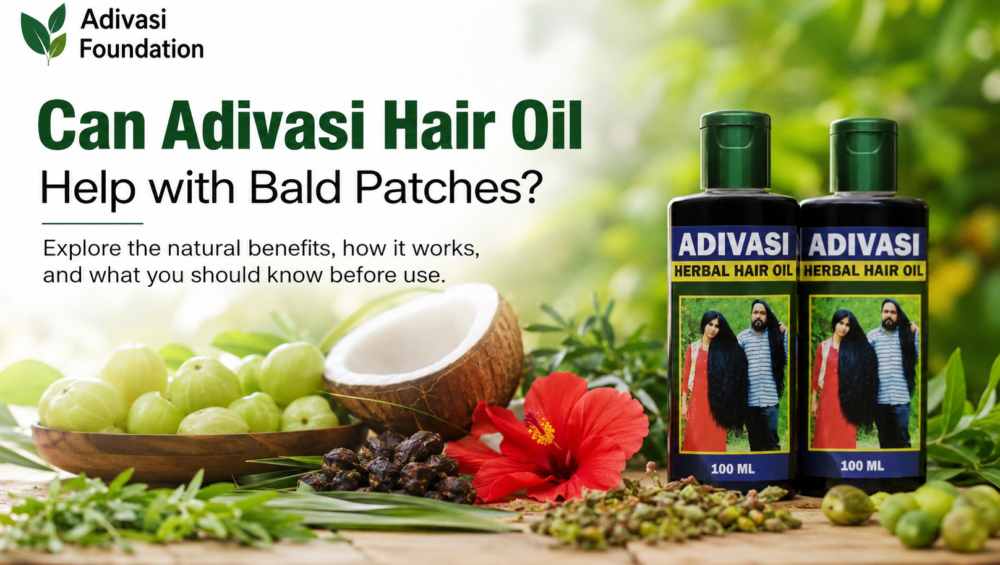
Hair thinning and visible bald patches can be concerning, especially when they appear unexpectedly or become more noticeable over time. Many people look toward traditional herbal hair-care practices as a way to nourish the scalp, strengthen existing hair, and maintain healthier-looking growth. Adivasi Hair Oil has attracted attention among people seeking plant-based hair care inspired by traditional herbal practices.
But can an herbal hair oil actually help with bald patches? The answer depends largely on why the patch has developed. Hair oils may support scalp conditioning and reduce certain forms of hair breakage, but a bald patch caused by an underlying medical condition, scarring, genetics, infection, or autoimmune activity may require professional assessment and treatment.
A realistic approach starts with identifying the possible cause and recognizing what an oil can and cannot do.
What Exactly Is a Bald Patch?
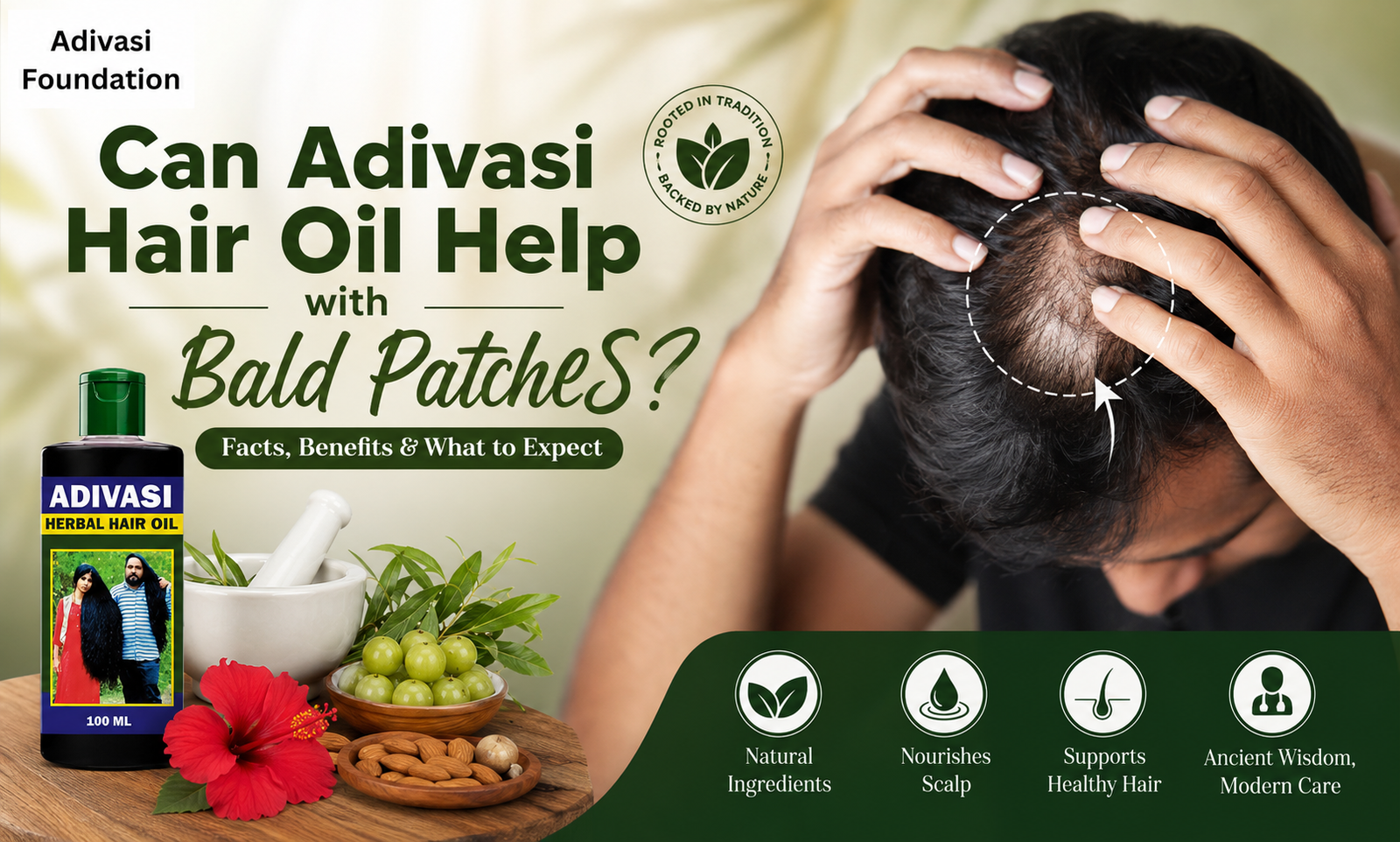
A bald patch refers to an area of the scalp where hair density has noticeably decreased or hair has disappeared altogether. It can be small and circular, irregularly shaped, gradually expanding, or part of broader thinning across the scalp.
Not every bald patch develops for the same reason. Some appear because hair shafts repeatedly break, while others result from changes affecting the hair follicle itself.
Common factors associated with patchy or noticeable hair loss can include:
- Alopecia areata
- Hereditary hair loss
- Fungal scalp infections
- Tight hairstyles
- Repeated pulling or friction
- Scalp inflammation
- Nutritional deficiencies
- Hormonal changes
- Physical or emotional stress
- Certain medicines or medical conditions
- Chemical or heat-related hair damage
- Scarring conditions affecting follicles
This distinction matters because applying oil cannot address every possible cause.
For example, improving scalp and hair conditioning may benefit dry, fragile hair that frequently breaks. It will not necessarily restore follicles affected by permanent scarring.
How Does the Hair Growth Cycle Work?
Hair does not grow continuously without interruption. Individual follicles move through different stages.
The anagen phase represents active growth. During this stage, hair continues to grow from the follicle for an extended period.
The catagen phase acts as a short transitional period in which active growth slows.
The telogen phase represents a resting stage. Eventually, the existing strand sheds and the follicle prepares for another growth cycle.
Several internal and external factors can disrupt this natural cycle. Stress, illness, nutritional issues, hormonal changes and certain scalp conditions can increase shedding or affect normal growth.
This explains why simply applying an oil cannot guarantee new hair growth. Healthy-looking hair depends on the condition of the scalp, follicles, hair shafts and the person’s overall health.
Can Adivasi Hair Oil Regrow Hair on Bald Patches?
No hair oil should be considered a guaranteed treatment for bald patches.
Adivasi Hair Oil may serve as part of a regular scalp and hair-care routine by providing lubrication, conditioning the scalp and reducing dryness. Depending on its formulation, an herbal oil can also help keep existing strands manageable and reduce damage caused by excessive friction.
Whether new hair can appear on a bald area depends on the condition of the follicles and the reason behind the hair loss.
If follicles remain active and the problem involves temporary shedding, breakage or reversible scalp stress, addressing the underlying cause may allow hair to recover over time. If follicles have been permanently damaged or replaced by scar tissue, topical cosmetic oils are unlikely to restore them.
Consumers should therefore be cautious about claims promising guaranteed regrowth on completely bald areas.
The Role of Scalp Care in Maintaining Healthy Hair
Healthy hair begins at the scalp, but scalp care does not mean applying increasingly large quantities of oil.
The scalp naturally produces sebum, which protects the skin and hair. Environmental exposure, frequent washing, harsh products, styling habits and individual skin characteristics can affect this balance.
A suitable hair oil may provide additional conditioning for people experiencing dryness.
Regular scalp care can help:
- Reduce feelings of dryness
- Improve hair lubrication
- Make strands easier to manage
- Reduce friction during grooming
- Support softer-feeling hair
- Minimize breakage associated with dryness
- Maintain a comfortable hair-care routine
These benefits can improve the appearance and condition of existing hair even though they should not be confused with treatment for a medical hair-loss disorder.
Why Scalp Massage Is Often Combined with Hair Oil
Hair oil application is commonly accompanied by gentle scalp massage. Massage helps distribute oil across the scalp and roots while making the application process more controlled.
Use fingertips rather than nails and avoid aggressive rubbing.
Excessive pressure does not make an oil more effective. In fact, vigorous scratching or rubbing may irritate a sensitive scalp or increase mechanical stress on fragile hair.
A gentle massage for several minutes is generally enough to spread the product. Hair that is already thinning should always be handled carefully.
Herbal Ingredients and Their Role in Hair Care
Traditional herbal hair oils may contain combinations of botanical ingredients and carrier oils. The exact formulation varies between products, so consumers should always check the ingredient list rather than assuming that every herbal oil contains the same substances.
Common botanical ingredients used across traditional Indian hair-care preparations may include amla, bhringraj, hibiscus, fenugreek, neem, aloe vera and different plant-derived oils.
Their presence does not automatically mean that a product can reverse baldness. Herbal ingredients are primarily used in cosmetic hair care for conditioning, lubrication and traditional scalp-care purposes.
Adivasi Foundation encourages users to look at hair care realistically: botanical ingredients can form part of a consistent routine, while unexplained or progressive hair loss deserves appropriate professional attention.
Can Hair Oil Help If the Bald Patch Comes from Breakage?
Sometimes an area appears thinner because strands are repeatedly breaking rather than because follicles have stopped producing hair.
Breakage can result from:
- Frequent heat styling
- Chemical treatments
- Rough towel drying
- Excessive brushing
- Tight hairstyles
- Dryness
- Repeated friction
- Poor detangling techniques
Oil can be more relevant in this situation because lubrication may reduce friction between individual hair fibres.
When strands become easier to detangle and manage, mechanical breakage may decrease. As healthier strands remain intact, an area affected mainly by breakage may gradually appear fuller.
However, persistent localized breakage should still be investigated, particularly when accompanied by scalp symptoms.
What If the Patch Is Caused by Alopecia Areata?
Alopecia areata is an autoimmune condition that commonly causes smooth, round or oval patches of hair loss. The immune system mistakenly targets hair follicles.
Cosmetic hair oil should not be presented as a treatment for alopecia areata.
Someone who suddenly develops one or more smooth bald patches should consider consulting a dermatologist. Medical evaluation can help determine whether alopecia areata or another condition is responsible.
An oil may still be used for general hair conditioning if a healthcare professional considers it suitable, but it should not replace appropriate medical care.
What About Hereditary Hair Loss?
Genetic hair loss generally develops gradually rather than appearing as a single isolated patch.
In men, hereditary hair loss frequently affects the temples, hairline and crown. Women may experience increasing thinning or widening of the parting.
An herbal oil can condition the scalp and existing strands, but it cannot be assumed to reverse genetic changes affecting follicles.
Early assessment can be useful because treatment options often depend on the type, stage and progression of hair loss.
Can Dandruff Cause Hair Thinning?
Dandruff itself does not necessarily create permanent bald patches, but significant itching and scratching can contribute to irritation and hair breakage.
Some scalp conditions can resemble ordinary dandruff while requiring different care.
If flaking becomes severe or appears with redness, pain, crusting, discharge or localized hair loss, professional assessment becomes particularly important.
Applying excessive oil to an irritated scalp without knowing the cause may not solve the problem.
How to Use Adivasi Hair Oil as Part of a Hair-Care Routine
Correct application matters when incorporating any oil into a routine.
Start with a manageable quantity rather than saturating the scalp. Apply the oil gradually across the scalp and hair according to the product’s directions.
Massage gently using fingertips. Avoid scratching the scalp with fingernails.
Pay attention to areas experiencing dryness or breakage, but do not aggressively massage bald patches in an attempt to force growth.
Leave the oil on for the period recommended for the specific product, then cleanse appropriately when required.
Consistency matters more than excessive application. Using more oil or applying it repeatedly throughout the day does not mean hair will grow faster.
Avoid Aggressive Treatment of Bald Areas
A visible patch often causes people to concentrate heavily on that particular spot. They may repeatedly rub, massage, brush or apply multiple products to it.
This approach can backfire.
A scalp experiencing irritation or inflammation needs gentle handling. Combining several oils, serums, home remedies and chemical products can also make it difficult to determine which product is causing irritation.
Keep the routine simple and monitor how the scalp responds.
How Long Does Hair Growth Take?
Hair growth is gradual.
Even when the underlying cause of temporary hair loss has been successfully addressed, visible improvement usually does not happen within a few days. New strands need time to emerge and become long enough to noticeably change density.
This is why claims promising dramatic regrowth within an extremely short period deserve caution.
Taking photographs under similar lighting every few weeks can provide a more objective way to observe changes than checking the mirror several times each day.
Signs That Deserve Professional Attention
Some forms of hair loss require more than cosmetic care.
Consider consulting a dermatologist when you notice:
- Sudden circular bald patches
- Rapidly expanding areas of hair loss
- Significant scalp redness
- Pain or tenderness
- Pus or discharge
- Heavy scaling or crusting
- Scarring
- Loss of eyebrows or eyelashes
- Severe or persistent shedding
- Hair loss following a new medication
- Bald patches in children
- No visible improvement despite correcting obvious hair-care damage
A dermatologist can examine the scalp and, when necessary, recommend tests to identify possible causes.
Why the Cause Matters More Than the Product
People often begin their search by asking which oil is best for bald patches. A more useful first question is: Why is the hair disappearing from this area?
Consider two people with visually similar patches.
One person may have hair breakage from tight hairstyles. Another may have alopecia areata. Although both cases appear as reduced hair density, they have entirely different causes.
The first person may benefit from reducing tension, changing styling habits and improving hair conditioning.
The second person may require medical assessment and specific treatment.
Using the same approach for both cases would overlook the actual reason for the hair loss.
Hair Care Habits That Can Support Existing Hair
Oil works best as one element of sensible hair care rather than as an isolated solution.
Handle wet hair carefully because it can be particularly vulnerable to mechanical damage. Use suitable detangling techniques and avoid pulling through knots aggressively.
Reduce unnecessary heat exposure. Frequent straightening, curling and high-temperature blow-drying can weaken hair fibres.
Avoid hairstyles that continuously pull at the roots. Tight ponytails, braids and buns may place repeated tension on particular areas.
Choose cleansing products according to scalp and hair needs. Extremely harsh cleansing can leave some hair types feeling dry, while insufficient cleansing may allow excessive product buildup.
Protecting existing strands is especially important when overall density has already decreased.
Nutrition and Hair Health
Hair follicles require nutrients to function normally. Significant deficiencies can contribute to shedding in some individuals.
Protein, iron, zinc and several vitamins play roles in normal biological processes associated with hair.
However, randomly taking supplements is not an ideal response to hair loss. Excessive intake of certain nutrients can create its own problems.
People experiencing persistent or unexplained hair loss should discuss possible nutritional deficiencies with a qualified healthcare professional rather than self-diagnosing.
Stress and Temporary Hair Shedding
Major physical or emotional stress can sometimes alter the normal hair cycle and contribute to increased shedding.
The shedding may become noticeable some time after the triggering event.
In such circumstances, an oil may make the hair feel conditioned but cannot remove the underlying trigger. Recovery depends on the cause and whether normal growth cycles resume.
Persistent shedding deserves evaluation because several different conditions can produce similar symptoms.
Should You Apply Oil Directly to a Completely Bald Area?
Applying an appropriate cosmetic oil to intact, healthy skin may provide moisturization, but this does not mean the oil will reactivate inactive or permanently damaged follicles.
Check the skin first.
Do not continue applying a product if the area becomes itchy, painful, swollen, unusually red or irritated.
Patch testing can also be sensible before using a new botanical formulation, particularly for people with sensitive skin or known allergies.
Avoid Mixing Too Many Hair Remedies
When people become concerned about bald patches, they sometimes start several treatments simultaneously.
One day they apply herbal oil. The next day they add onion juice, essential oils, masks, serums or other home preparations.
Using numerous products can increase the possibility of irritation and makes it harder to identify which product suits the scalp.
A simple, consistent routine is easier to monitor.
If a bald patch has a medical cause, experimenting with additional cosmetic remedies may also delay proper assessment.
Setting Realistic Expectations from Adivasi Hair Oil
The most practical expectation from a hair oil involves scalp and hair conditioning.
Depending on the formulation and individual response, regular oiling may help maintain softness, reduce dryness, improve manageability and decrease friction-related breakage.
Those effects can support healthier-looking existing hair.
It is different from promising that every bald patch will grow back.
No responsible hair-care approach should guarantee identical results for every individual because hair loss has many possible causes.
Why Choose Adivasi Foundation for Herbal Hair Care?
Adivasi Foundation focuses on traditional herbal hair-care practices for people seeking a plant-based addition to their regular routine.
Rather than treating hair oil as a miracle solution, users should combine sensible product use with gentle grooming, suitable scalp hygiene and realistic expectations.
When unexplained hair loss occurs, professional diagnosis remains important. Herbal hair care can complement a thoughtful routine, but identifying the cause of bald patches should always remain a priority.
Final Thoughts
Adivasi Hair Oil can form part of a regular routine aimed at conditioning the scalp, maintaining hair softness and reducing dryness or friction-related breakage. These benefits may help existing hair look healthier and better maintained.
However, bald patches can develop from autoimmune conditions, infections, hereditary hair loss, traction, nutritional issues, inflammation, scarring and several other causes. Hair oil alone cannot address all of them.
If a patch appears suddenly, grows larger, causes scalp symptoms or persists despite gentle hair care, consult a dermatologist. Identifying the cause provides a far stronger foundation for choosing appropriate care than relying on any single cosmetic product.
FAQs
How often should I use Adivasi Hair Oil?
Usage depends on your scalp type, hair condition and the specific product instructions. A moderate, consistent routine is generally preferable to excessive oiling. Stop using the product if you notice irritation or an adverse reaction.
How long does Adivasi Hair Oil take to show results?
Hair changes occur gradually, and individual results vary. Improvements in softness or manageability may become noticeable before changes in hair density. Hair growth cannot be guaranteed because bald patches can have many different underlying causes.
Should I see a dermatologist for bald patches even if I use hair oil?
Yes, particularly if the bald patch appears suddenly, expands, becomes painful or itchy, develops scaling or redness, or does not improve. A dermatologist can identify the cause and recommend appropriate treatment while you use suitable hair-care products for general conditioning.