
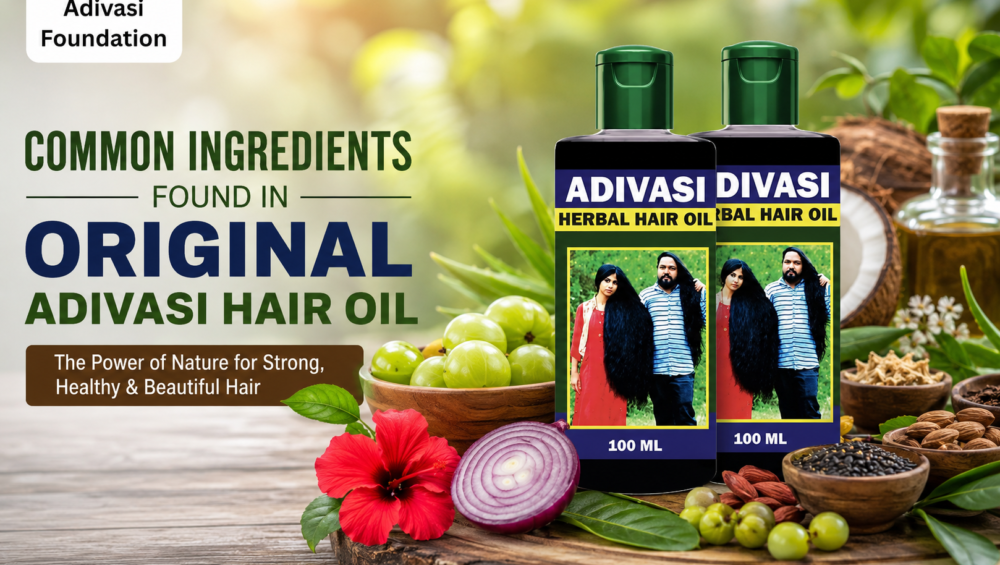
Hair oiling has remained an important part of Indian hair care for generations. Families across different regions have traditionally relied on herbs, plant extracts, seeds, flowers, and nourishing oils to maintain their hair and scalp. Original Adivasi Hair Oil draws attention because it is commonly associated with this herbal approach to hair care, combining traditional ingredients that may help nourish the scalp, condition the hair, and support a healthier-looking appearance.
People considering herbal hair oil often want to know what actually goes into the formulation. While the exact ingredient list can vary by manufacturer or formulation, several herbs and natural ingredients are commonly associated with Adivasi-style hair oils. Knowing their traditional roles can help consumers make more informed choices.
At Adivasi Foundation, the emphasis is on herbal hair care and the value of carefully selected plant-based ingredients. Below is a closer look at ingredients commonly found in or associated with Original Adivasi Hair Oil formulations and the roles they may play in a regular hair care routine.
Why Ingredients Matter When Choosing Hair Oil
A hair oil is more than a product used to add shine. Its formulation determines how it feels on the scalp, how easily it spreads, and how it complements a person’s existing hair care routine.
Traditional herbal oils frequently combine a carrier oil with botanical ingredients. The carrier oil helps distribute herbal extracts across the scalp and hair strands, while individual herbs contribute their own properties.
When evaluating Original Adivasi Hair Oil, consumers should pay attention to the ingredient label rather than relying only on packaging claims. Ingredients can differ between products sold under similar descriptions.
Factors worth checking include:
- The main carrier oils used in the formulation
- The presence of recognizable herbal ingredients
- Added fragrances or colours
- Storage and usage instructions
- Manufacturer and product information
- Suitability for individual scalp and hair needs
Reading the actual label is particularly important for people with sensitive skin or known allergies.
1. Amla
Amla, also known as Indian gooseberry, is one of the most familiar ingredients in traditional Indian hair care. It has been incorporated into homemade hair oils, powders, pastes, and herbal preparations for generations.
Amla naturally contains vitamin C and various plant compounds. In hair oils, it is mainly valued as a conditioning and scalp-care ingredient.
Regular oiling with an amla-containing formulation can help keep dry hair feeling softer and better conditioned. The oiling process itself also helps reduce the rough feeling that can occur when hair lacks adequate moisture.
For people searching for Original Adivasi Hair Oil, amla is therefore one of the ingredients they may commonly encounter on product descriptions or labels.
2. Bhringraj
Bhringraj has a strong association with traditional Indian hair and scalp care. Its botanical name is Eclipta prostrata, and it is frequently included in herbal hair oils.
Bhringraj is commonly used as part of scalp massage preparations. When combined with an appropriate carrier oil, it allows users to massage the scalp while coating the hair.
Scalp massage can also make an oiling routine more relaxing and encourage even product distribution. Rather than viewing bhringraj as a stand-alone solution to every hair concern, it is better considered one component of a broader hair care routine.
Its long-standing use makes bhringraj a familiar ingredient in many herbal formulations inspired by traditional practices.
3. Brahmi
Brahmi is another herb frequently associated with traditional herbal preparations. It may be used in hair oils alongside amla, bhringraj, neem, hibiscus, and other botanical ingredients.
Within a hair care formulation, brahmi is generally incorporated as a scalp-conditioning botanical. Herbal oils containing brahmi are often massaged gently into the scalp and distributed through the hair.
People dealing with dry-feeling hair may find regular oiling useful for improving softness and manageability. However, the overall result depends on the complete formulation rather than one individual herb.
Checking how brahmi appears on the product’s ingredient list can provide a clearer idea of the actual formulation.
4. Hibiscus
The bright hibiscus flower has a well-established place in traditional beauty routines. Both hibiscus flowers and leaves have been incorporated into homemade hair masks and oils.
Hibiscus-based preparations are particularly popular for conditioning. When included in an oil formulation, hibiscus complements ingredients such as amla and coconut oil.
People with dry, rough, or difficult-to-manage hair often use oiling to make strands feel smoother. An oil containing hibiscus may therefore fit naturally into a conditioning-focused routine.
Its popularity also reflects the broader preference for botanical ingredients that have been used in Indian households for generations.
5. Neem
Neem is widely recognized in Indian herbal traditions and is commonly used in personal-care preparations intended for skin and scalp hygiene.
In herbal hair oils, neem is generally included as a scalp-care ingredient. It may be combined with carrier oils and other herbs rather than used alone.
People who apply neem-containing oils should follow the manufacturer’s directions carefully, particularly if they have a sensitive scalp. Natural ingredients can still cause sensitivity in some individuals.
A small patch test before wider application is a sensible precaution whenever trying a new herbal oil.
6. Fenugreek or Methi
Fenugreek, commonly called methi, is another household ingredient that has crossed naturally into traditional hair care.
Fenugreek seeds are frequently soaked, ground, or infused into homemade hair preparations. Commercial herbal oils may use fenugreek extracts or infused ingredients instead.
Methi is commonly associated with conditioning and maintaining manageable hair. When combined with oils, it can form part of a routine aimed at reducing the dry, coarse feeling of hair.
Consumers interested in Original Adivasi Hair Oil may find methi included alongside other familiar herbs, depending on the specific formulation.
7. Curry Leaves
Curry leaves are commonly known as a culinary ingredient, but they also have a history of use in traditional hair preparations.
In homemade routines, curry leaves are sometimes infused into coconut or other oils. Herbal formulations may similarly incorporate curry leaf extracts with complementary botanicals.
Curry leaves contain naturally occurring plant compounds and nutrients. In hair care, however, consumers should focus on their role within the complete formulation rather than expecting one botanical ingredient to produce dramatic results independently.
Consistency, gentle cleansing, appropriate conditioning, and proper hair handling all contribute to overall hair appearance.
8. Aloe Vera
Aloe vera is widely used across skin, scalp, and hair products. Its popularity comes largely from its soothing and conditioning characteristics.
Depending on how a herbal hair oil is formulated, aloe vera or aloe-derived ingredients may be incorporated alongside other botanicals.
Aloe-containing hair products are often selected by consumers seeking a softer, conditioned feel. When used appropriately, such formulations can complement shampoo and conditioner rather than replacing the entire hair care routine.
Because formulations differ, users should always check whether aloe vera is actually listed on their chosen product.
9. Coconut Oil
Herbs need an effective base through which they can be applied to the scalp and hair. Coconut oil is one of the most familiar carrier oils used for this purpose.
It spreads easily across hair strands and is frequently used alone or as part of herbal oil blends.
Coconut oil is especially popular for pre-shampoo oiling. Applying a suitable amount before washing can help coat the strands and reduce the excessively dry feeling that sometimes follows cleansing.
For thick or dry hair, slightly more oil may be suitable. Fine or oily hair usually requires a smaller quantity. The appropriate amount depends on individual hair characteristics.
10. Sesame Oil
Sesame oil has a long history in traditional Indian body and hair oiling practices. Its texture and ability to carry botanical extracts make it useful in herbal preparations.
Some formulations use sesame oil as the main base, while others combine it with coconut or additional plant oils.
The choice of carrier oil influences the texture of Original Adivasi Hair Oil. A heavier formulation may suit dry, coarse hair, while people with fine hair may prefer lighter application.
This is one reason consumers should evaluate the entire ingredient list instead of concentrating exclusively on individual herbs.
11. Castor Oil
Castor oil is recognizable for its thick consistency. It is frequently blended with lighter oils because applying pure castor oil can feel heavy on some hair types.
In a herbal blend, castor oil can help coat the strands and provide a richer conditioning feel. People with dry ends may particularly appreciate oils containing a balanced proportion of castor oil.
However, excessive application can make washing difficult. Starting with a small quantity and adjusting according to hair length, density, and texture generally produces a more comfortable experience.
12. Onion Extract
Onion-based hair care products have attracted considerable consumer interest. As a result, some herbal oil formulations incorporate onion extract or onion-infused components.
Onion naturally contains sulfur-containing compounds, which explains much of the interest surrounding its use in hair preparations.
However, ingredient concentration, extraction method, overall formulation, and individual response can differ significantly. Consumers should therefore avoid assuming that every herbal oil contains onion or that the presence of onion alone determines a product’s effectiveness.
The ingredient label remains the most reliable source for confirming its presence.
13. Tulsi
Tulsi, or holy basil, is another botanical ingredient commonly found across traditional Indian wellness and personal-care preparations.
Within herbal hair oils, tulsi is generally incorporated as a complementary scalp-care botanical. It can appear alongside neem, amla, brahmi, and similar ingredients.
As with other plant ingredients, tulsi should be viewed as part of the total formulation. A balanced oil depends on the selection of herbs, their preparation, the carrier oils, and appropriate product usage.
14. Shikakai
Shikakai is best known as a traditional hair-cleansing ingredient. Before modern shampoos became widespread, shikakai preparations were commonly used to cleanse hair.
It is more frequently encountered in herbal powders and shampoos, but certain oil formulations may contain shikakai extracts as part of a broader botanical blend.
Its presence reflects the connection between traditional cleansing and conditioning practices. Consumers should nevertheless check the label because not every Adivasi-style oil uses the same collection of herbs.
15. Reetha
Reetha, commonly called soapnut, has also been traditionally associated with hair cleansing. Its natural saponins give it cleansing properties, which is why it frequently appears in herbal shampoo preparations.
Some botanical hair oils may incorporate reetha extracts alongside other ingredients, although its use depends entirely on the formulation.
The combination of traditionally recognized herbs can make a product attractive, but more ingredients do not automatically mean better performance. Formulation quality, suitability, and correct application remain important.
How Herbal Ingredients Work Together in Hair Oil
A well-formulated herbal oil does not depend on a single botanical. Instead, the formulation brings together carrier oils and selected herbs to provide conditioning and scalp care.
For instance, coconut or sesame oil may form the base, while amla, bhringraj, brahmi, hibiscus, neem, methi, or other ingredients are incorporated as extracts or infusions.
This combination can help:
- Lubricate dry hair strands
- Improve the feel of rough hair
- Make hair easier to manage
- Support scalp conditioning
- Provide a relaxing massage medium
- Complement a regular cleansing and conditioning routine
Results can differ depending on hair texture, scalp condition, frequency of application, washing habits, environmental exposure, and other personal factors.
How to Check Whether an Adivasi Hair Oil Is Suitable for You
The word “herbal” does not automatically mean that every product will suit every person. Consumers should assess a product based on their own scalp and hair requirements.
Start by reading the full ingredient list. If you have known sensitivities to particular plants, fragrances, or oils, avoid formulations containing those ingredients.
A patch test is also useful. Apply a small amount according to the product directions and watch for irritation before applying it extensively.
Hair type matters as well. Fine hair can become weighed down by heavy oils, whereas coarse or very dry hair may respond better to richer formulations.
Most importantly, stop using a product if persistent itching, redness, burning, or unusual scalp irritation develops.
How to Use Original Adivasi Hair Oil in a Hair Care Routine
Correct application can be just as important as ingredient selection.
Begin with a manageable amount rather than saturating the scalp. Divide the hair into sections if necessary and apply the oil evenly. Massage gently using fingertips without scratching the scalp with fingernails.
The remaining oil can be distributed through the lengths, particularly across dry areas and ends.
Leave the oil on for the period recommended on the product label before cleansing. Some people prefer pre-shampoo application, while others follow a different schedule based on product instructions.
Using excessive quantities is not necessary. More oil does not automatically produce better results and may simply require stronger cleansing afterward.
What Consumers Should Expect from Herbal Hair Oil
Herbal hair oil should be approached as part of routine hair and scalp care rather than as an instant solution.
Regular oiling can support conditioning, softness, manageability, and a smoother appearance. However, hair concerns can have many causes, including grooming habits, nutrition, chemical treatments, heat exposure, stress, environmental factors, and underlying scalp conditions.
Adivasi Foundation encourages consumers to look carefully at ingredients and choose products based on realistic hair care needs.
When evaluating Original Adivasi Hair Oil, the ingredient list, product authenticity, usage instructions, and suitability for your hair type deserve greater attention than exaggerated promises.
Final Thoughts
Original Adivasi Hair Oil is commonly associated with traditional botanical ingredients such as amla, bhringraj, brahmi, hibiscus, neem, methi, curry leaves, tulsi, coconut oil, sesame oil, and other plant-based components. The exact composition, however, can vary between formulations.
Each ingredient has its own place in traditional hair care, but the overall formulation matters more than any single herb. Checking the product label, following application directions, patch testing when appropriate, and maintaining a consistent hair care routine can help consumers make better use of herbal oils.
For people interested in plant-based hair care, Adivasi Foundation focuses on bringing traditional herbal concepts into practical routines that support hair conditioning and scalp care.
FAQs
Can Original Adivasi Hair Oil be used regularly?
Usage frequency depends on the specific formulation, hair type, scalp condition, and manufacturer's instructions. Many people incorporate herbal oil into a pre-shampoo routine once or several times per week. People with oily or fine hair may prefer smaller quantities or less frequent application.
Is Original Adivasi Hair Oil suitable for every hair type?
Suitability varies between individuals. Dry or coarse hair may respond differently from fine or naturally oily hair. Ingredients, oil texture, fragrance, and individual scalp sensitivity should be considered. Performing a patch test before extensive use is sensible, particularly for people with sensitive skin.
How can I check the ingredients in Original Adivasi Hair Oil?
Read the ingredient information printed on the product packaging or official product information provided by the manufacturer. Do not assume that every product using the Adivasi hair oil description contains an identical herbal blend. Checking ingredients, manufacturer details, usage directions, and packaging information can help you make a more informed choice.