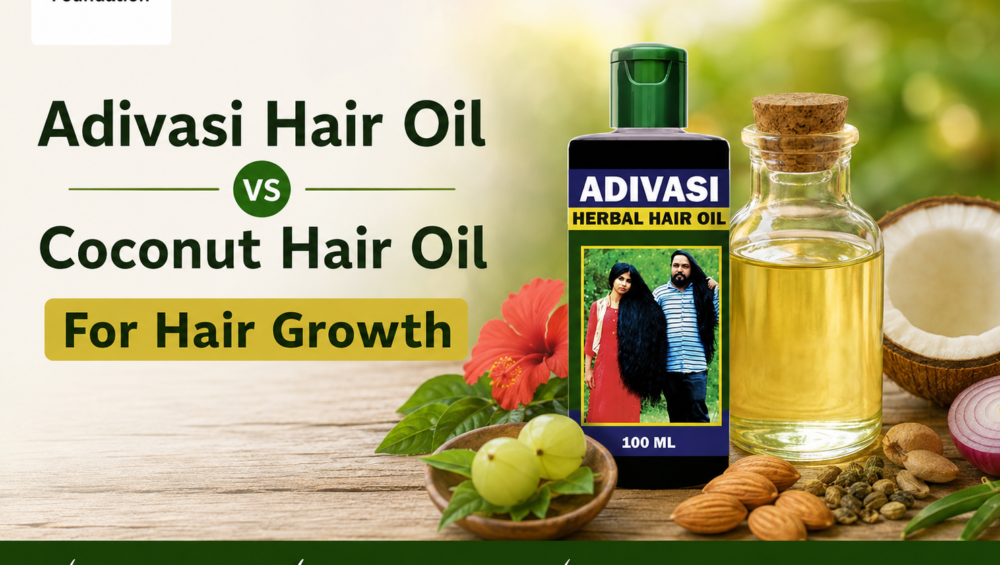
Adivasi Hair Oil vs Coconut Hair OilCategoriesBlog

Adivasi Hair Oil vs Coconut Hair Oil for Hair Growth

Hair oiling remains an important part of many Indian hair-care routines. Among the many options available, traditional herbal formulations and coconut oil often attract the most attention from people looking to maintain stronger, healthier-looking hair. The comparison between Adivasi Hair Oil vs Coconut Hair Oil becomes especially relevant when the main concern is hair growth, scalp nourishment, dryness, breakage, or overall hair quality.

Both options approach hair care differently. Coconut oil is a single-oil staple known primarily for conditioning and protecting hair, while Adivasi hair oil generally refers to a herbal formulation containing multiple plant-derived ingredients and oils. Choosing between them requires looking beyond popularity and considering formulation, hair type, scalp condition, routine, and individual expectations.

What Is Adivasi Hair Oil?

Adivasi hair oil is generally associated with traditional herbal hair-care practices. Depending on the formulation, it may combine a carrier oil base with herbs, botanical extracts, roots, leaves, seeds, or other plant-derived ingredients traditionally used for scalp and hair maintenance.

Adivasi Foundation focuses on bringing traditional herbal hair-care principles into a practical oiling routine. Rather than relying on a single ingredient, the concept behind such formulations is to provide multiple forms of conditioning and scalp nourishment through carefully selected ingredients.

The exact benefits depend heavily on the actual formulation. Ingredient quality, processing methods, storage, frequency of application, and individual scalp characteristics can all influence the experience.

Potential Role of Herbal Hair Oils

A well-formulated herbal hair oil may support a hair-care routine by:

  • Conditioning dry and rough strands
  • Helping maintain scalp moisture
  • Reducing the appearance of frizz
  • Supporting smoother and more manageable hair
  • Minimising breakage associated with dryness
  • Providing lubrication during scalp massage
  • Supporting the overall appearance of healthy hair

Hair growth, however, is influenced by many internal and external factors. No cosmetic hair oil should be treated as a guaranteed treatment for significant or unexplained hair loss.

What Is Coconut Hair Oil?

Coconut oil is extracted from coconuts and has been used for generations as a hair-conditioning oil. Its popularity comes from its relatively simple composition, accessibility, and ability to coat and lubricate hair.

One notable characteristic of coconut oil is its high proportion of lauric acid. Its properties allow coconut oil to interact effectively with the hair fibre, making it particularly useful as a pre-wash or conditioning treatment.

For people whose primary concern is dry, rough, or damaged-looking hair, coconut oil can be a straightforward addition to a routine.

Adivasi Hair Oil vs Coconut Hair Oil: The Fundamental Difference

The biggest difference lies in formulation.

Coconut hair oil is generally centred on one principal ingredient: coconut oil. Adivasi hair oil, depending on the product, typically combines oils with multiple herbal or botanical ingredients.

This means the comparison is not simply between two identical products from different sources. Instead, it is a comparison between a relatively simple oil and a multi-ingredient herbal formulation.

Coconut oil mainly provides lubrication, conditioning, and protection to the hair shaft. A herbal formulation may aim to provide these benefits while incorporating additional botanical ingredients traditionally associated with scalp and hair care.

Which Oil Is Better for Hair Growth?

This is usually the main question behind the comparison.

Hair growth begins inside the follicle. Genetics, nutrition, hormones, age, stress, scalp health, medical conditions, medications, and hair-care practices can influence the normal growth cycle.

Applying oil cannot override these biological factors.

The practical value of hair oil often lies in maintaining favourable conditions for healthy-looking hair. If oiling reduces dryness, friction, tangling, and breakage, a person may retain more length over time. Hair can consequently appear fuller and healthier.

Adivasi hair oil may appeal to people seeking a broader herbal routine, while coconut oil may suit those wanting a simple conditioning treatment.

Comparing the Ingredient Approach

Adivasi Hair Oil

Traditional herbal formulations can contain several botanical components. Each formulation is different, which makes checking the ingredient list important.

The advantage of a multi-ingredient approach is variety. Different ingredients may contribute conditioning, moisturising, aromatic, or scalp-care properties.

The limitation is that more ingredients do not automatically mean better results. Formulation quality matters more than ingredient count.

Coconut Hair Oil

Pure coconut oil offers simplicity. Consumers generally know what they are applying, particularly when selecting a product containing only coconut oil.

This simplicity can also be useful for people who prefer minimalist routines.

However, someone looking specifically for a combination of traditional herbs and oils may find plain coconut oil too basic for their preferences.

Hair Shaft Protection and Breakage

Hair length depends not only on how quickly strands grow from the scalp but also on how successfully existing hair is retained.

Frequent heat styling, rough brushing, tight hairstyles, chemical processing, environmental exposure, and excessive friction can weaken strands. When hair repeatedly breaks at the ends or along the shaft, achieving visible length becomes more difficult.

Oil creates lubrication between strands and can reduce friction during handling.

Coconut oil is particularly popular as a pre-shampoo treatment because it conditions the hair fibre and can help protect hair during washing and grooming.

Adivasi hair oil can also support length retention when its formulation provides effective conditioning and lubrication. Regular application may make dry hair feel softer and easier to manage, reducing unnecessary pulling during detangling.

Scalp Nourishment

A comfortable scalp creates a better foundation for a consistent hair-care routine.

Dryness can make the scalp feel tight or uncomfortable. Applying an appropriate amount of oil and gently massaging the scalp may provide temporary moisturisation and improve the overall oiling experience.

Adivasi hair oil offers a botanical-focused option for people who enjoy herbal scalp-care traditions. Coconut oil provides a simpler alternative.

Neither should be applied excessively. More oil does not mean faster growth. Heavy application can make washing difficult and may leave residue on the scalp.

People experiencing persistent itching, scaling, inflammation, sores, or unusual hair shedding should consider professional medical advice rather than relying solely on oil.

Texture and Hair Type Matter

No single oil suits every person.

Dry and Coarse Hair

Dry, coarse, curly, or textured hair often benefits from additional lubrication. Coconut oil can help reduce roughness, while a suitable herbal oil may provide conditioning through a combination of oils and botanical ingredients.

Fine Hair

Fine hair can become greasy or weighed down when too much oil is applied. Smaller quantities and shorter application periods may work better.

Chemically Treated Hair

Coloured, straightened, bleached, or chemically processed hair may require greater attention to breakage. Oil can form part of a protective routine, although it cannot reverse structural damage already caused by chemical treatments.

Oily Scalp

People with naturally oily scalps may not require frequent heavy oiling. Applying a limited amount before shampooing can be more practical than leaving large quantities on the scalp for extended periods.

Adivasi Hair Oil for a Herbal Hair-Care Routine

One reason consumers choose Adivasi hair oil is their preference for traditional botanical hair care.

Instead of using a standalone carrier oil, they may want an oil that brings multiple ingredients into a single application. This can make a herbal routine easier to maintain.

Consistency matters more than occasional heavy use. Applying a reasonable amount regularly, following appropriate washing practices, and protecting hair from unnecessary damage can contribute more to overall hair quality than repeatedly switching between oils.

Adivasi Foundation encourages consumers to view hair oil as part of a wider hair-care routine rather than an instant answer to every hair concern.

Coconut Oil for Simple Hair Conditioning

Coconut oil remains attractive because it is uncomplicated.

It can be applied before shampooing, concentrated on dry lengths, or used sparingly depending on hair texture. People who already have a balanced scalp and primarily want softer, smoother hair may find that a simple coconut oil routine meets their needs.

It is also useful for consumers who prefer to introduce one ingredient at a time. This approach makes it easier to observe how the hair and scalp respond.

How Should Hair Oil Be Applied?

Technique can influence the experience regardless of which oil is selected.

Start with a manageable quantity. Apply the oil across the scalp only when scalp oiling suits you, then distribute an appropriate amount through the lengths.

Massage gently with the fingertips rather than scratching with the nails. Aggressive massage can create unnecessary friction and may tangle or pull delicate strands.

Hair does not need to be completely saturated.

If using oil as a pre-wash treatment, allow enough time for it to coat the strands before shampooing. Wash according to your hair type and the quantity applied.

People with sensitive skin can consider patch testing a new multi-ingredient product before wider use.

Can Adivasi Hair Oil and Coconut Oil Be Used Together?

They can be part of the same routine, but combining them is not always necessary.

If an Adivasi hair oil formulation already contains suitable carrier oils, adding coconut oil may simply make the application heavier. Consumers should first examine the ingredient list and directions.

Another approach is to use different oils for different purposes. For example, someone might prefer a herbal formulation for regular scalp massage while using coconut oil occasionally as a pre-shampoo treatment on dry lengths.

The routine should remain simple enough to identify which products actually suit the hair.

How Long Does It Take to Notice a Difference?

Hair-care expectations should remain realistic.

Conditioning benefits such as softness, shine, reduced roughness, and improved manageability may become noticeable relatively quickly. Changes associated with length retention require more time because hair grows gradually.

Visible improvement also depends on the starting condition of the hair.

Someone experiencing substantial breakage may notice that consistent conditioning helps maintain length. However, significant shedding from the root requires a different evaluation because oil alone may not address the underlying reason.

Avoid judging an oil solely by promises of dramatic growth within a very short period.

Lifestyle Factors Still Matter

Hair oil cannot compensate for every factor affecting hair quality.

Adequate nutrition, sufficient protein intake, micronutrient status, sleep, stress management, gentle grooming, appropriate shampooing, and reduced exposure to damaging treatments all contribute to healthy hair maintenance.

Hairstyles also matter. Repeatedly pulling hair into very tight styles can place stress on the roots. Excessive heat can weaken the shaft, while aggressive towel drying increases friction.

A good oiling routine works best alongside sensible daily hair-care habits.

What Should Consumers Check Before Buying Hair Oil?

The label deserves attention.

Look at the full ingredient list, directions for use, manufacturer information, packaging quality, batch details, and other required product information. Avoid choosing a product purely because of exaggerated growth claims.

For herbal oils, ingredient transparency becomes especially important because formulations can differ considerably between sellers.

Consumers interested in traditional hair care should seek products from sources that clearly communicate what they offer rather than relying on unrealistic promises.

Which One Should You Choose?

Choose based on what you expect from your routine.

Coconut oil may be suitable when the priorities are simplicity, hair-shaft conditioning, lubrication, and management of dry or rough hair.

Adivasi hair oil may be more suitable when you prefer a traditional herbal formulation containing multiple plant-based ingredients as part of a broader scalp and hair-care routine.

The best option is ultimately the one that suits your scalp, hair texture, washing frequency, lifestyle, and tolerance.

Final Thoughts

The Adivasi Hair Oil vs Coconut Hair Oil comparison does not produce one universal winner. Coconut oil has clear value as a simple conditioning oil, particularly for protecting and lubricating dry hair. Adivasi hair oil offers a different approach by combining traditional herbal ingredients within a dedicated hair-care formulation.

For people seeking botanical diversity and a traditional oiling experience, Adivasi Foundation provides an option built around herbal hair-care principles. Whichever oil you select, use it consistently, apply it appropriately, protect hair from unnecessary damage, and maintain realistic expectations about growth.

Hair oil can support healthier-looking, better-conditioned hair, but persistent or sudden hair loss deserves professional evaluation rather than dependence on cosmetic products alone.

FAQs

The main difference is formulation. Coconut oil is generally a single primary oil, while Adivasi hair oil typically incorporates multiple herbal or botanical ingredients in an oil base. Coconut oil focuses mainly on conditioning and hair-shaft protection, whereas herbal formulations offer a multi-ingredient approach to routine hair and scalp care.

Yes, but combining them may not be necessary. Check whether your Adivasi hair oil already contains coconut or other carrier oils. Using both can make fine or oily hair feel heavy. They can alternatively be used separately according to scalp condition, hair texture, and specific conditioning needs.

Frequency depends on hair type, scalp condition, formulation, and washing routine. Many people incorporate oiling once or twice a week as a pre-wash or scalp-care practice. Follow the product directions and avoid excessive application. Consistent hair care, nutrition, gentle handling, and scalp health also influence healthy hair retention.